Stanley P. Morrison


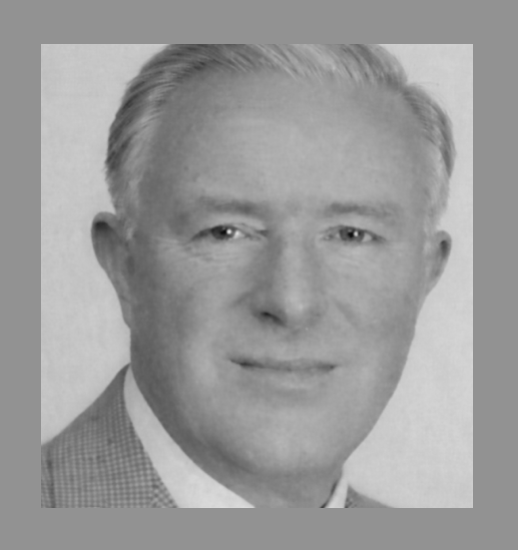
Stanley Pringle Morrison stands as one of the central architects of modern Scotch whisky’s postwar revival. He was a broker-turned-distiller whose instincts reshaped both ownershippatterns and the emerging single-malt market. His life traces a distinctly Scottish narrative: rooted in family enterprise, refined through commercial acumen, and ultimately expressed in the stewardship of some of the country’s mosthistoric distilleries.
Morrison was born in 1900 into a family already connected to the whisky trade, part of a broader Glasgow mercantile culture in which brokers, blenders, and exporters formed a dense commercial network. By then, the Morrison family’s involvement in whisky already extended across multiple generations as descendants of both the Andrew Dewar Rattray family as well as the John Morrison distillers.
At the time, Glasgow remained one of the principal commercial centers of the Scotch whisky industry, even as distillation itself was often concentrated in rural regions such as Islay, Speyside, and the Highlands. This environment shaped Morrison’s early exposure to whisky, not as a romantic craft, but as a business—one grounded in relationships, contracts, and the movement of casks across markets. Unsurprisingly then, Morrison’s early professional life unfolded within the whisky brokerage world in Glasgow. By the interwar and immediate post–Second World War years, brokers played a crucial role in matching distillers, blenders, and international buyers. They operated at the intersection of supply and demand, often acquiring casks for maturation or resale.
In 1925, Morrison demonstrated early entrepreneurial initiative by helping to establish T. William Walker & Co., while also acquiring the whisky merchant A. D. Rattray, an independent firm with roots dating back to the nineteenth century. This move revealed a pattern that would define his career: acquisition paired with long-term strategic positioning. Morrison did not simply trade whisky, he accumulated assets and relationships that allowed him to move up the value chain from broker to owner. By 1936, Morrison had extended his reach further, acquiring an interest in Chivas Brothers alongside partner Robert Lundie. This placed him within one of the most prestigious names in Scotch whisky, underscoring his growing influence within the industry.
In 1951, Morrison made perhaps his boldest business move, formalizing his operations and founding Stanley P. Morrison Ltd., a whisky broking and trading company based in Glasgow. This company became the central vehicle through which Morrison would transition to distillery owner. It also served as the institutional foundation for what would later become Morrison Bowmore Distillers, one of the most important independent Scotch whisky companies of the twentieth century. Unfortunately, the postwar years were a period of restructuring within Scotch whisky, and many distilleries had closed during wartime or struggled mightily in its aftermath. But Morrison recognized that ownership of distilleries, particularly those with strong heritage, offered both stability and long-term value.
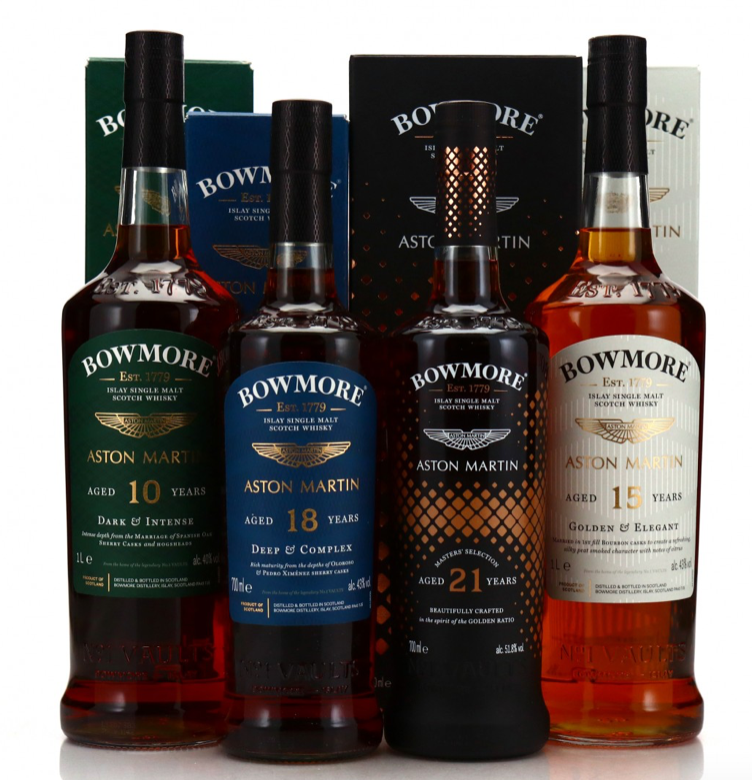
Another defining moment in Morrison’s career came in 1963, when, while at Glasgow’s Grand Central Hotel, he overheard that the historic Bowmore Distillery on Islay was available for purchase. Acting immediately, he acquired it the same day. Founded in 1779, Bowmore was one of Scotland’s oldest distilleries. Its acquisition marked Morrison’s decisive transition from broker to distiller. To manage this new phase, Morrison and his partner James Howat formed Morrison Bowmore Distillers Ltd. in 1963. Under this structure, the company expanded into production, maturation, and global distribution. In the years that followed, he continued to build a portfolio, including the purchase of Glen Garioch Distillery approximately seven years later. This vertical integration—owning distilleries, warehouses, and distribution channels—positioned the company to benefit from the emerging interest in single malt Scotch whisky.
Although the widespread popularity of single malts would fully emerge in the 1970s and beyond, Morrison’s acquisitions in the 1960s placed his company at the forefront of that movement. Bowmore, in particular, became a flagship Islay malt, known for its balance of peatsmoke and maritime character. The Morrison company helped transform distilleries from anonymous producers of blending stock into identifiable brands. This shift required not only production expertise but also marketing vision—an area in which Morrison’s brokerage background proved invaluable.
Stanley P. Morrison’s personal life remained closely intertwined with his business. In 1930, Stanley married Elizabeth Walker, the daughter of another prominent whiskey broker, William Walker. The couple soon had two sons, Stanley “Tim” Morrison, and W. Brian Morrison. Tim Morrison, would become one of the most prominent figures of the next generation. He joined the family company in 1961 after training with Arthur Bell & Co., bringing formal industry experience into the firm. Brian Morrison also played a significant role, eventually assuming leadership of the company after his father’s death. The Morrison family structure reflects a classic Scottish whisky dynasty model: knowledge and ownership passing across generations, with each contributing to the evolution of the business. Tim Morrison would later describe growing up around warehouses, casks, and blending rooms, indicating that the whisky trade was not merely a profession but a lived family environment.
Stanley P. Morrison died in 1971. By that time, he had transformed his company from a brokerage into a distilling powerhouse with internationally recognized assets. Following his death, control of the company passed to his son Brian Morrison, ensuring continuity of familyleadership. The company Morrison built continued to expand in the decades after his death. It remained family-controlled until 1994, when Morrison Bowmore Distillers was sold to the Japanese firm Suntory (now Suntory Global Spirits). This sale marked both the culmination of Stanley P. Morrison’s original vision and the beginning of a new phase of globalization within Scotch whisky. Yet the Morrison family did not exit the industry. Tim Morrison and later generations continued their involvement through ventures such as A. D. Rattray and the development of new distilleries, including the Clydeside Distillery in Glasgow. Now spread across more than five generations, the Morrisons have remained embedded in the whisky trade, operating as brokers, distillers, and independent bottlers.
Stanley P. Morrison’s career illustrates a pivotal transformation in Scotch whisky history. Beginning as a broker in Glasgow’s commercial whisky world, he recognized the strategic importance of owning production assets at a time when many distilleries were undervalued. His acquisition of Bowmore in 1963 stands as one of the most consequential purchases in modern Scotch whisky. Stanley Morrison did not simply participate in the whisky industry; he reshaped its structure. By linking brokerage, distillation, and branding under one family enterprise, he helped lay the groundwork for the modern single-malt era. His legacy endures not only in the distillerieshe acquired, but in the generations of Morrison family members who continue to shape Scotch whisky today.
Sources
The Clydeside Distillery official website, “Our Story”, www.theclydeside.com
Scottish Business UK, “Tim Morrison”, scottish-business.uk/about-us/tim-morrison/
Whisky Magazine, “A Dram With Tim Morrison”, 30 April 2024, whiskymag.com
Top Whiskies (blog), “One Family’s Love Story…: The Morrisons”, 11 March 2021
Morrison Scotch Whisky Distillers, “The Morrison Family”, morrisondistillers.com
Contributed by Tracy McLemore, Fairview, Tennessee USA