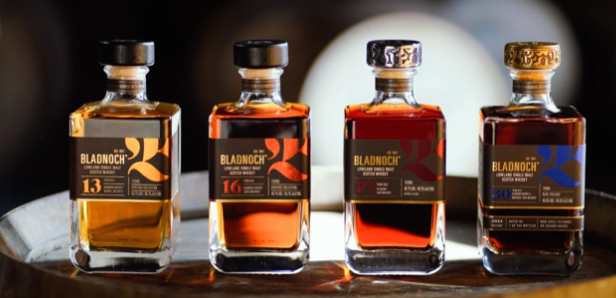
Thomas McClelland

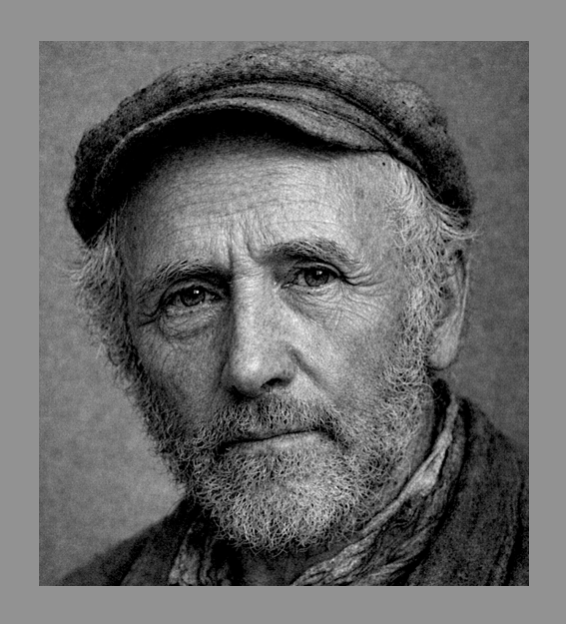
There are no known photographs of Thomas McClelland known to exist. Above
is an AI-generated image of him based on facts known about him life.
Thomas McClelland was born in 1794 in Sorbie, Wigtownshire, but his life unfolded in the rural parishes of Dumfries and Galloway. It was a region defined by farming, small industry, and proximity to the Irish Sea and its associated enterprises. McClelland’s family were relatively large local farmers whose activities eventually extended beyond simple agriculture. Thomas had two brothers, George and John McClelland. While George’s life’s work was in the operation of a nearby starch and farina mill, it was his brother John with whom Thomas McClelland eventually founded a distillery. The McClelland’s ventures, farming, milling, and eventually distilling, reflect a pattern common in early industrial Scotland, where agricultural families often jointly expanded into related enterprises.
Thomas McClelland’s historical significance began definitively in 1817, when he was 23. At that time, he and John secured a license to distill whisky on their farm at Bladnoch, near Wigtown. This moment places Thomas McClelland squarely within a transformative period in Scotch whisky history. The early 19th century saw the gradual transition from illicit distillation to regulated production, particularly following legislative changes associated with the Excise Act of 1823. The McClellands were, then, among the first of those who adopted legal distillation. The distillery they established was quickly named Bladnoch after the river upon which it was situated; it was homage to a location that provided both water supply and logistical transportation advantages. At least initially, the operation was closely tied to their farming activities. After all, like many early distillers, the McClellands used surplus barley grown on their land. Most such distilleries operated seasonally, producing whisky during quieter agricultural months. However, the McClelland brothers did not limit themselves to distillation alone. Evidence indicates that they also engaged in whisky blending and export through premises in Glasgow, linking their rural production to broader commercial networks.
Under the industrious McClelland ownership, Bladnoch grew steadily throughout the 19th century. Production records from the 1820s show increasing output, demonstrating that the distillery quickly became a viable commercial operation.
Meanwhile, on 24 Apr 1826, Thomas McClelland married Margaret Broadfoot, and one child, a daughter, Elizabeth, was born of the union. Unfortunately, Margaret died soon after the birth of their daughter, and Thomas remained a widower for the next 15-odd years, raising Elizabeth until she was of marrying age; then on 14 February 1841, McClelland married another Margaret, this time Margaret Davidson. Ten more children were thereafter born of McClelland and his second wife.
By the mid-19th century, expansion of the Bladnoch distillery occurred, and eventually, it employed a relatively substantial workforce, utilizing enormous quantities of George McClelland’s milled barley annually; by the 1870s, Bladnoch had become one of the most significant distilleries in the Lowlands. At its peak, the distillery’s production reached approximately 230,000 liters annually, earning it the enduring nickname “Queen of the Lowlands.”
Thomas McClelland died 20 Apr 1871 at the age of 77. Although he did not live to see the full extent of this expansion, the enterprise that he co-founded remained in family hands for nearly a century, passing through successive generations of McClellands who continued to modernize and enlarge the operation. By the late 19th century, Thomas’ descendants were overseeing even more significant increases in production rooted in his earlier modernization efforts.
Even so, the late 19th century brought severe challenges to the Scotch whisky industry as a whole. These included fluctuations in barley supply and price, rising taxation, and the increasing influence of temperance movements; as the 20th century dawned, these problems were compounded by international conflict. Despite these pressures, Bladnoch managed to survive by scaling back, while many other regional distilleries closed. Nevertheless, the distillery eventually left family ownership in 1904, then closed in 1905 before eventually being sold to Irish company Wm Dunville & Co. in 1911.
Still, Thomas McClelland’s legacy remains inseparable from Bladnoch, just as the distillery remains one of Scotland’s oldest distilleries. More importantly, his work represents a pivotal moment in Scotch whisky history, straddling the transition from small-scale agricultural distillation to structured, licensed production that could scale across generations. McClelland then emerges as a foundational figure whose importance lies in action rather than biography. He was a farmer who recognized opportunity, a businessman who formalized production at a critical historical moment, and a co-founder of a distillery that would outlast wars, closures, and industry upheaval. His life illustrates a broader truth about early Scotch whisky: its origins were not always founded in grand estates or industrial conglomerates, but in the initiative of rural families willing to transform grain into something enduring.
Sources
Bladnoch Distillery official website, “Our Story”, www.bladnoch.com/pages/our-story
ScotchWhisky.com, “T&A McClelland”, scotchwhisky.com/whiskypedia/3187/t-a-mcclelland/
Beamish International, “Bladnoch Distillery—Still in Flow”, 04 December 2023
Whisky Magazine Issue 197, “Meet the Australian entrepreneur who saved a Scotch whisky distillery”, Peter Ranscombe, 08 March 2024
ScotchWhisky.com, “Bladnoch”, scotchwhisky.com/whiskypedia/1823/bladnoch/
Whisky.com, “Bladnoch Distillery”, www.whisky.com/whisky-database/distilleries/details/bladnoch.html
Contributed by Tracy McLemore, Fairview, Tennessee USA