
Tim Morrison

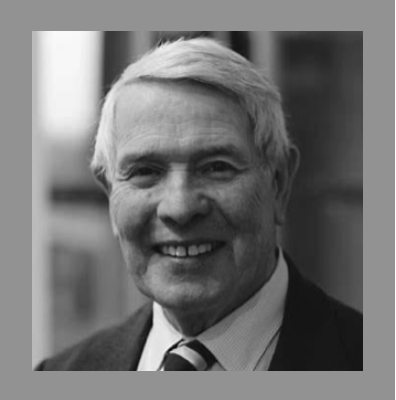
Stanley Walker “Tim” Morrison entered the whisky trade through the side door that, in Scotland, often turns out to be the main entrance: brokerage. In 1961, he joined the Glasgow whisky broking firm Stanley P. Morrison, the company owned by his father. Before formally entering the family business, Morrison trained within working Scotch production, completing placements at Arthur Bell distilleries and at the North British grain distillery in Edinburgh. These placed him inside the mechanics of Scotch whisky as it was actually made, stored, and sold: bulk spirit, contracts, warehousing, and the quiet but decisive relationships that determined who had whisky to sell when demand tightened. Morrison later described the decisive shift in the family business as arriving in 1963, when the company purchased Bowmore Distillery. That acquisition pushed the firm beyond intermediation and into the more exposed identity of distillers and brand owners, with capital tied up in wood, time, and reputation.
Family continuity was already taking shape alongside that professional shift. Morrison was married and raising a son, Stanley Andrew Morrison, who would later enter the whisky trade himself. While Tim Morrison’s own career unfolded within distillery ownership and brand management, the presence of a next generation, one that would eventually take on senior roles within the industry, reinforced the long-term thinking that increasingly defined the Morrison approach to whisky: stewardship measured not in years, but in decades.
Bowmore fundamentally altered the scale and responsibilities of the Morrison business. With ownership came operational realities that brokers could previously treat at arm’s length: securing casks, managing maturation policy, maintaining warehouses, and selling character rather than anonymous spirit. Morrison later recalled that Bowmore had a “significant effect” on the firm, not simply in revenue but in credibility. The company was now recognized as an owner of stock and style, not merely a conduit between distiller and blender. That shift would matter deeply when future acquisitions were evaluated, including one closer to home.
As the decades progressed, Morrison’s own responsibilities increasingly focused on the outward-facing side of the business. He became involved in marketing and sales development during the period when single malt Scotch was beginning to emerge as a category in its own right rather than a quiet supplier to blends. In practical terms, this meant learning how to articulate distillery character for export markets, managing international distribution, and transforming spirit once destined for blending into named whiskies consumers would actively seek out. The success or failure of a distillery was no longer determined solely by production; it depended on whether its identity could be made legible beyond Scotland.
By 1979, the firm’s evolution was formalized under the name Morrison Bowmore Distillers, a corporate acknowledgment that brokerage now sat firmly behind distillery ownership and brand building. It was within this mature, portfolio-driven context that Auchentoshan became strategically significant to Morrison’s career.
Auchentoshan’s earlier history belonged to a different industrial moment. Legally founded in 1823 and associated with John Bulloch, a local corn merchant, the distillery occupied a Lowland site close to Glasgow, producing a triple-distilled style that set it apart from many Highland and Islay malts. Yet its story was marked as much by disruption as by tradition. Geography placed Auchentoshan within reach of wartime devastation, a reminder that distilleries are not insulated from the forces around them. That vulnerability became explicit in March 1941 during the “Clydebank Blitz,” when Luftwaffe raids on 13 and 14 March caused widespread destruction across the area. The distillery suffered severe wartime damage and loss of stocks, quickly followed by rebuilding. Still, the episode left Auchentoshan with a fractured mid-century identity: operationally revived, but lacking the continuity and clarity that increasingly mattered as single malt began to find an international audience.
Ownership changed in 1969, when Auchentoshan was sold to the hospitality company Eadie Cairns. Under that stewardship, the distillery was promoted through the group’s hotels and restaurants, an early form of place-based whisky marketing. While this period kept Auchentoshan visible, it did not fully resolve the question of how the distillery fit into the broader, long-term whisky strategy that other brands were undergoing as international markets were explored.
That alignment arrived in 1984, when Stanley P. Morrison acquired Auchentoshan for £325,000. For Tim Morrison, this was not a speculative purchase but a logical extension of the Bowmore-era philosophy. Auchentoshan offered something the portfolio did not yet have: a Lowland single malt, geographically close to Glasgow and the company’s historic base, yet stylistically distinct from Bowmore’s Islay character. Just as importantly, it entered the group at a moment when Morrison was deeply involved in shaping how single malts were presented, positioned, and sustained in export markets. Auchentoshan could be made understandable, consistent, and reliable, qualities increasingly essential as Scotch moved from a trade product to a branded one.
Under Morrison Bowmore ownership, Auchentoshan benefited from the same disciplined approach applied elsewhere in the portfolio: attention to stock management, maturation planning, and the steady articulation of house style. The distillery was no longer an isolated Lowland survivor but part of a system that understood how to protect character while making it commercially durable. Those years also prepared Auchentoshan for its next transformation. In 1989, the Japanese spirits company Suntory acquired a stake in Morrison Bowmore, later completing full ownership in 1994. With that, Auchentoshan entered a global spirits framework that brought scale, distribution, and international visibility, while inheriting the structural discipline established during the Morrison years.
Although Morrison’s career extended beyond that transition, the Auchentoshan chapter stands as a defining example of his approach to whisky: not revival through nostalgia, but stability through ownership, clarity of purpose, and long-term thinking. From a war-damaged Lowland distillery with an interrupted past, Auchentoshan became a modern single malt, not through reinvention, but through careful integration into a portfolio that understood time, stock, and identity. In that sense, Auchentoshan reflects Morrison’s lasting imprint on Scotch whisky itself; quiet, strategic, and built to endure well beyond the moment of acquisition.
Sources:
Whisky Magazine, “A dram with… Tim Morrison”, 30 April 2024, whiskymag.com
Scottish Business, “Tim Morrison Profile”, scottish-business.uk
World Drinks Awards, “Tim Morrison Hall of Fame profile”, worlddrinksawards.com
Auchentoshan distillery official website, Our History”, auchentoshan.com
Whiskypedia, “Auchentoshan/Bowmore”, scotchwhisky.com
West Dunbartonshire Council, Clydebank Blitz Summary, Tom McKendrick, west-dunbarton.gov.uk
Clydeside Distillery official website, “Our Story”, theclydeside.com
Contributed by Tracy McLemore, Fairview, Tennessee USA