Tommy McDaniel


Tommy S. “Blue” McDaniel’s whiskey story is rooted in a part of Oklahoma that has long traded on clean water, dense pine forests, and a kind of geographic isolation that once made southeastern Oklahoma an ideal place for doing things out of sight. McDaniel was born in January 1968 and is from Broken Bow, Oklahoma, where his family has laid down at least four generations of deep roots. It is a region where memory runs long and reputation lingers, especially when it comes to alcohol.
Nine miles north of Broken Bow on Highway 259 sits the small hamlet of Hochatown, tucked near the Mountain Fork River and the foothills of the Kiamichi Mountains. For decades, this landscape quietly carried moonshining through the years when Oklahoma remaineddry well past national Prohibition. When modern tourism eventually transformed the Broken Bow–Beavers Bend area into cabin country, McDaniel recognized a different kind of possibility in that same terrain. Rather than letting the region’s bootlegging reputation exist only as folklore, he saw a path to build a legal distillery that could turn that history into a grain-to-glass bourbon business, one that visitors could tour, taste, and carry home.
The idea was not sudden. McDaniel has described the distillery as a dream he carried for roughly 25 years, tracing its origin back to his college days. His formal training fits the way Hochatown Distilling would later define itself. McDaniel is a chemical engineer by education, and he and his wife, Julie, spent about two decades living in East Texas while he worked in technical sales. That combination of process-driven thinking paired with long experience in relationship-based business would shape nearly every major decision the company made once the dream began turning into a plan.
Hochatown Distilling Company took formal shape in 2015, built as a partnership where each founder filled a specific role. McDaniel brought engineering and decades of technical business experience. His brother and co-founder, Martin McDaniel, contributed years of work in property development and construction, providing the practical knowledge needed to turn an empty building into a functioning distillery. Longtime friend Nathan Jewell joined as an experienced distiller with a family background steeped in moonshining, an unbroken line between the area’s illicit past and its modern, legal production.
The family’s approach to developing its bourbon leaned heavily into science and experimentation. Mitch McDaniel’s background is often described in scientific terms, and the brothers have spoken about “reverse engineering” bourbon to define the house style they wanted before committing large volumes to long aging. Rather than rushing toward a first release, the team spent its early period dialing in mash bills, fermentation profiles, and distillation parameters. Even within the family, the emphasis on continuity is clear. McDaniel’s youngest son, Matthew, works in the broader family beverage orbit and is learning production fundamentals that overlap with distilling, quietly extending the operation’s generational arc.
From the outset, Hochatown Distilling established a simple but demanding rule: it would release only bourbon it made itself. That decision carried real consequences. By mid-2016, after extended product development, the distillery began barreling its first bourbons. At that moment, the business committed not just to a recipe, but to time. Barreling bourbon means tying up capital for years, managing evaporationlosses, and resisting the faster path of sourcedwhiskey. The company accepted the long silence between formation and release as the cost of building credibility.
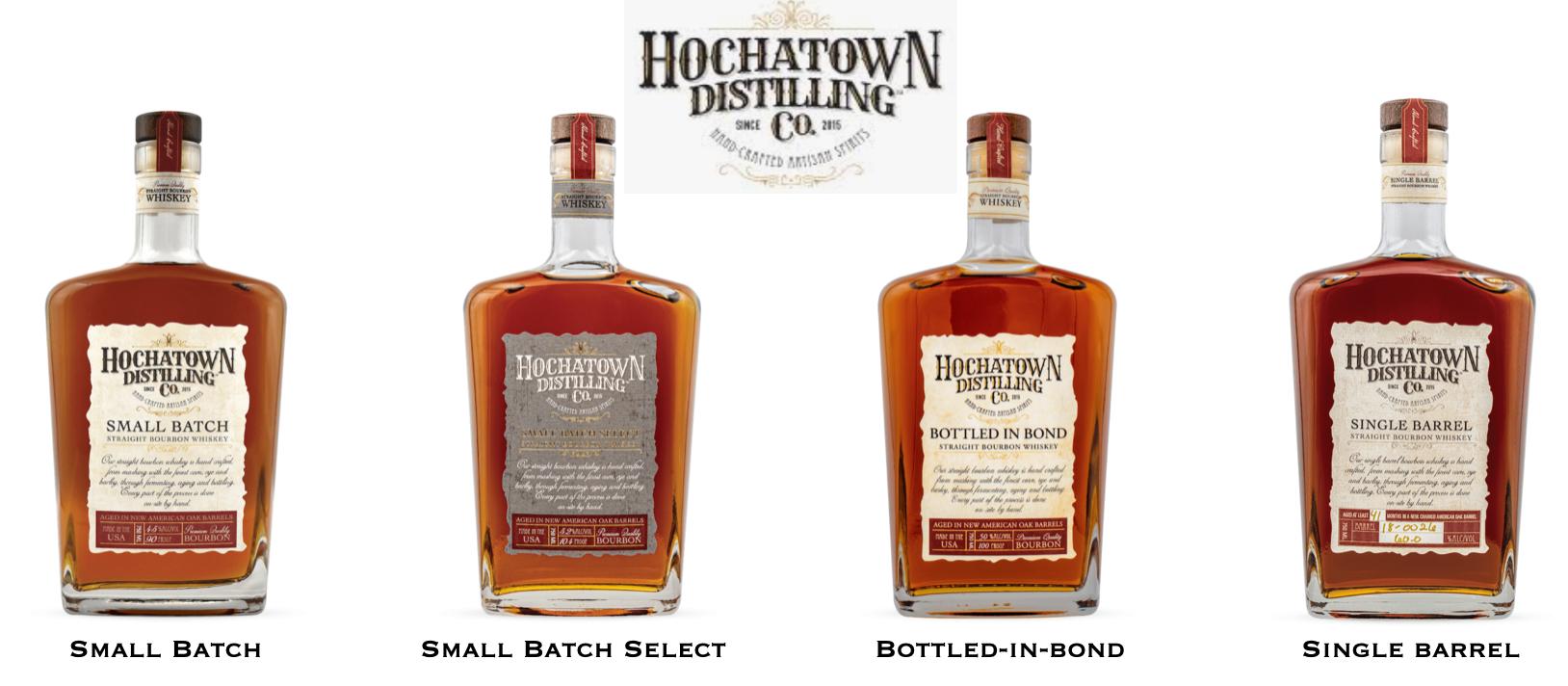
That silence ended in the spring of 2019, when Hochatown Distilling released its first straight bourbon whiskey. The timing of those bottles represented real age, real patience, and a refusal to shortcut the process. From that point forward, the distillery began presenting itself not merely as a place that makes spirits, but as a whiskey house built around a specific production philosophy. Its portfolio language reflects that identity, with small-batch and higher-selection bourbon releases, along with a Bottled-in-Bond straight bourbon whiskey that underscores adherence to traditional standards.
By the early 2020s, Hochatown Distilling had become a fixture in the region’s tourism economy. Cabin guests, lake visitors, and weekend travelers began folding the distillery into itineraries alongside breweries, wineries, and outdoor recreation. McDaniel speaks about this growth in a way that ties the present directly to the past. He acknowledges Hochatown’s long association with illegal alcohol while making clear that the modern operation exists to replace secrecy with transparency and pride. His nickname, “Blue,” fits that posture: plainspoken, unsentimental, and grounded in the idea that heritage matters most when it is handled honestly.
The final shape of McDaniel’s story is not one of sudden transformation, but of disciplined accumulation. A chemical engineer who spent decades in technical sales returned to his home region, formed a distillery with family and a small team, laid down bourbon in 2016, and waited until 2019 to release a straight bourbon the company insists is made entirely on site. Hochatown Distilling’s identity amounts to a deliberate wager—that the only way to make the Hochatown legend respectable is to let barrels do what they have always done best: turn time into credibility.
Sources:
The East Texas Weekend,“From grain to glass…”, Jade Allen, April 21, 2023
Hochatown Distilling Co. official website, “Bottled In Bond”/ Home”/ “Our Story”
NonDoc, “Hochatown: Southeast Oklahoma’s unlikely tourism hub”, Heide Brandes, November 23, 2020
Contributed by Tracy McLemore, Fairview, Tennessee