William Mackenzie

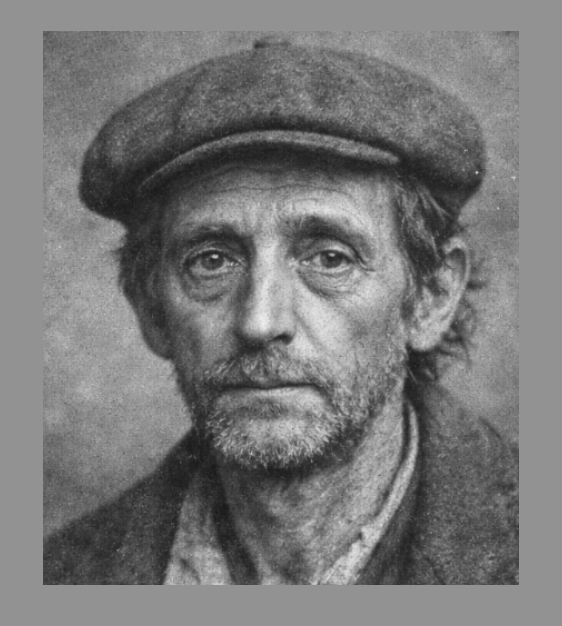
There are no known photos of William Mackenzie in existence. Above is an AI-generated image of his based on facts known about his life.
William Mackenzie entered the world on 3 May 1822, the eldest son in a family whose roots were tied to Speyside farms and the careful bookkeeping of kin. His father, Thomas Mackenzie, lived at Lyne of Carron and would become the family’s representative after the death of an older brother; his mother was Ann Grant, described in family records as a great-granddaughter of Ludovick Grant, linking the household by marriage into one of the best-known local names. William grew up with a brother, John, one year younger than him, and four younger sisters.
By his early twenties, William was making adult decisions on schedule, and on record. On 5 October 1844, at age twenty-two, William married Jane Thomson, daughter of William Thomson of Knockando. The marriage, like many in Speyside, was likely both personal and practical, as it anchored him to another local family while the couple began what would become a large household. Their first child, John, arrived on 28 July 1845. A second son, also William, was born on 9 October 1846. A third child, Thomas, followed as the son who would succeed his father at Dailuaine. Eight more children would be born across the 1850s and early 1860s to William and Jane.
These domestic milestones framed the more public work that placed William Mackenzie into Scotch whisky history. In 1851, he built the Dailuaine distillery at Carron near Aberlour, beside the water supply that would drive the work. “Dailuaine,” explained in later distillery writing, came from Gaelic for “green valley,” a name that fit the landscape and the agricultural logic behind a Speyside plant built by a man often described as a farmer from Carron.
In that era, distilling in Speyside was becoming something more than a local sideline. Demand from blending and urban markets was rising, and the region’s barley, water, and transport prospects made it a natural place for expansion. Building a distillery was not simply putting up a shed and a still; it was staking money, time, and reputation on a business whose product matured slowly and whose profits depended on distribution networks that were still forming. And Dailuaine’s location did matter: Carron sat within reach of the Spey and the growing web of roads and rail projects that would increasingly connect the Highlands to commercial Scotland. By the 1860s, Dailuaine was being served by the Strathspey Railway, a development later remembered as a boost to the distillery’s reach beyond the immediate neighborhood, and there was a dedicated branch connection in this period, reflecting how closely production and transport intertwined. The effect was not merely convenience: rail could turn a distillery from a local manufacturer into a consistent supplier, able to move casks at scale and with predictability, an advantage that would become more important as whisky shifted into a national and then international trade.
For William Mackenzie, the years of building and operating Dailuaine coincided with the busiest years of his family life: children arriving, responsibilities multiplying, and the demands of keeping a new industrial plant functioning in a rural setting. Yet his story, as preserved, is also brief in the way many nineteenth-century business lives were brief: strong on foundational acts, thin on daily texture, and abruptly ended. That end came unexpected, and early. William Mackenzie died on May 1865 at Dailuaine. He was only forty-three.
The distillery did not die with him, but it did not pass cleanly and immediately into a settled, long-term family rhythm either. After his death, Jane leased the distillery to James Fleming, a banker from Aberlour, who worked with Thomas to keep the works going and preserved the value of what William had built, even as many of his children were still young and the family’s future management of the enterprise was not yet secure.
The Mackenzie children’s later lives, as listed in the family’s genealogical record, read like a classical map of nineteenth-century opportunity, risk, and tragedy. John (born 1845) was drowned at sea, leaving no descendants. William went to the West Indies and died there, unmarried, at Paramaribo, Surinam, at the age of 46. The details hint at the far-flung commercial and imperial networks that young Scots sometimes followed. Another son, Alexander, is noted as being in South Africa and unmarried, apparently to finish his life there, while Lewis went to America and settled in California. Even within one Speyside family, the whisky era could stretch a household outward across oceans. Only Thomas, the son marked out as successor, would later take the distillery forward and become the visible MacKenzie in Dailuaine’s expansion years.
In the end, William Mackenzie’s legacy rests on what he did early and decisively: he established the industrial base. Dailuaine would become one of the most significant Speyside producers of its era after it eventually rebuilt and expanded during Thomas’ lifetime. But the first, necessary act was the hardest: choosing the site, committing the capital, and building a working distillery where there had been none. William did that while raising a large family and living in a region whose economic future was being reshaped in the moment by transport, industry, and the changing tastes of whisky drinkers. William did not live to see Dailuaine’s late-Victorian prominence. Still, the distillery’s continued operation after 1865, and the fact that later generations could enlarge and modernize it, began with William Mackenzie’s short, foundational run in the middle of the 19th century.
Sources:
History of the MacKenzies, genealogical record, Alexander MacKenzie, 1894
Whiskipedia, “Dailuaine", scotchwhisky.com/whiskypedia/1835/dailuaine/
whisky.com, “Dailuaine”
Clan Mackenzie Initiative, “Dailuaine - Scotland”, clanmackenzie.org/the-whisky/
Contributed by Tracy McLemore, Fairview, Tennessee USA