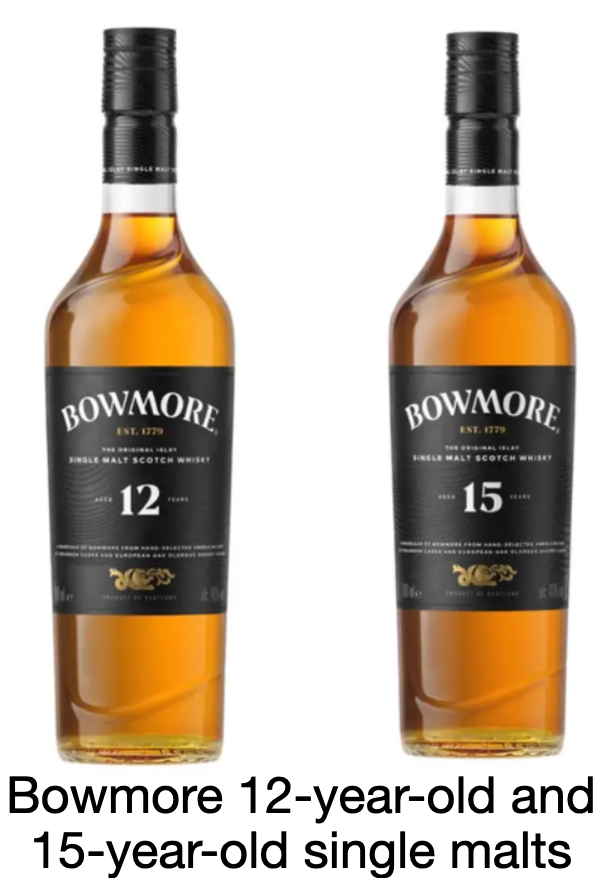
William Mutter


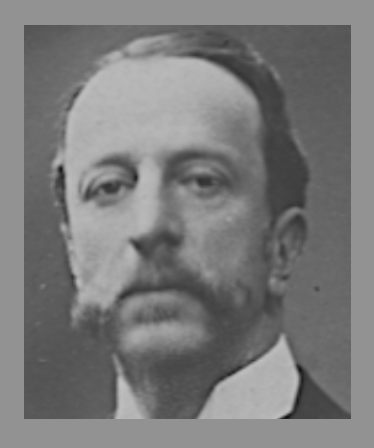
There are no known photographs of William Mutter known to exist. Above
is an AI-generated image of him based on facts known about him life.
William Mutter stands as one of the pivotal figures in the transformation of Bowmore from a modest Islay operation into a commercially significant Scotch whisky distillery. Muttter’s life, closely intertwined with that of his twin brother James, reflects both the opportunities and the upheavals of early 19th-century Scotland, an era shaped by industrial change, agricultural innovation, and the rapid expansion of whisky as a global commodity.
William Mutter was born on 16 September 1805, in Dalkeith, Midlothian, the twin brother of James Mutter. Their early life was marked by both opportunity and hardship. The family’s roots were connected to agriculture and small-scale enterprise, and their upbringing unfolded in a Scotland undergoing profound transformation during the Industrial Revolution.
Tragedy struck early. Their mother, Ann, died giving birth in 1807, and their father died in 1820, leaving the twins effectively orphaned in their mid-teens. Despite these losses, the brothers were raised within an extended family network that included aunts involved in education, so that they were at least exposed to structured learning environments before heading out into the working world as adults. By that point, William’s early vocational path was already clearly defined. He had by then already been apprenticed for two or three years as an ale brewer in Edinburgh, placing him directly within the fermentation trades that would shape his later career. This apprenticeship provided both technical knowledge and familiarity with the commercial realities of alcohol production in a tightly regulated industry.
Also of significance is that the Mutter brothers came of age just when Scotland’s whisky industry was evolving from scattered illicit distillation into a legally regulated, increasingly industrial enterprise. William’s early experience in brewing and James’s in farming allowed the duo to exploit their complementary skills: William gravitated toward production and technical methods, while James became more deeply associated with agricultural and commercial operations. Together, by the 1830s, the brothers had begun to establish themselves as entrepreneurs. Their transition from tenant farmers and tradesmen into distillers represents a broader pattern in Scottish economic life, where individuals leveraged agricultural and brewing knowledge into whisky production as legalization and taxation frameworks stabilized.
In 1837, William and James Mutter jointly acquired the Bowmore distillery on the Isle of Islay. Founded in 1779, Bowmore was already one of Scotland’s oldest distilleries, but it was relatively small in scale at the time of their acquisition. So under the Mutters’ ownership, the distillery entered a defining period of expansion. Over the next decades, William and James transformed Bowmore from a localized operation into a recognized commercial enterprise. Their tenure would ultimately last more than half a century, marking one of the most sustained and influential ownership periods in the distillery’s history.
William Mutter’s role in the distillery was not limited to ownership; he was an active innovator, distiller, and “scientific” farmer, reflecting a mindset oriented toward efficiency and improvement. During his leadership of Bowmore, William expanded production capacity, allowing Bowmore to move beyond a purely regional market, and improved the water supply systems, including the development of a new source that continued to serve the distillery long after his lifetime. He also integrated Bowmore’s transport infrastructure, including the use of a small steamship to import barley and coal and export whisky to Glasgow markets. These changes were not merely incremental; they aligned Bowmore with the broader industrialization of Scotch whisky production. By connecting Islay more directly to mainland markets, the Mutters helped position Bowmore within emerging global trade networks.
It was also in about 1837 that William Mutter married Jane Rankine, and the couple established a family that would continue to be associated with the distillery and its legacy for many years. Their children included a son that they named James after his own twin brother.
In 1851, William withdrew from direct involvement in the distillery, relinquishing his share of Bowmore and living comfortably off the proceeds for the remainder of his life. This transition reflects both financial success and the maturation of the enterprise he helped build. William Mutter spent his later years away from Islay, residing in Ardrossan, on the mainland across the Firth of Clyde. He died on 29 April 1886 at the age of 80. His wife, Jane Rankine Mutter, had predeceased him by about a year. Both William and Jane were buried in Ardrossan.
The impact of William Mutter’s work at Bowmore is enduring. Together with his brother, he reshaped the distillery’s identity during a critical phase in the Scotch whisky industry, and because of his work, Bowmore still operates as one of Scotland’s most successful distilleries. Mutter’s ownership of Bowmore did more than simply expand production; it integrated the distillery into the economic and technological changes awash in the early 19th century. By combining practical skill, commercial awareness, and a willingness to innovate, Mutter helped define the trajectory of Islay whisky at a formative moment in its history. The distillery he nudged into prominence continues to operate more than a century after his death, a direct testament to the durability of William Mutter’s vision, as well as the scale of his contribution.
Sources
Bowmore Distillery official website, “Our Heritage,” www.bowmore.com
The Ardross-man blog, “William Mutter”, 8 February 2017, ardrossman.wordpress.com/tag/william-mutter
ginealach.paretosystems.com | Roy James Mutter, “The Story of W. & J. Mutter’s Bowmore Islay Whisky” (PDF excerpt), Jim McEwan
Islay Info, “Bowmore Distillery”, 20 October 2025, islayinfo.com
Whiskypedia, “Bowmore”, scotchwhisky.com
Akel, The Morrison Bowmore Story, “But the Distilleries Went On”, Ian Buxton, September 2014, www.akel.co.uk
Contributed by Tracy McLemore, Fairview, Tennessee USA