Don Poffenroth


“Dry Fly”
Don Poffenroth was born in 1963 and grew up in Spokane, Washington, a city that would remain the center of his life and career. Decades later, when he had become one of the key figures in American craft distilling, he would still describe himself first as a Spokane local and a fisherman who happened to make spirits.
As a young man, Poffenroth stayed close to home for college, attending Whitworth University in Spokane. After leaving Whitworth, he entered the corporate world, building a long career in marketing within the food industry. Over roughly twenty years he held management and executive-level roles, work that brought professional success, but mounting fatigue.
During these years, fishing never left his life. He and his friend and future business partner, Kent Fleischmann, met while working in the food industry and often took clients on fly-fishing trips as part of their corporate roles. Those trips planted seeds for something very different from the boardroom. On one outing, wading a Western river together, they began talking seriously about how fortunate they were to live and work in such a rich landscape—and how they might build a business that reflected that place.
By the early 2000s, Poffenroth was feeling what he later called “terminal corporate burnout.” When his employer asked him to move to a part of California he considered one of the least appealing places in the world to fish, it became a turning point. Rather than uproot his family and give up the rivers he loved, he walked away from a two-decade corporate career and began to look for a new path.
That path led back to those river conversations with Fleischmann. Drawing on his earlier involvement with a Montana brewery and his exposure to beer and beverage vendors, Poffenroth investigated brewing as a business idea. Vendors he spoke with steered him toward the then-emerging world of craft distilling, and he became convinced that spirits offered the better opportunity. He developed a business plan and asked Fleischmann to invest. Instead, Kent offered to join him as a full partner. Together, they used their retirement funds as primary start-up capital, a structure arranged through a small-business financing firm.
In 2007, Dry Fly Distilling officially launched in Spokane, co-founded by Poffenroth and Fleischmann. It was licensed as the first legal distillery in Washington State since Prohibition, an early entry in what would become a nationwide craft-spirits boom. From the outset, Poffenroth insisted on a tightly local, grain-to-glass model: the distillery sourced virtually all of its grain and botanicals from farms within about thirty miles of Spokane, and used water from a local aquifer.
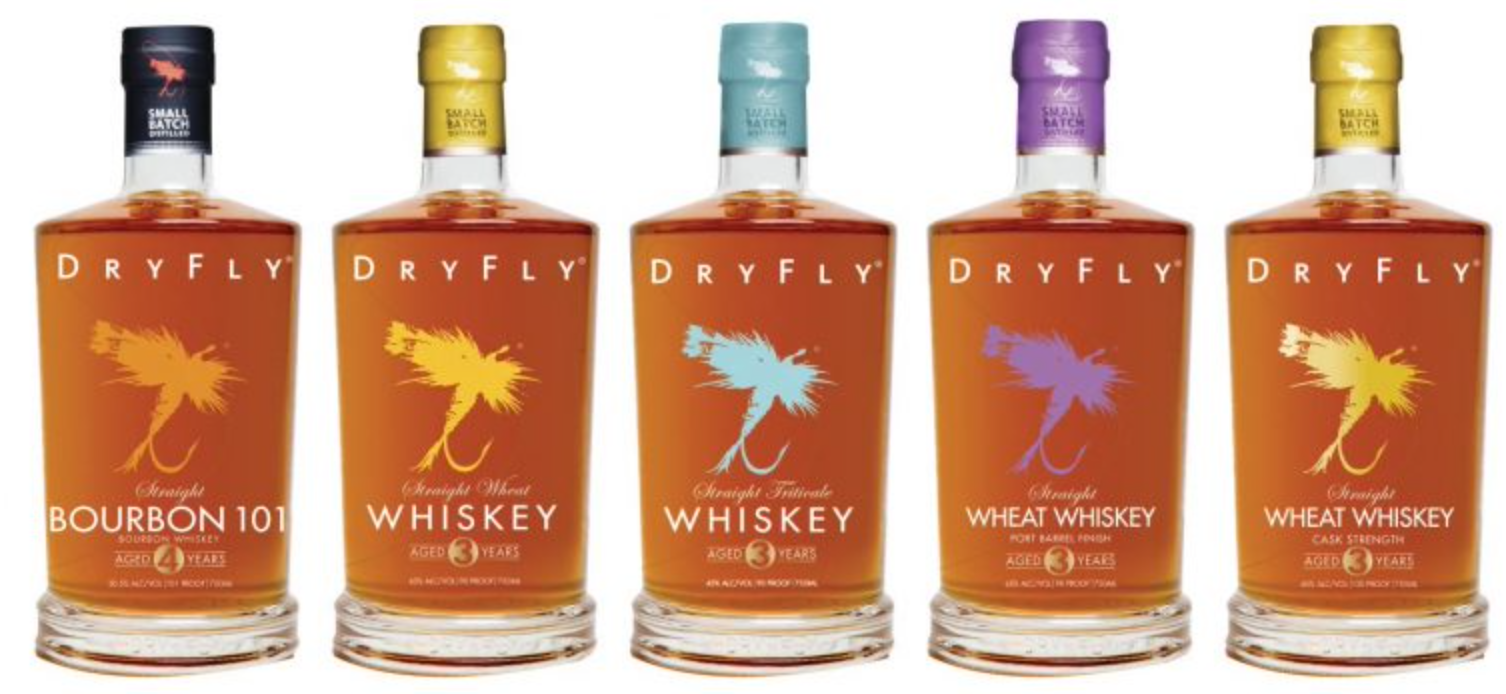
Dry Fly began with clear spirits, later adding wheat whiskey, bourbon, and a distinctive straight triticale whiskey made from a rye-wheat hybrid. Poffenroth and his team worked with local farmers and researchers to develop triticale varieties suited to their needs, emphasizing long-term relationships with growers whose families had farmed the region for generations.As the whiskies aged, Dry Fly also became known for its distilling school, hosted at the Spokane facility and run in collaboration with Christian Carl, which helped train dozens of future craft distillers across North America.
As the product line expanded, Dry Fly itself outgrew its original facility. Starting in 2020, the company began transforming part of The Spokesman-Review’s former press building in downtown Spokane into a combined production plant, tasting room, restaurant, and event space. By 2021–2022, the new 19,000-square-foot location on Riverside Avenue was fully operational, significantly increasing capacity for both bottled spirits and canned cocktails.
In August 2024, a new chapter began when Caymus Vineyards, the Napa Valley winery owned by the Wagner family, acquired a majority stake in Dry Fly. Poffenroth remained involved as founder and a key voice in the partnership, describing the Wagner family as long-term collaborators whose barrels had already been used to finish Dry Fly wheat whiskey. The deal was presented as a way to expand Dry Fly’s national footprint while preserving its Spokane base and production methods.
Don is married to Cheryl Poffenroth and is still based in Spokane, where the now semi-retired distiller continues to be associated with the distillery he founded. From a boy growing up in Spokane to a retired founder still deeply attached to both rivers and grain fields, Don Poffenroth has built a career that loops back to where it began. Dry Fly’s bottles, bearing the silhouette of a classic dry fly, now sit on shelves far beyond Spokane. But the story behind them remains rooted in one person’s decision to trade a corporate future for a locally grounded, grain-to-glass distillery that reflects the landscape he calls home.
Sources:
Dry Fly Distilling website/Our Story, dryflydistilling.com
Spokesman-Review (Spokane, WA), Opinion by Don Poffenroth, February 14, 2023, spokesman.com
SIP Magazine, “Getting to Know: Dry Fly Distilling” , Sophia Lizardi, October 21, 2015
Kysela Pere et Fils, “Dry Fly Distillery profile”, kysela.com
Fly Life Magazine, “Dry Fly Distilling: a convergence of passions”, Andrew Derr, May 29, 2019, flylifemagazine.com
Bourbon Fellowship blog, “Dry Fly Whiskey Is a Real Catch”, bourbonfellowship.com
The Fly Box LLC, “Distilled with Intention…”, theflyboxllc.com
Spotify podcast, “…MIP Podcast:Don Poffenroth”, April 9, 2024, creators.spotify.com
Contributed by Tracy McLemore, Fairview, Tennessee