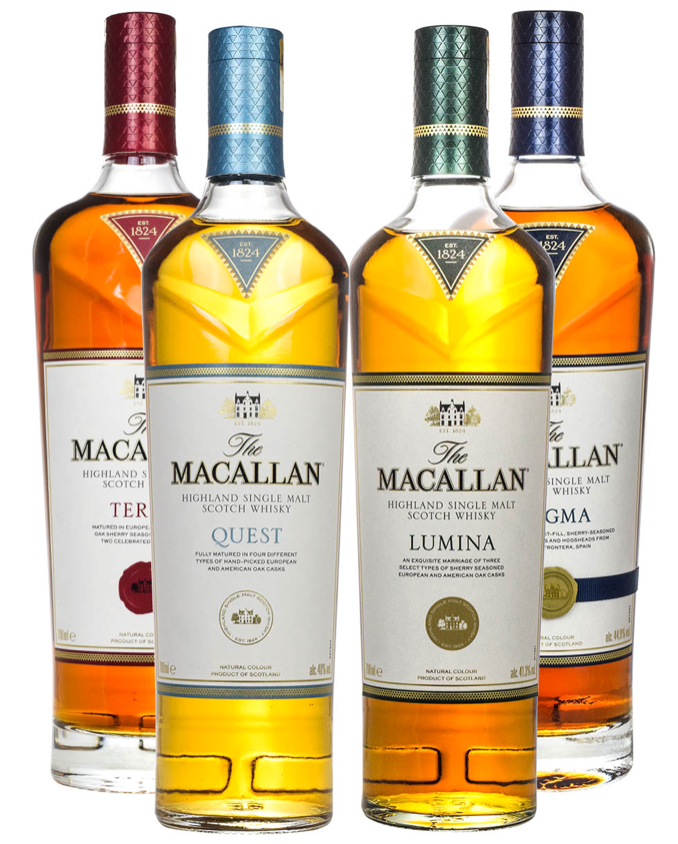
Willie Phillips


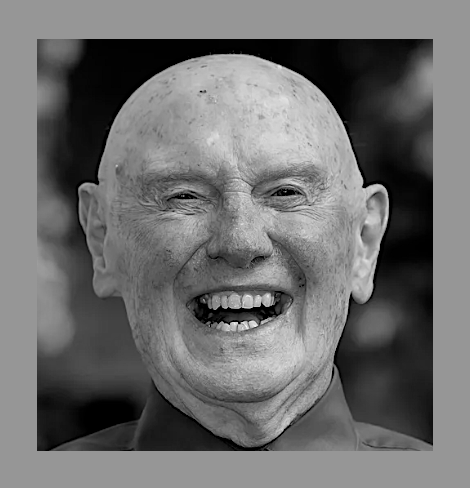
Willie Phillips occupies a distinctive place in the history of Scotch whisky. Although he is frequently overshadowed by more publicly celebrated master blenders and distillery founders, few individuals played a greater role in transforming The Macallan from a respected but small Speyside malt into one of the world's most recognized luxury whisky brands. During the difficult decades of the 1970s, 1980s, and early 1990s, Phillips skillfully guided The Macallan through a period when the entire Scotch whisky industry faced severe contraction and uncertainty. Yet by the time Phillips left the firm in 1996, The Macallan had not only survived, but had become one of the most admired single malts in the whisky world.
Phillips was born in the late 1940s in Kilmarnock, Ayrshire. His childhood was spent in a community where whisky was a visible part of daily life. Kilmarnock was then the historic home of Johnnie Walker, and whisky production formed an important component of the local economy. His great-grandfather worked for Johnnie Walker, while one of his father's friends served as an exciseman. Those early experiences exposed him to the whisky trade long before he entered it professionally. Looking back on his childhood, Phillips remarked that whisky seemed to be "in his soul."
Yet Phillips’ own initial career path did not lead directly into distilling. In 1970 he was employed as a management accountant with Scottish & Newcastle, the major brewing and drinks company. In that role he worked with the Mackinlay-McPherson whisky interests. Although his understanding of whisky production was still limited, the position introduced him to the economics of the industry. He later recalled his bewilderment when distilling executives repeatedly requested funds to purchase wood for casks, The experience provided an early education in the complexities of Scotch whisky production.
One of the most significant turning points in Phillips' life occurred entirely by happenstance. While participating in a businessmen's indoor football league in Edinburgh, he became involved in a friendly argument over a sporting matter. A fellow participant later left a newspaper clipping on Phillips' desk to prove his point. After acknowledging that he had been mistaken, Phillips turned the clipping over before discarding it and noticed a job advertisement seeking an accountant for The Macallan Distillers Ltd. The ad would ultimately alter the course of his career.
When Phillips joined The Macallan in 1972, the distillery was dramatically different from the global powerhouse it would later become. The company primarily sold spirit to blending houses and had only a modest reputation as a single malt. In fact, Phillips later remembered visiting bars where Macallan was treated merely as an inexpensive optic whisky rather than a prestigious malt. Despite its limited public profile, he immediately recognized the exceptional quality of the spirit being produced at Easter Elchies. As the first accountant ever employed by the company, Phillips quickly developed a deep attachment to the business, the blend and the brand.
A pivotal figure in Phillips' story was Peter Shiach, the managing director of The Macallan. When Shiach received a terminal cancer diagnosis, he quietly began preparing Phillips to succeed him. According to Phillips, Shiach eventually told him that Macallan possessed the potential to become known throughout the world and entrusted him with the responsibility of making that vision a reality. After Shiach's death, Phillips inherited not merely a management position but a mission. But the timing could hardly have been more challenging. The Scotch whisky industry entered a prolonged downturn from the 1970s through to the early 1980s. Distilleries closed, warehouses overflowed with unsold whisky, and many companies focused on survival rather than expansion. Phillips took a different approach. He believed The Macallan's spirit was already exceptional and saw no need to alter its fundamental character. Instead, he concentrated on introducing that whisky to new audiences around the world. His philosophy was straightforward: maintain quality and teach consumers why the whisky deserved attention.
During approximately eighteen years as managing director and twenty-three years overall in leadership roles associated with The Macallan, Phillips helped transform the distillery's reputation. He emphasized sherry-seasoned oak casks, traditional production methods, and a commitment to quality at a time when many competitors were pursuing volume. Under his leadership, Macallan gained increasing recognition in export markets and gradually established itself as one of the benchmark single malts of Scotland. Phillips later insisted that the achievement belonged to the entire Macallan team rather than to one individual, but industry observers widely credit his leadership as instrumental in the brand's rise.
His tenure ended in 1996 following changes in corporate ownership. Phillips later admitted that leaving The Macallan was deeply emotional. He described the company as having become his "baby" and acknowledged that his departure brought many tears. The intensity of that reaction reflected more than two decades of personal investment in building the distillery's reputation. But retirement from Macallan did not mean Phillips’ retirement from whisky. Soon afterward, Richard Gordon invited Phillips to become chairman of the Scotch Malt Whisky Society. Already a long-time member of the organization, Phillips accepted and spent roughly a decade helping guide one of Scotland's most influential independent bottling institutions. He emphasized quality, hospitality, and member experience, principles that mirrored the philosophy he had championed at Macallan.
In later years Phillips continued contributing to Scotch whisky as a non-executive director of the Isle of Harris Distillery and as chairman of Ardgowan Distillery. These roles allowed him to share decades of accumulated knowledge with a new generation of whisky makers. Throughout his career, he remained proud of Scotch whisky's place in Scottish culture and identity. He frequently described himself as fortunate to have spent his life working with a product that represented Scotland on the world stage.
Willie Phillips' legacy rests not on creating a new whisky recipe or inventing a revolutionary production process. Instead, his achievement was recognizing the greatness already present in The Macallan and persuading the world to appreciate it. Few whisky executives can claim to have altered the trajectory of a major Scotch brand so profoundly. By preserving quality, championing authenticity, and relentlessly promoting a Speyside malt he loved, Phillips helped build the foundation upon which The Macallan's modern global reputation still stands today.
Sources:
Scotch Malt Whisky Society, “Industry Insider: Willie Phillips”, smws.com
Whisky Talk Podcast, “The Man Who Brought The Macallan to the World Stage | Willie Phillips”, 18 November 2025, podcasts.apple.com
Craft Distillers, “Story – The Exceptional”, craftdistillers.com
YouTube, “When Macallan Was Actually Hard to Find”,YouTube Shorts, Whisky Talk channel.
Contributed by Tracy McLemore, Fairview, Tennessee USA