

George Conrad Reifel

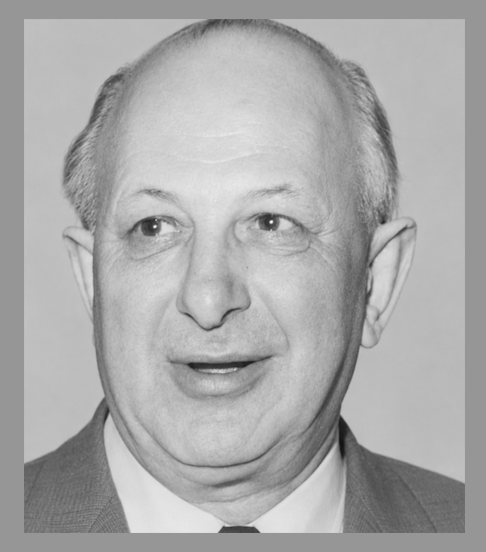
George Conrad Reifel was born on May 15, 1893, the first child of Henry Reifel and Annie Elizabeth Brown Reifel. By the time of George’s birth, the Reifels were already one of Canada's pioneering brewing families. George’s father had emigrated from Germany to North America in the early 1880s after training as a brewer in Europe. Settling in British Columbia in 1888, he recognized the opportunities created by the province's rapidly growing population. In 1889, Henry and his brother established the Victoria Brewing and Ice Company in Victoria, before expanding to Vancouver in the 1890s. Soon renamed the Mainland Brewery, it eventually became one of the province's largest brewing enterprises. It was in that environment that George grew up in a well-to-do household, immersed in this family’s burgeoning business, and learning brewing science from an early age under his father's guidance.
On October 23, 1917, Reifel married Annie Alma Lucy Barnes. With World War I’s alcohol restrictions and then the onset of American Prohibition, the largest source of his company’s legal revenue was slowly evaporating. So the young Reifel looked abroad for opportunities for his family. Soon, George, his wife and three small children, Audry, George Henry and Alma Jane, as well as his father, Henry, traveled to Japan to help establish the Anglo-Japanese Brewing Company. There, George served as a brewer and technical specialist for the company, helping to organize brewing operations and transfer Western brewing methods to the new enterprise. Although the venture was principally a brewing company rather than a whisky distillery, Reifel's years in Japan proved invaluable. He became familiar with large-scale fermentation techniques, yeast management, and grain processing under very different conditions than those found in Canada.
During the late 1920’s, Reifel became interested in an island on the southwest Delta of British Columbia, then known as Smoky Tom Island. Close to the mouth of the Fraser River, it was a haven for birds and wildlife. A big game enthusiast since childhood, Reifel had traveled extensively throughout British Columbia and the Yukon on hunting trips, often taking son George Henry along. He recognized the island as an ideal retreat for indulging in his hobby of hunting and preserving game birds. In 1927, Reifel purchased a large parcel of land on the island, and over the next few years he installed dams and dikes where the Fraser River split into three narrow channels. He then built the family home on the property in 1929, and when the family ultimately returned from Japan, they occupied their new home there.
Meanwhile, during American Prohibition, British Columbia became one of the principal legal sources of liquor ultimately destined for the United States. Prohibition had ended in British Columbia in 1921, allowing breweries and distilleries to operate legally under Canadian law, though manufacture and sale remained illegal south of the border. Nevertheless, during that time, the Reifel family expanded its brewing interests and developed a substantial export business. Their vessels, including the famous Malahat, transported liquor into international waters off the Pacific coast, where it was then sold to American intermediaries. Those purchasers then allegedly smuggled the liquor into California and other western states. By remaining outside U.S. territorial waters, the Reifels later maintained that their transactions were entirely legal under Canadian law, thus beyond American jurisdiction.
Meanwhile, during American Prohibition, British Columbia became one of the principal legal sources of liquor ultimately destined for the United States. Prohibition had ended in British Columbia in 1921, allowing breweries and distilleries to operate legally under Canadian law, though manufacture and sale remained illegal south of the border. Nevertheless, during that time, the Reifel family expanded its brewing interests and developed a substantial export business. Their vessels, including the famous Malahat, transported liquor into international waters off the Pacific coast, where it was then sold to American intermediaries. Those purchasers then allegedly smuggled the liquor into California and other western states. By remaining outside U.S. territorial waters, the Reifels later maintained that their transactions were entirely legal under Canadian law, thus beyond American jurisdiction.
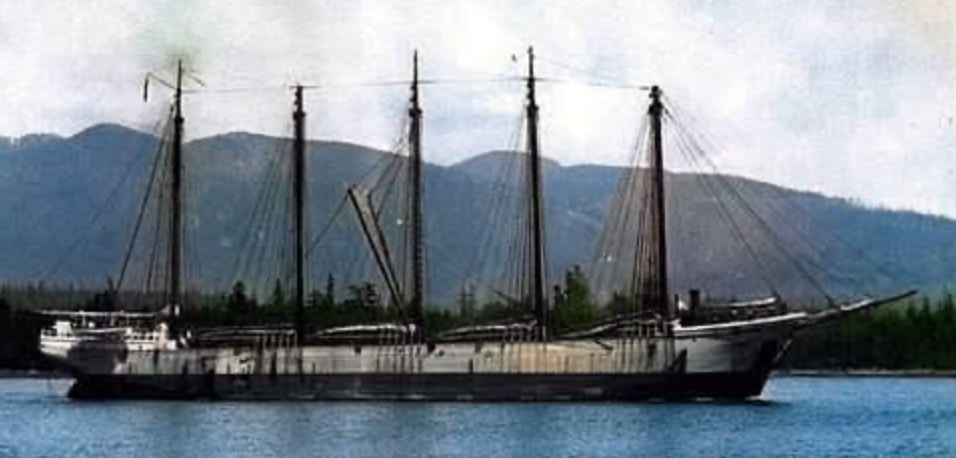
“The Malahat” schooner, 1924
Nevertheless, when Prohibition ended in December 1933, the United States government sought to recover customs duties and internal revenue taxes on the enormous quantities of liquor that had entered the country illegally during the previous thirteen years. It brought civil proceedings against several Canadian liquor companies and their principals, including George C. Reifel and the companies associated with his British Columbia operations. The government initially asserted claims totaling approximately $17 million against the Reifel interests, a staggering sum during the depths of the Great Depression, equivalent to several hundred million dollars today. The assessment represented alleged unpaid duties, taxes, and statutory penalties. Contemporary newspapers sensationalizing the story referred to it as a "$17 million fine," although legally it was nothing more than a civil tax claim.
Fortunately for the Reifels, in 1934, a Federal court rejected the government's sweeping theory of liability. The court concluded that the government had failed to establish the necessary legal basis for imposing the enormous tax assessment on Reifel and the other defendants. Consequently, the government's effort to collect their taxes collapsed, while George C. Reifel escaped what would have been one of the largest financial judgments ever sought against a Canadian liquor producer arising from Prohibition. The decision effectively confirmed that, however morally questionable the bootlegging trade appeared, proving legal liability against Canadian manufacturers who sold their products outside U.S. territory was considerably more difficult than federal prosecutors had anticipated.
Meanwhile, George C. Reifel’s career in spirits was still blossoming. In 1946, Reifel was recruited by Canadian oilmen Frank McMahon and Max Bell to become the founding master distiller and third partner of Alberta Distillers. Neither Bell nor McMahon had any practical experience designing or operating a whisky distillery, but what they possessed was capital, entrepreneurial ambition, and a belief that Alberta could support a major distilling industry. They needed someone who understood fermentation, distillation, and plant design at a professional level. By the time they tapped the then 53-year-old Reifel for the job, he had extensive practical fermentation knowledge and unique process expertise.
Reifel quickly set about determining how to efficiently ferment and distill mash made primarily from Alberta rye. That grain presented particular technical challenges. Unlike corn or barley, unmalted rye is exceedingly difficult to mash, ferment, and distill efficiently because of its high gum content and viscosity. Yet once under Reifel’s guidance, Alberta Distillers soon developed into the world's best-known producer of 100 percent rye whisky.
In addition to his distilling prowess, George’s later life and extraordinary wealth were well-documented. He often travelled with his wife, and was influential in Vancouver’s music scene, building and owning the Commodore Ballroom, and the Vogue and Studio Theatres. Like many prosperous businessmen of his era, Reifel frequently contributed to local charitable campaigns and fundraisers. Lavish events often included concerts, balls, theatrical performances, and musical entertainments held at one of his impressive Vancouver residences. Perhaps the most well-known of these was “Casa Mia.” Completed in 1932, Casa Mia was the city’s leading example of the Spanish Colonial Revival style. The home had its own ball room, and Reifel brought in Disney artists to draw illustrations of Snow White and the Seven Dwarfs on the walls of his daughter’s playroom. A major architectural statement then, it remains a landmark intact estate home to this day.
Today, Alberta Distillers remains one of Canada's most important whisky producers and one of the few large distilleries that continues to specialize in 100 percent rye whisky. Now owned by Suntory Global Spirits, the Calgary distillery produces well-known brands such as Alberta Premium while also supplying rye whisky for blending and export. Despite changes in ownership since George C. Reifel's day, the company's identity is still built around the same challenge that confronted its founders in 1946: transforming prairie rye, one of the most difficult grains to distill consistently, into a refined, flavorful whisky. George C. Reifel's influence extends well beyond his role as a founder at Alberta Distillers. He brought decades of brewing and distilling experience at a time when few people had mastered large-scale rye distillation. His insistence on careful grain selection, precise fermentation, and patient distillation established a production philosophy that remains central to the distillery's operations. Alberta Distillers itself continues to describe Reifel as the "legendary master distiller" who laid the foundations of its craft, emphasizing that the company's commitment to local ingredients, meticulous production, and exceptional rye flavor.
George Conrad Reifel died on July 20, 1958, leaving an estate worth tens of millions of dollars. Yet for Reifel, his measure of success was not in money, but in the durability of the enterprise he helped create. Although his career was not without controversy, his reputation within the Canadian spirits industry ultimately rested on his technical expertise, his insistence on quality, and his willingness to pursue unconventional methods.
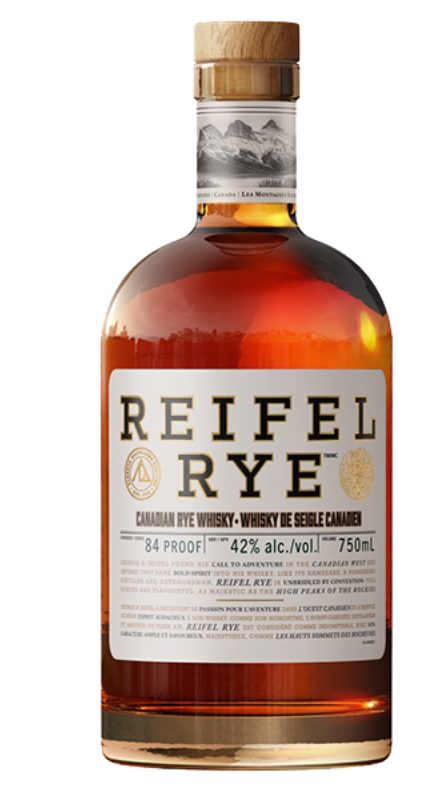
Perhaps the clearest acknowledgment of Reifel’s lasting legacy came in 2022 with the introduction of Alberta Distillers Reifel Rye, its first entirely new rye whisky brand in decades. Rather than merely placing his name on a bottle, Alberta Distillers designed the whisky as an expression of the qualities Reifel championed: high prairie rye content, complex profile, and unique, spice-forward character—not at all unlike the whisky’s first creator himself.
Perhaps the clearest acknowledgment of Reifel’s lasting legacy came in 2022 with the introduction of Alberta Distillers Reifel Rye, its first entirely new rye whisky brand in decades. Rather than merely placing his name on a bottle, Alberta Distillers designed the whisky as an expression of the qualities Reifel championed: high prairie rye content, complex profile, and unique, spice-forward character—not at all unlike the whisky’s first creator himself.
Sources:
Vancouver Sun (AP), “Liquor Smuggling Charged”, July 7, 1934
Find A Grave (ancestry), “George Conrad Reifel (1893-1958)”, findagrave.com
The Beer Life of Brian (blog), “George Conrad Reifel”, B. Westcott, February 5, 2007, brianbeerblogspot.com
Contributed by Tracy McLemore, Fairview, Tennessee USA