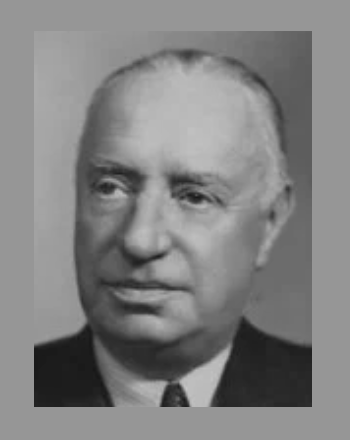
Sir Henry Ross

Henry James Ross was born on 14 March 1893 at Cluny Gardens, a fashionable district of Edinburgh built specifically for the prosperous merchant class. Ross’ mother was Annie Gilmour Pollock Dalglish and his father was Distillers Company Ltd (DCL)pioneerWilliam Henry Ross.
Henry James had a well-to-do and comfortable but unremarkable home life that stretched well into adulthood. When he was 30, on November 21, 1923, Ross married Lady Blanche Newboult, in Edinburgh, and soon they had two sons, Cecil and Kenneth. Uncommon for his class, Henry never attended university, instead he rose through the corporate ranks at his father’s company, eventually replacing his father as Chairmen of DCL, Johnnie Walker’s parentcompany, in 1948.
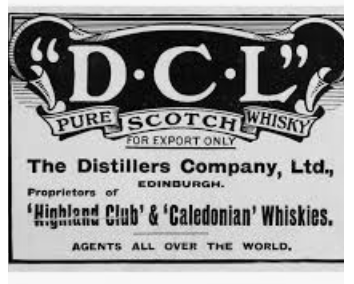
By the time Ross assumed the chairmanship of DCL, the Scotch whisky industry was emerging from wartime restriction, austerity rationing, and disrupted global trade. DCL itself had become one of the most important consolidating forces in the U.K., controlling a wide portfolio of distilleries and, crucially, maintaining an influential stake in blended scotch production. Its crown jewel was John Walker & Sons, the house behind Johnnie Walker Scotch. The brand had already achieved international recognition by the interwar period, but the postwar decade required careful rebuilding of supply chains, maturation stocks, and export relationships.
The challenge facing DCL leadership was not simply marketing, but physical reality. Whisky is a deferred product; wartime production limits meant that in the late 1940s and early 1950s, supply of well-aged spirit was structurally tight. Ross’s role, therefore, was less about brandinvention and more about allocation discipline; that is, ensuring that scarce maturestocks were deployed in a way that preserved Johnnie Walker’s international reputation for conformity, while keeping the loyal customer base well-supplied in high-quality, consistent whisky.
Under Ross’s oversight, DCL continued refining its vertically integrated structure, balancing malt and grain production across its network to stabilize blended Scotch output. Johnnie Walker, as the flagship blend,benefited from this disciplined allocation model more than most. The brand’s identity, already well-defined by its “Striding Man” emblem and its color-coded range, was increasingly supported by systematic blending consistency rather than regional variability. While the public-facing marketing would evolve through agencies and brand managers, Ross’s contribution sat upstream: governance of supply, stockpolicy, and long-term maturationplanning.
As the 1950s dawned, the era was marked by a critical acceleration in global Scotch exports, particularly to North America. Ross and DCL’s leadership navigated shifting tariff environments and postwar trade liberalization. Johnnie Walker’s positioning as a premium, export-oriented blend aligned naturally with these conditions. In this period, the brand’s Red Label became increasingly associated with accessible international consumption, while Black Labelconsolidated its reputation as a more mature, complex blend for established whisky markets. These distinctions were not accidental marketing flourishes alone; they were reinforced by DCL’s ability to allocate aged stock appropriately across tiers, a process governed at the highest corporate level.
Within the internal culture of DCL, the chairman’s role was not narrowly operational but rather integrative. Ross presided over a complex federation of distilling interests, in which Johnnie Walker functioned as both a commercial engine and a reputational standard-bearer. The relationship between Ross and the Johnnie Walker organization can therefore be understood as one of structural guardianship. The Walker brand, having already achieved global recognition before his tenure, required protection more than reinvention. Ross’s era ensured that the brand did not lose coherence during a period of industrial normalization after the Second World War. In that sense, his influence is best measured, not in stylistic changes to the whisky itself, but in the stability of supply, consistency of blending philosophy, and expansion capacity that defined the 1950s.
During his tenure as chairman at DCL, Ross fiercely and aggressively neutralized competitivethreats from rival firms. As an example, when the Canadian corporation Seagram attempted to covertly purchase neutral grain supplier Highland Distilleries via an intermediary, Ross firmly indicated that DCL would counter any bids. The move successfully forced the much smaller Seagram board to withdraw their offer, preserving DCL’s supreme control over the Scotch whisky market. Overall, Ross maintained a conflicting relationship with the North Americans. While DCL required the enormous sales that the market provided, the staunch Scot constantly fended off buyouts and takeovers of grain whisky suppliers from both the Canadians and the Americans, believing, probably correctly, that non-Scottish acquisitions might devastateJohnnie Walker, at the very least disrupting consistency and driving up prices.
Also, in order to manage shortages and prevent the dilution of their premium brands, in the early 1950s, Ross placed strict quotas on the domestic sale of Johnnie Walker Black Label. It became a supply restriction that remained in place until 1962, and had the unintended effect of making the expression even more desirable, and therefore, more profitable. To further shore up the Johnnie Walker franchise, Ross also introduced complementaryblends, for instance, John Barr, aimed at holding rising competition at bay in lower price segments.
By the time Ross’s chairmanship concluded in 1958, DCL had strengthened its position as one of the dominant forces in Scotch whisky production, and Johnnie Walker stood as the mostwidely recognized scotch brand in the world. The groundwork laid during Ross’ tenure would later support even more aggressive global branding and corporate consolidation in the second half of the 20th century.
Sir Henry James Ross died on April 4, 1973. To this day he remains, in historical terms, a figure defined more by institutional function than by personal narrative. In that sense, Ross represents a type of industrial leader increasingly rare in modern corporate history: the executive whose identity is inseparable from the institutional structure he governed, and whose legacy is embedded not in personalmythmaking, but in the operational continuity of commercially important global brands like Johnnie Walker.
Sources:
Distillers Company Limited Annual Reports (1948–1958), National Records of Scotland, nrscotland.gov.uk
Whiskypedia, A Gazetteer of Scotch Whisky, Birlinn Ltd, Charles MacLean, birlinn.co.uk
Diageo heritage overview: Johnnie Walker brand history page, diageo.com
Scotch Whisky Association historical industry summaries, scotch-whisky.org.uk
Whisky Magazine Issue 203, “Strong foundations… Distillers Company Limited”, Mark Jennings, 06 January 2025
Headshot image taken from a portrait at the National Portrait Gallery, 1952
Contributed by Tracy McLemore, Fairview, Tennessee USA