James Rankine

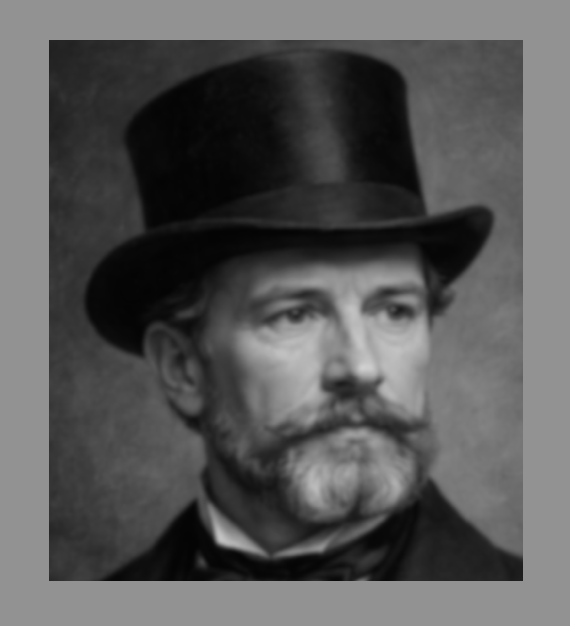
There are no known photographs of James Rankine known to exist. Above
is an AI-generated image of him based on facts known about his life.
James Rankine entered the whisky story as a townsman whose livelihood depended on trade, margins, and movement. He understood buying and selling, supply and demand, and, critically, the commercial power of transport. In early-19th-century Scotland, that understanding mattered as much as skill at the still.
Rankine lived and worked in the Falkirk district of Stirlingshire, a region transformed by industry well before the Victorian whisky boom. The opening of the Forth and Clyde Canal in 1790 created one of the most important commercial arteries in the country, linking the North Sea to the Atlantic. By the early 1800s, the canal had turned places like Camelon, on the edge of Falkirk, into active industrial communities supporting nail-making, timber yards, coal traffic, and warehousing. Whisky barrels, bulky and valuable, moved especially well by water. By the time James Rankine appears clearly in the historical record in 1840, he was already established as a grocer, wine merchant, and tea blender. These were not incidental occupations. Grocery and wine trading demanded reliable sourcing, consistency of quality, and an ability to meet customer expectations repeatedly: skills directly transferable to whisky production at a commercial scale. Tea blending in particular required precision and a sensitivity to flavor balance, traits that later defined the whisky made under Rankine’s ownership.
Little survives about Rankine’s early life. His exact birthdate is unrecorded, though he is generally believed to have been born around 1796. What is documented is his marriage in 1819 to Catherine Learmonth, a union that anchors him firmly within the settled merchant class of the region. The couple had at least one son, Robert, whose later role at Rosebank would ensure the family’s lasting place in Scotch whisky history.
In 1840, Rankine acquired existing maltings on the East side of the canal at Camelon and converted them into a new distillery that he named Rosebank, The decision was both practical and forward-looking. The canal allowed barley, coal, and casks to arrive efficiently, while finished spirit could be shipped directly to Glasgow’s blending houses and onward to export markets. Road transport could not compete with the canal’s economy or reliability. From its earliest years, Rosebank was physically and operationally shaped by logistics. Maltings and warehouses stood on one side of the canal, production buildings on the other, creating a two-site operation that functioned as a single industrial system. This layout was unusual but effective, reflecting Rankine’s merchant mindset: whisky was not merely made, it was moved. Rosebank expanded within its first five years of operation, evidence that Rankine had found a receptive market quickly. This was a period when Lowland whisky was in high demand among blenders, prized for its lightness and ability to soften and elevate heavier Highland and Island malts. Rankine’s distillery entered that market at exactly the right moment.
Rosebank’s whisky developed a reputation for a delicate, floral character that stood apart even within the Lowlands. The distillery employed triple distillation, still rare in Scotland, and paired it with traditional worm-tub condensers. This combination helped produce a spirit noted for elegance without sacrificing structure, a profile that blenders valued highly.
For much of the 19th century, Rosebank’s output flowed primarily into blends rather than appearing as a widely bottled single malt, as was typical of the era. Single malt bottlings were uncommon, and Rosebank’s commercial importance lay in its role as a “top-dressing” malt, adding finesse and aroma to blended Scotch whiskies sold across the Empire. Its reputation was built within the trade long before the modern single-malt market emerged.
James Rankine died on 2 September 1859, four years after the death of his wife Catherine. Like many industrial founders of his generation, he left behind a substantial enterprise but relatively little recorded domestic detail. His significance lies not in a dramatic personal narrative, but in decisions that proved durable: site selection, production style, and an insistence on consistency. Those decisions allowed Rosebank to flourish after his death under the leadership of his son.
Robert W. Rankine assumed control of the distillery and expanded it dramatically. In 1861, he purchased the neighboring Camelon Distillery after it fell into bankruptcy, demolishing most of the old structures to make way for new maltings and warehouses. In 1864, he oversaw a major rebuilding and modernization of Rosebank, formalizing the canal-divided, two-site layout that became one of the distillery’s defining features. A dedicated swing bridge was constructed to move malt and casks efficiently between the sites. Under Robert’s management, Rosebank’s whisky reached international markets, with shipments recorded as far away as Australia by the 1880s. Its reputation earned it the enduring nickname “King of the Lowlands,” a title reflecting trade esteem rather than marketing flourish. In 1894, Robert formally incorporated the Rosebank Distillery Company, Ltd. The distillery remained under family control until 1914, when it became a founding member of Scottish Malt Distillers, ensuring Rosebank’s place within the emerging structure of the modern Scotch whisky industry.
James Rankine’s legacy is not one of invention, but of recognition. He recognized the value of place, of transport, and of producing a spirit suited to its market. He built Rosebank not as a curiosity, but as a working distillery designed to endure. That it continued to matter through ownership changes, closure, and eventual revival, speaks to the soundness of those original choices. The modern revival of Rosebank does not rewrite its history, it confirms it. The distillery’s story began in 1840 with a Falkirk merchant who understood that whisky’s future depended as much on canals and customers as on copper and barley, and who built accordingly.
Sources:
Falkirk Local History Society (PDF),”Falkirk West Churchyard”, Geoff B. Bailey
Find a Grave, “James Rankine”, findagrave.com
Historic Environment Scotland, “Listing record for Former Rosebank Distillery (LB44184)”, portal.historicenvironment.scot
Falkirk Local History Society, “A History of Camelon”, falkirklocalhistory.club
Whisky Advocate, “Rosebank Back in Bloom…", Jonny McCormick, 14 June 2024
Decanter, “Rosebank Restarts Production”, Peter Ranscombe, July 20, 2023
Rosebank official distillery website, “Our Beginnings”, rosebank.com
Contributed by Tracy McLemore, Fairview, Tennessee USA