John Robertson

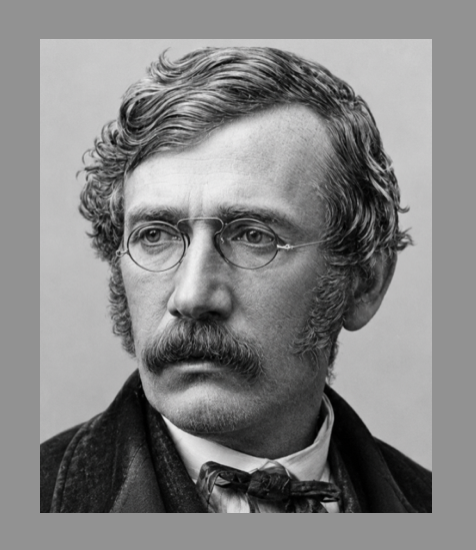
The above image of John Robertson is an AI-created depiction based on facts known about his life.
As founder of the Speyside whisky distillery Coleburn, John Robertson helped shape a whisky operation that, although often overshadowed by larger neighbors, quickly became well-respected within the blending industry for both its quality spirit and its experimental approach to production. The surviving historical record on Robertson himself is basic compared with the documentation available for some larger whisky dynasties, but enough survives to trace the outline of a smart businessman whose career paralleled the rapid industrialization of Scotch whisky in Victorian Scotland.
Robertson was born in 1860 to his father, also named John Robertson, and his mother, Mary. The Robinsons had two boys and two girls in total, of whom John was the eldest. All the Robertson men were associated with the Dundee blending firm John Robertson & Son Ltd., which had been founded by John the elder’s father in 1838. Through that company, Coleburn Distillery in Morayshire was established in 1897. As this area south of Elgin was known as a center of charcoal production at the time, the distillery’s name originated. At the time, Moray was also a major commercial center with strong shipping and trading links. Consequently, many blending houses flourished there, concurrent with surging demand for blended Scotch whisky across Britain. Blenders increasingly sought secure supplies of malt whisky for their own brands, and many, such as Robertson began investing directly in their own distilleries. Like many whisky merchants of the era, Robertson’s work would have required detailed knowledge of spirit quality, maturation, transport logistics, and the increasingly competitive export market for Scotch whisky.
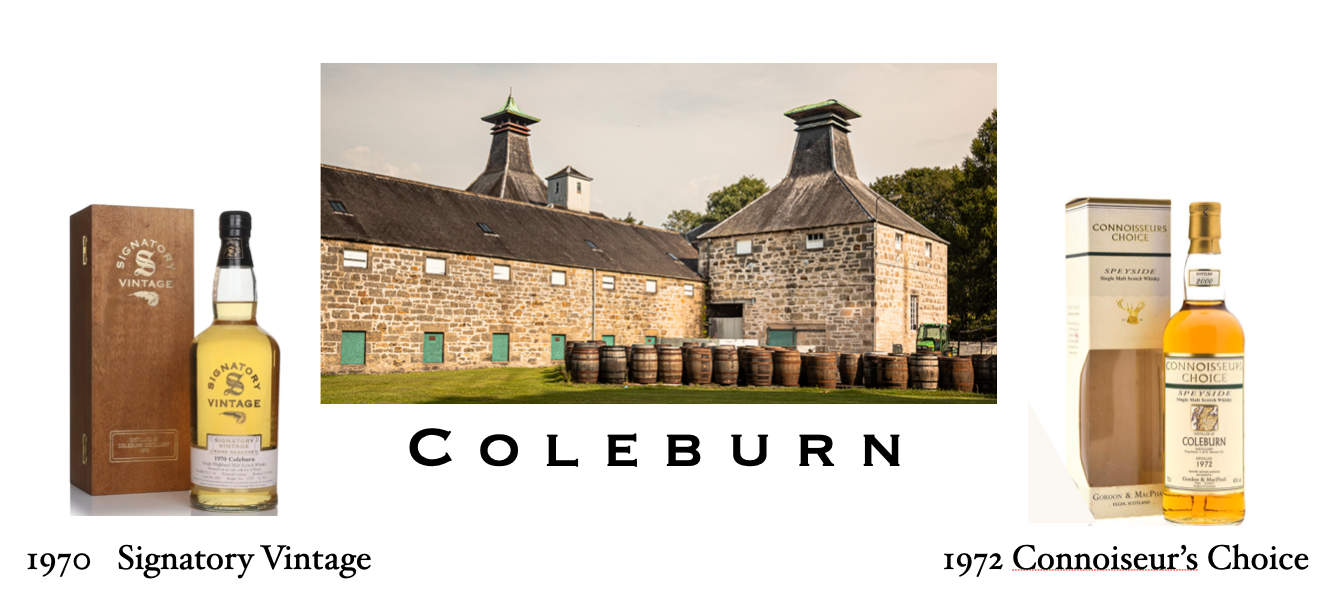
The site that Robertson determined suitable for Coleburn was strategically chosen near Longmorn, south of Elgin in Speyside, an area already famous for malt whisky production. The location offered access to clean water supplies from the Glen Burn. It also provided excellent railway connections through the Great North of Scotland railway, a transportation link that was critical for moving coal, barley, casks, and mature whisky throughout Scotland and beyond.
For the design of Coleburn, Robertson turned to the distinguished distillery architect Charles Doig, whose pagoda-roofed kiln ventilators became one of the defining visual symbols of Scotch whisky distilling. Doig designed many important distilleries throughout Scotland, and his involvement demonstrated the seriousness of Robertson’s ambitions. Coleburn was also equipped with two copper pot stills. Once completed, it began production in 1899, and from the beginning, the distillery was intended not merely as a local operation, but as part of a vertically integrated whisky business supplying high-quality malt spirit for blending into established brands, including Johnnie Walker Red Label and J&G Stewart’s Usher’s blends.
The timing of Coleburn’s completion, however, proved difficult, and occurred just as the whisky industry had entered a troubled period. Over expansion, financial speculation, and market instability damaged many distilling companies. Coleburn itself struggled during these difficult years and finally ceased production in 1913. Like numerous smaller distilleries founded during the whisky boom, it faced the harsh realities of a contracting market after years of optimism. In 1915 or 1916, depending on the source consulted, Coleburn was sold to the Clynelish Distillery Company, an organization jointly connected with John Walker & Sons, John Risk, and the Distillers Company Limited. This transfer placed Coleburn within the orbit of the powerful whisky consolidation movement that eventually created some of the largest whisky corporations in Scotland. At that, Robertson’s independent ownership effectively came to an end, but the distillery he founded survived and continued producing spirit for major blends. John Robertson is thought to have died in 1916 or 1917, at the age of about 47, just as World War I was also impacting scotch whisky production negatively due to wartime rationing. Relatively little else survives concerning Robertson’s private life, though his position as head of John Robertson & Son strongly suggests a family-centered commercial enterprise, typical of Scotch whisky businesses of the era. The “& Son” designation reflects the common nineteenth-century practice of involving capable sons who had been groomed from childhood to inherit a distilling business directly.
Coleburn itself developed a quiet but distinctive reputation after John Robertson’s death. Almost all of its production made its way into Johnnie Walker Red Label, Usher’s, and other well-known blends. Thus, unlike some Speyside distilleries that built strong reputations through official single malt bottlings, Coleburn remained largely invisible. Within the larger whisky industry, however, it became respected for its character and reliability. The distillery also earned recognition for experimental work involving production methods and distillation techniques. That reputation for technical experimentation gave Coleburn an unusual standing among Speyside distilleries, and even after it was mothballed in 1985 during the whisky downturn of the 1980s, the site retained a certain mystique among whisky enthusiasts and industry veterans.
After two decades of silence, in 2004, brothers Dale and Mark Winchester, and their company D&M Winchester, Ltd., purchased the Coleburn buildings, with the intent of the rebirth of the distillery. The early phase of the re-development of Coleburn included converting the site’s Victorian dunnage warehouses into a thriving whisky bonding and cask management business. The Winchesters are now just beginning to realize their further vision of creating a comprehensive whisky resort, which includes a five-star hotel with restaurants, conference facilities, spa, event space, and entertainment center; the brothers are hopeful of meeting the target of opening the complex by 2027.
In light of Coleburn’s revival, John Robertson’s legacy ultimately rests largely on institutional endurance. Many nineteenth-century whisky entrepreneurs vanished completely from the historical record when their businesses failed or were absorbed into larger corporations. Coleburn, by contrast, survived long after John Robertson’s death. Its warehouses, architecture, and reputation both preserve and justify his contribution to Scotch whisky history. The story of John Robertson also reflects the broader evolution of the Scotch whisky trade itself. He belonged to the generation that bridged old-style merchant whisky dealing and the emergence of modern industrial distilling corporations. His decision to establish Coleburn during the final years of the nineteenth century demonstrated both confidence in the future of Scotch whisky and an understanding that ownership of distilling capacity had become essential for successful blending firms, and although his ownership was brief, the distillery he founded now lives on into a new era of whisky-making that John Robertson could have scarcely imagined.
Sources:
Whiskypedia, “Coleburn”, scotchwhisky.com
Master of Malt Blog, “Inside the Coleburn Distillery Revival”, Adam O’Connell, 17 December 2025
Whisky.com, “Coleburn Distillery”
Forbes, “Coleburn Single Malt: One Of The World's Rarest Scotch Whiskies”, Joseph V. Micallef, 1 May 2019, forbes.com
Contributed by Tracy McLemore, Fairview, Tennessee USA