Peter Russell

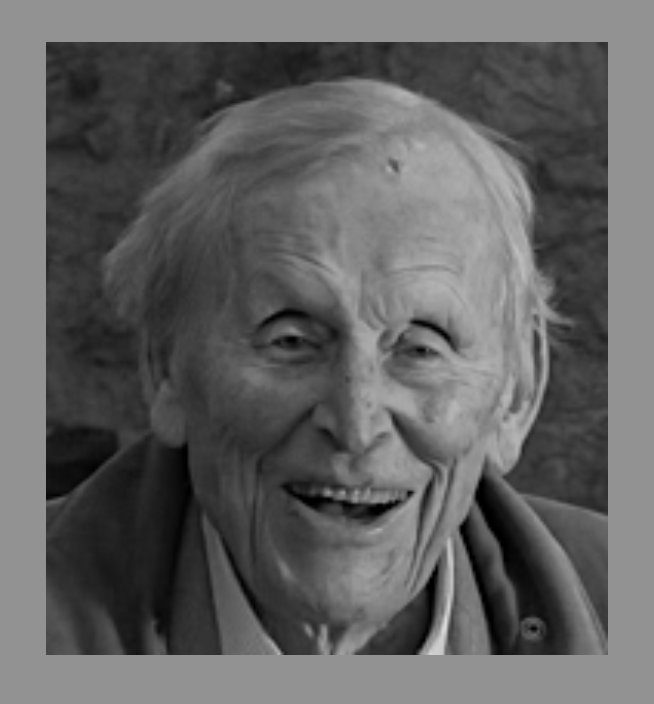
Peter James Sidney Russell was born in November 1927 in Edinburgh. He was educated at Edinburgh Academy, then went on to study economics at Corpus Christi College at Cambridge. In 1946, while still a student, he was called up for National Service, a disruption that pushed him into a pattern that would recur in his life: adapting quickly, and then returning to the long game. When service ended, he trained as a Chartered Accountant, qualifying in 1953. He then practiced accountancy for two years in Paris, gaining a business discipline and outward-looking perspective that would later shape how his firm approached export markets and retail partnerships.
The trajectory of his life shifted again as family duty intersected with Scotch whisky. When his father, Leonard J. Russell, who had founded a Scotch whisky brokering firm in 1936, fell ill, Peter returned to Scotland to join the business. In mid-20th-century Scotland, “broker” typically meant deep, hands-on familiarity with stocks, blending components, contracts, and the hard arithmetic of supply. Russell arrived with accounting rigor, but he was stepping into a world where relationships and judgment mattered as much as ledgers.
When Leonard Russell died in 1956, Peter took control of the brokerage, later joined by his brother David. By then, he had absorbed enough of the industry to realize that brokerage alone left value on the table, so he began moving from arranging whisky to creating and controlling it, turning his hand to blending and brand ownership. That decision led the family firm to buy Ian Macleod & Co., Ltd, along with the Isle of Skye brand, an acquisition that became foundational for what would later be known as Ian Macleod Distillers. Meanwhile, Russell married his wife, Edith, in 1958 and they had soon two children, Leonard and Lucinda.
The timing with Macleod & Co. was shrewd. As British supermarkets began to launch own-label spirits, many in the established trade dismissed the idea. Russell did not. He supplied Scotch whisky (and later, gin and vodka as well) to retailers who wanted reliable quality at scale. That channel, unglamorous to some, became a growth engine. It also required operational competence: sourcing, consistent blending, bottling capacity, and the cash discipline to ride the market’s cycles. Russell was, by training, a man built for those requirements.
By the 1980s, the company’s ambitions were no longer limited to buying and selling casks. The Isle of Skye range gained momentum in the marketplace, and in 1984, Russell entered a major partnership, a 50/50 split with George Grant of Glenfarclas to buy the Broxburn Bottling Plant from Saccone & Speed. Owning bottling infrastructure meant greater control, and it also signaled that Russell was building a durable firm rather than simply trading whisky. Meanwhile, the company itself became explicitly multi-generational when Peter’s son Leonard joined Macleod with his father in 1987, after completing an MBA degree at Bristol University. By 2000, Leonard became Managing Director, while Peter advanced into the Chairman role; still influential, but no longer running day-to-day.
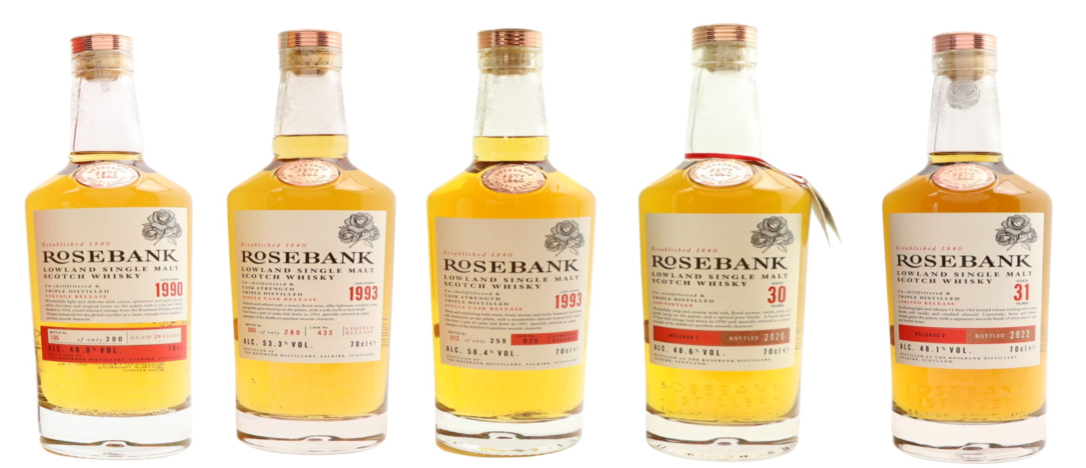
Rosebank distillery, once celebrated as a Lowland classic, triple-distilled and elegant, closed in 1993. By the time the Russells entered the scene, it had become a name sustained by memory, independent bottlings, and scarce old stock. But under Leonard’s leadership, Ian Macleod made a move toward Rosebank’s revival. The rebirth of Rosebank, however was a slow process, complicated by Macleod’s acquisition of a number of other firms, such as Glengoyne, Tamdhu, and Spencerfield Spirits. Finally, though, Rosebank was reborn in 2017, and it became tangible as a functioning distillery in 2021, with a completely rebuilt visitor presence. Sadly, on January 23, 2023, the beating heart of Ian Macleod, Ltd. for nearly 70 years, Peter Russell, died peacefully at age 95. At his death, Peter and Edith had been married for 64 of those years.
It was unfortunate that Peter did not live to see the full public flowering of the reopening of Rosebank. Yet the distillery’s revival sits squarely within the family enterprise he spent decades turning into a serious independent house: the financial stability, the ownership mindset, the operational control, and the generational transition that allowed bold acquisitions to become feasible. In that sense, his connection to Rosebank is not a matter of having run its stills himself, but of having built the kind of company that could bring a “lost” distillery back to life and carry it forward.
If a single through-line ties Peter Russell’s life together, it is competence applied patiently. An Edinburgh schoolboy who studied economics at Cambridge, served when called, trained as an accountant, and then returned home out of duty. He became a reluctant whisky man by inheritance, but stayed one by choice. He moved from brokerage to blending, from deals to ownership, from skepticism in the trade to success in the market. And by the time Rosebank’s stills ran again under Russell family ownership, they did so in a landscape his approach helped shape: a Scotch world where independents can still matter—if they are disciplined enough to last.
Sources:
The Scotsman, “Peter Russell Obituary”, legacy.com
Scotch Whisky Magazine, “Leonard Russell…”, Dave Broom, 23 April 2019, scotchwhisky.com
Decanter, “Rosebank…re-welcomes visitors”, Peter Ranscombe, June 7, 2024
Contributed by Tracy McLemore, Fairview, Tennessee USA