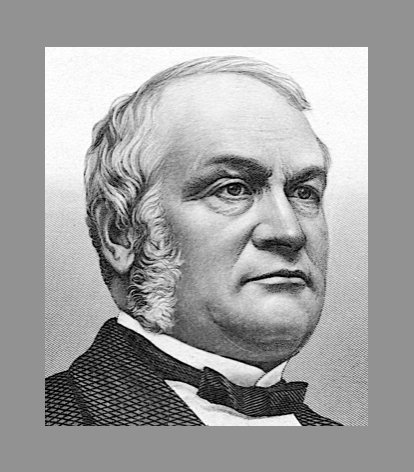
Sir Alexander Ramsay

The legal birth of many Highland distilleries can be traced to a narrow window in the early nineteenth century, when long-tolerated illicit practices were abruptly replaced by regulation, licenses, and paperwork. Fettercairn Distillery belongs to that moment. Founded in 1824, the same year the Excise Act came fully into force, it was not the product of inherited distilling skill or generational whisky ambition, but of estate logic. Its founder, Sir Alexander Ramsay of Balmain, was a landowner responding to a change in law that suddenly made whisky production profitable, legitimate, and a potentially stable adjunct to agriculture.
Ramsay was born on 14 February 1785, at Edinburgh, Midlothian, Scotland, to Sir Alexander Ramsay of Balmain (1st Baronet), and Elizabeth Bannerman. He belonged to the long-established Ramsay family of Balmain in Kincardineshire, a lineage rooted in landholding. Ramsay’s formative environment emphasized stewardship and continuity, values that would later shape the way he approached Fettercairn distillery, not as a personal craft, but as a rational estate enterprise. Ramsay had succeeded as the 2nd Baronet Ramsay of Balmain on 17 May 1810, so his early life unfolded within the rhythms typical of a Scottish estate household: oversight of tenants, agricultural planning, and an inherited expectation that land must be made to support itself.
By the early nineteenth century, estate economics across Scotland were under strain. Agricultural returns fluctuated, rents were increasingly scrutinized, and landowners sought lawful ways to diversify income without destabilizing existing arrangements. Barley was already central to Highland farming, and distilling offered a means of converting surplus grain into a durable, taxable commodity. The Excise Act of 1823 fundamentally altered the risk profile of whisky production by reducing duties and encouraging legal operation. For men like Ramsay, this legislative shift transformed distilling from a legal liability into a calculable opportunity.
On 1 August 1811, Ramsey married Jane Russell. Within eight years, six children were born to the couple, including Sir Alexander Ramsay of Balmain, who eventually became 3rd Baronet. Tragically, Jane died in August of 1819, leaving all her children under the age of six. On 22 December 1822, Sir Alexander then married Elizabeth Maule Christina Ramsay, and had six more children with his second wife. Between wives, in 1820, Sir Alexander also became Member of Parliament for Kincardineshire.
Meanwhile, Ramsay’s Balmain estate sat within an agricultural district that he reckoned capable of supporting barley cultivation. It also had access to reliable water sources, and consistently drew labor from surrounding rural communities. So in 1824, Ramsay secured a license and established Fettercairn Distillery on his land. The decision aligned closely with broader Highland patterns: landowners founding small, licensed distilleries intended to operate alongside farming rather than replace it. Fettercairn, then, was not conceived as a speculative gamble or a vanity project, but as an extension of estate management under a new regulatory regime. Ramsay’s role in the distillery was that of founder and proprietor, not working distiller. He provided the site, capital backing, and legal authority necessary to bring the distillery into operation. Day-to-day production was entrusted to hired managers and distillers, a common arrangement among estate-backed operations of the period. The early distillery operated on a modest scale, producing spirit intended for blending or local trade rather than brand identity. In that vane, Ramsay did not seek to innovate technically or stylistically; his interest lay in lawful production and predictable returns.
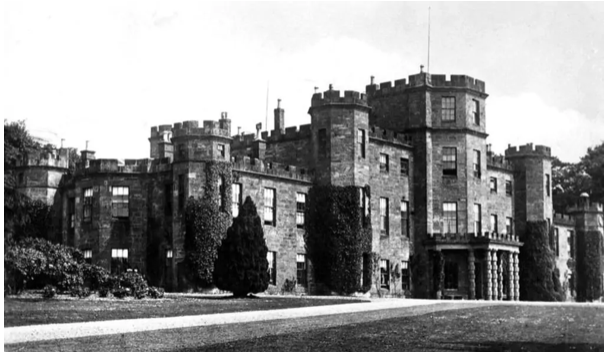
Fasque House, on the estate of the Ramseys of Balmain
At that time in the history of whisky, the spirit was never central to an owner’s personal identity in the way later Victorian whisky figures would be defined by their firms. In contrast, to Ramsay, Fettercairn was one element within a broader estate economy that included agriculture, tenancy, and inherited responsibilities. That restraint, reticent if not downright cold by later standards, would ultimately prove to be one of the distillery’s quiet strengths. In that context, within a relatively short period, Ramsay transferred ownership of Fettercairn to Sir Henry Gladstone, whose family then maintained control for nearly 100 years. Fettercairn then passed through the familiar circumstance faced by most scotch distilleries in the early 20th century caused by war, economic collapse, and government Prohibition: it alternately opened, shuttered, and went through a long series of ownership changes Those acts were, unfortunately, unremarkable for the time. Proprietors regularly reallocated capital, divested secondary enterprises, or consolidated holdings in response to shifting priorities. The sale of a distillery at the time did not usually indicate failure; on the contrary, it demonstrated that it had reached a level of stability that made it a transferable asset.
In the end, Ramsay’s personal life followed the expected contours of his social position. He had produced an heir, ensuring the continuation of the Balmain line. His title and status placed him firmly within Scotland’s landed gentry. Sir Alexander Ramsay passed away on 26 April 1852 at the age of 67. He died having fulfilled the responsibilities typical of his class and era. His legacy rests less in personal innovation than in institutional contribution. By founding Fettercairn at a pivotal legal moment, he helped anchor a distillery that would survive long after his involvement ended. In doing so, he represents a category of figure essential to Scotch whisky history but often overshadowed by more colorful entrepreneurs: the landowners who converted law into infrastructure. Ramsay’s importance, like Fettercairn’s early years, is best understood not through myth, but through structure: a distillery born because a landowner recognized that the law had finally caught up with reality.
Sources:
Fettercairn Distillery official website, “Home”, www.fettercairnwhisky.com
Scotch Whisky Association, “History of the Excise Act…”, www.scotch-whisky.org.uk
Wikitree (genealogy), “Alexander Ramsay of Balmin 2nd Bt”, wikitree.com
Wikitree (genealogy), “Jane (Russell) Ramsey”, wikitree.com
Family Search (genealogy), “Sir Alexander Burnett later Ramsay 1st Baronet of Balmain (31 July 1757–17 May 1810)” ancestors.familysearch.org
Coat of Arms Database, “Ramsay Family Crest”, coadb.com
Contributed by Tracy McLemore, Fairview, Tennessee USA