William H. Ross


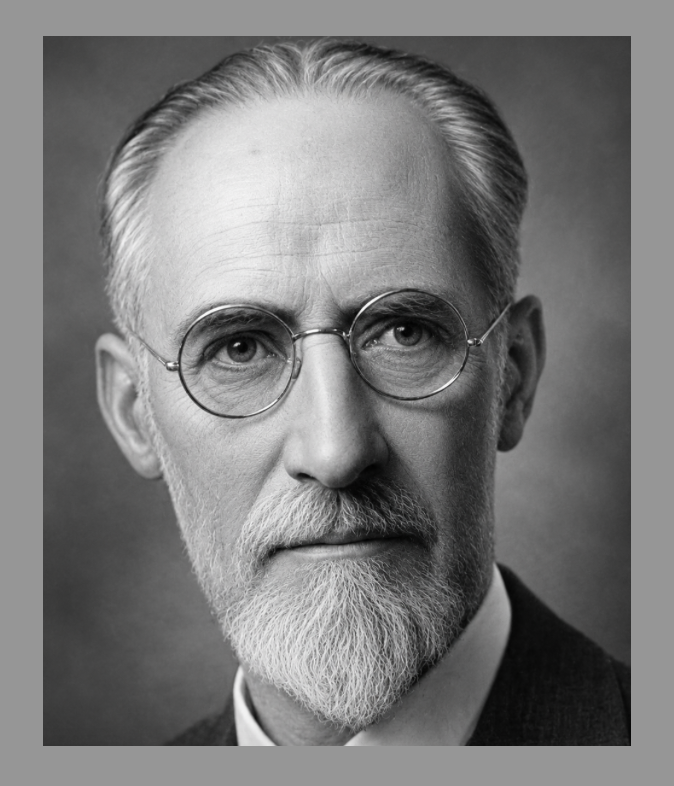
William Henry Ross was born on 19 June 1862 on his parents’ 100-acre Gowanside Farm outside Carluke, Lanarkshire. His mother was Euphemia Forrest Ross, and his father, John Ross, was a tenant farmer. The Ross family had nine children, and “Willie” was the youngest. Life on the farm revolved around hard work and regular church attendance, experiences that helped instill in the Ross children a disciplined work ethic grounded in faith. While Willie was still an infant, John and Euphemia sought better opportunities and moved the family to a larger 275-acre Westfield Farm at South Queensferry, west of Edinburgh.
The move proved successful. As the family’s circumstances improved, Ross was able to attend George Watson’s College in Edinburgh. After completing his education, he joined the Grassmarket branch of the City of Glasgow Bank in 1877. His banking career was short-lived, however, because the bank collapsed the following year. Ross quickly found new employment as a junior clerk with Distillers Company Limited (DCL), a newly formed enterprise created through the merger of six Scottish grain-distilling firms: Macfarlane, John Bald, John Haig, MacNab Bros., Robert Mowbray, and Stewart.
At the same time, Ross continued his education through evening classes in bookkeeping. His diligence, reliability, and attention to detail earned him steady promotion through the company's ranks. Over just a few short years he advanced from accountant and cashier, then to company secretary, then general manager and secretary, and ultimately managing director. Ross’s personal life also developed during these years. On 21 August 1888, he married Annie Dalglish. The couple went on to have two sons and a daughter, and their family life coincided with Ross’s increasingly influential role in one of Scotland’s most important industrial enterprises.
By the end of the nineteenth century, the Scotch whisky trade had been shaken by the spectacular collapse of Pattisons, Ltd. Because Pattisons had been DCL’s fifth-largest customer, the crisis had significant implications for the company. Ross concluded that the industry required greater stability and believed that a program of consolidation offered the best solution. Accordingly, he began acquiring distilleries and related businesses to help regulate production, manage stocks, and reduce the risks associated with overcapacity.
The acquisition program expanded steadily. In 1902, Ross purchased Ardgowan Distillery in Greenock and Loch Katrine (Adelphi) Distillery in Glasgow for DCL. Harvey’s Dundashill Distillery at Port Dundas followed in 1903. Saucel Distillery in Paisley was acquired in 1905, although a later fire destroyed the site, leaving it useful only for bonded warehouse storage. In 1914, DCL added five Lowland pot-still distilleries to its holdings: Clydesdale in Wishaw, Grange in Fife, St. Magdalene in Linlithgow, Rosebank in Falkirk, and Glenkinchie in East Lothian. Two years later, Ross oversaw the acquisition of the blending and export house John Hopkins & Co., together with its associated Speyburn and Tobermory distilleries, as well as John Begg Ltd., owner of Royal Lochnagar.
Although these acquisitions unquestionably strengthened DCL’s position, Ross’s most significant achievement was still to come. Throughout the early twentieth century, much of DCL’s business depended upon arrangements with the three largest independent Scotch blending firms of John Walker & Sons, James Buchanan & Co., and John Dewar & Sons. Ross found this dependence frustrating, particularly because those companies, Walker in particular, possessed considerable influence and customer loyalty. He also became aware that the three firms had begun discussing merger among themselves.
Ross responded by pursuing a strategy that would fundamentally reshape the Scotch whisky industry and force Johnnie Walker scotch and the others under the DCL umbrella. Independent blenders such as John Walker & Sons depended upon grain whisky produced in large patent stills to combine with malt whisky in their blends. DCL already controlled a substantial portion of Scotland’s grain-whisky production, and under Ross’s leadership the company expanded that dominance through further acquisitions. By the early 1920s, DCL effectively controlled almost all of Scotland’s grain-distilling capacity. Ross also strengthened DCL’s position by purchasing nearly all of the surplus maturing whisky he could find, giving the company near complete power over supply and pricing throughout the industry and throwing John Walker’s management team into a near state of dead panic.
At the same time, everyone knew that the economics of the whisky trade were changing. Rising advertising expenses, growing international competition, and increasingly complex trade barriers placed pressure on even the most successful independent firms. Ross believed that large-scale consolidation offered the most practical solution. He therefore proposed a merger with John Walker & Sons, entering into direct negotiations with Sir Alexander Walker II (who was John Walker’s grandson) to create a new corporate structure. Under Ross’s proposal, John Walker & Sons would retain control of their established brands, guaranteeing Alexander II a position on DCL’s board, with Walker & Sons controlling its own marketing and sales operations while becoming part of a larger financial organization administered by DCL.
The plan succeeded. In 1925, John Walker & Sons, by then very nearly out of options reluctantly but formally merged with DCL, ending the company’s status as an independent family-controlled enterprise, and bringing the Johnnie Walker brand into the expanding conglomerate. Having little choice but to follow suit, less than a year later, James Buchanan & Co. and John Dewar & Sons also capitulated. That final transaction transformed DCL into the unquestioned dominant force in Scotch whisky by 1930.
Ross remained active in business until declining health forced his retirement. In 1934, while traveling in Australia, he suffered a catastrophic accident that nearly cost him his sight. Although he worked determinedly to adapt to his disability, he resigned from DCL in 1935. The following year brought further personal hardship when his beloved wife Annie died. Ross subsequently married his nurse, Florence Ridley, but she died not long afterward. He then married her successor, Gladys Murdoch.
William Henry Ross himself died on 22 August 1944. His estate amounted to approximately £246,000, equivalent to roughly £11 million in modern value, which was left to his third wife. His influence on the Scotch whisky industry, however, extended beyond his own lifetime. His son, Henry Ross, later rose to become chairman of DCL in 1948, continuing the family’s association with the company.
Ross’s career spanned the transformation of Scotch whisky from a fragmented collection of producers and merchants into a highly organized global industry. Through decades of acquisitions, consolidation, and corporate negotiation, Ross helped build DCL into the dominant force of its era and played a central role in bringing Johnnie Walker under an enormous corporate umbrella. Those changes permanently altered the structure of the Scotch whisky business and have shaped the industry that followed to this day.
Sources:
Motorbikes, Hillwalking and Scotch Whisky, “The Man who Saved the DCL”, 24 September 2020, bikehillsandstills.com
The Glasgow Story, Mitchell Library/The Bailie, “William H. Ross”, theglasgowstory.com
Spirits & Distilling, “Distillers Company Limited”, spiritsanddistilling.com
Contributed by Tracy McLemore, Fairview, Tennessee USA