Cody Schmick

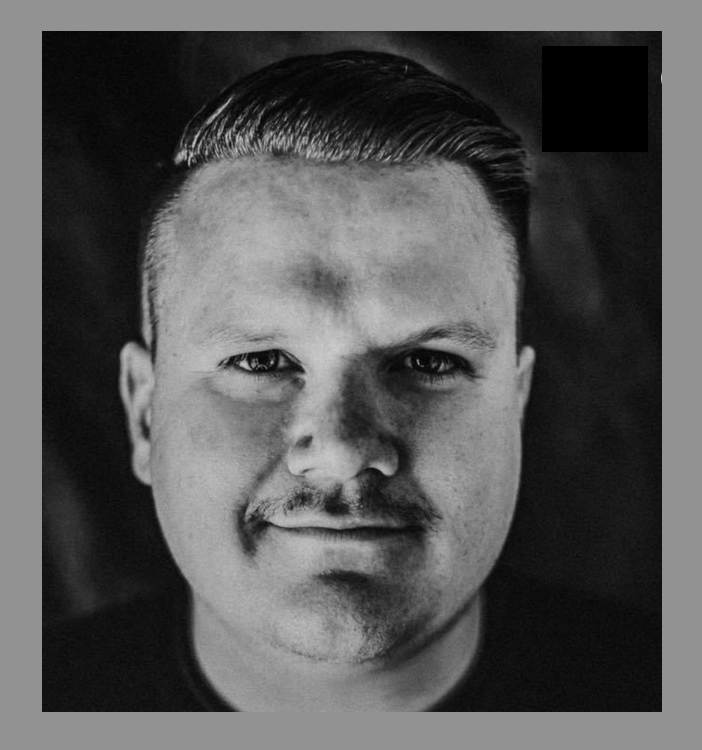
Cody Schmick was born in June 1983, a Nebraska kid who stayed home. He has remained rooted enough in place that, years later, he would still describe his work as building fun spaces for the same people he grew up around. By the time he became a recognizable name in Lincoln’s nightlife and craft-beverage scene, he had already lived through his first chapter in the grocery business. Schmick has described that sector as “cutthroat,” and he framed it as a schooling in discipline. In 2005, his had family opened grocery stores, eventually growing the operation to four locations before selling them in 2009. In June of that year, Schmick also married the former Christin DeKay. The two are now parents of Olivia and Henry.
By late 2014, another major chapter in Schmick’s story was underway. Along with three partners, Barry Fox, Dan Hodges, and Nate Bell, Schmick turned a hobby and a shared craft-beer obsession into a business. The group tested each other’s homebrew ales, refined the idea, and then made the leap into an operating brewery. Schmick later described how they pushed to establish 2014 as their founding year, brewing their first batch in August and opening a retail space in December. That brewery was named Kinkaider Brewing Company. Schmick explained that a “Kinkaider” was a settler who acquired land under the Kinkaid Act of 1904 in Nebraska, which allowed individuals to obtain a section of federal land for a small fee to encourage settlement in the area, making even the name uniquely Nebraskan.
Kincader Brewing is an early example of a pattern Schmick would repeat later: use location and narrative as more than decoration, and let the brand feel like it belongs there. After all, the brewing company wasn’t built on inherited brewing lineage. Schmick’s “capital,” as he has told it, was commercial experience and local credibility: the ability to raise a concept, manage risk, and keep the machine running after the grand opening. So as Kinkaider expanded, it widened into an orbit; beer, yes, but also hospitality. Then Schmick’s approach wasn’t simply to perfect one boutique location and stop; he tended to build “destination” experiences around repeatable habits. He wanted to be a part of what people eat, drink, and do for fun, then scale the idea into multiple venues with distinct identities. For instance, his venues are positioned to catch game-day energy, and serve as a convenient gathering point for Husker fans and visitors. From Kincaider, the portfolio grew into a set of experiences that looked different on the surface but shared a common spine. Bierhaus Maisschäler offered German-themed communal energy. Howdy Coffee extended the “daily ritual” idea into caffeine and morning foot traffic. And then there was the concept that would give Schmick’s career its most distinctive theatrical shape: Sideshow Spirits.
The cleanest public timeline for Sideshow began in late 2019. When Schmick learned that a prior tenant in the Haymarket area was closing, the ownership group bought equipment and gained access to the space on December 26, 2019. A cocktail bar opened in May 2020, right at the tense beginning of the COVID era when, unfortunately, every hospitality decision carried extra risk and extra scrutiny. At roughly the same moment, Schmick’s team unveiled a loud front-of-house concept that would function as both a neighborhood hangout and a signpost pointing to something deeper behind it. Boombox Social officially opened on May 11, 2020 after delaying about a month due to COVID concerns, described as a bar, pizza joint, arcade and, importantly, a “soon-to-be distillery” in the same building.
Schmick emphasized that the back half of the building would shift tone. He described a secret-door transition into a Sideshow cocktail lounge designed to feel, “super high end,” with a different drink menu and a flow between the spaces. It’s a revealing detail: Schmick wasn’t choosing between mass appeal and premium experience, he was stacking them, letting each one feed the other. Sideshow’s physical scale reinforced the ambition. The distillery operation was described as occupying an 11,000-square-foot space, and was framed publicly as Lincoln’s first legal distillery in a very long time.
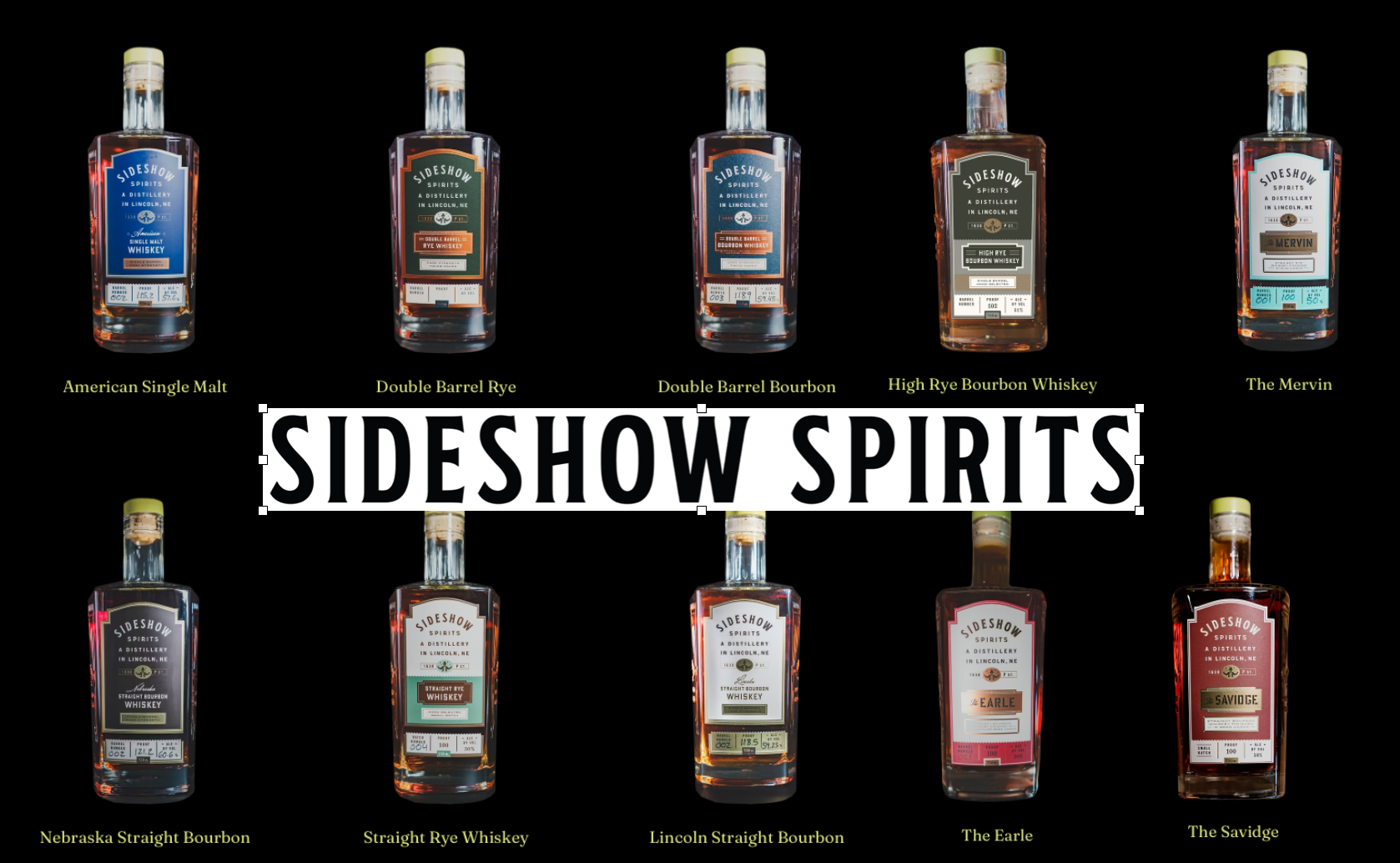
From the start, Sideshow tied its product identity tightly to Nebraska. Schmick has argued that the state “fits” bourbon especially well: corn is the required dominant grain, and Nebraska’s temperature swings can encourage the barrel expansion-and-contraction that helps whiskey mature. In practice, the brand emphasized Nebraska-grown corn and a “grain to glass” tour experience. Independent downtown coverage described house-made spirits that included a white whiskey and a Nebraska corn vodka, along with other experimental or seasonal products. Sideshow also took a blended approach to production. The operation distills some spirits in-house, while much of its available aged whiskey has been made through contract distillation, openly described as coming from MGP, with Sideshow specifying a mash bill rather than simply buying generic bulk whiskey. For flagship identity, Sideshow’s bottled-in-bond bourbon is a four-grain mash bill aged at least four years, produced under bottled-in-bond rules, and associated with the Lincoln distillery operation.
By the mid-2020s, profiles of Schmick’s Lincoln ventures tended to summarize him as a “trailblazer” in craft beverage and hospitality. He is someone who didn’t just open bars, but tries to reshape what “a night out” means in downtown Lincoln by building distinct environments: train-platform taproom energy, German hall sociability, arcade neon, and then the moody copper-still backdrop of a whiskey-focused room.
If you zoom out, the through-line across grocery, brewing, and distilling is less about the specific liquid and more about the method. Schmick repeatedly built around repeatable human behaviors like buying food, meeting friends, watching games, stopping for coffee, then engineered spaces that made those behaviors feel like events. Sideshow is the sharpest expression of that philosophy: playful and loud in front, premium and spirits-forward behind the door, and always anchored in a Nebraska story he is intent on keeping visible.
Sources:
Corn Nation, “Cody Schmick…”, John Johnston, August 31, 2020, www.cornnation.com
Sideshow Spirits official homepage, “Distillery”, www.sideshowspirits.com
Omaha magazine, “Sideshow Spirits/Kincader…Faces of Lincoln”, March 13, 2024, omahamagazine.com
Apple Podcast with Polly Requa, “Down to Business in Lincoln”, March 25, 2024
KOLN-KGIN CBSTV 10-11/Lincoln, Nebraska, “Brewery Allows Owners to Turn Passion…”, Jacquelyn Olsen, March 13, 2015
Dine Nebraska, “Enchanting Spirits”, Holly McAtee, March 30, 2021, dinenebraska.com
Downtown Lincoln, “Sideshow Spirits…”, Madeline Christenson, downtownlincoln.org
McCook (NE) Gazette, “Wedding Announcements (DeKay/Schmick)”, May 8, 2009
Contributed by Tracy McLemore, Fairview, Tennessee