Colin Schmidt


Colin Schmidt, founder of Last Mountain Distillery, was born and raised in Regina, Saskatchewan. It was in that western Canadian city that Schmidt developed a passion for hockey, and from an early age he demonstrated the talent to pursue the sport at an elite level. His abilities eventually earned him a hockey scholarship to Colorado College in Colorado Springs, where he continued both his athletic and academic development. The experience exposed him to life beyond Saskatchewan and placed him on the path toward professional hockey. Ultimately, his success on the ice culminated in his selection by the Edmonton Oilers in the 1992 National Hockey League Entry Draft. For a young player from Regina, being drafted by one of hockey's premier organizations represented a remarkable achievement. During those years, the Oilers had become one of the dominant dynasties in professional sports, and earning a place within that organization reflected Schmidt's considerable ability.
Unfortunately, Schmidt's professional hockey career proved shorter than anticipated when a series of shoulder injuries curtailed his opportunities in the professional ranks. He later joked that his brief experience with the Oilers consisted largely of playing "left bench," a self-deprecating description of a career that never fully developed as planned. Yet what initially appeared to be a disappointing end ultimately became the beginning of a very different journey, redirecting him toward opportunities that would define the rest of his life.
While living in the United States after his hockey career, Schmidt met a young woman named Meredith, who would become both his wife and business partner. The couple later married at Last Mountain Lake, a place that has remained central to their family life and business identity. It became a setting where family memories were created and where many of their future plans took shape. During this period, the Schmidts realized that Saskatchewan, despite its worldwide reputation for agriculture and grain production, lacked a true micro-distillery. Encouraged by a friend who had successfully launched one of the early American micro-distilleries, they decided to pursue an ambitious goal: establishing Saskatchewan's first micro-distillery.
In August 2010, they began operations in remarkably humble surroundings. The Schmidts' distillery was launched not in a grand industrial facility but in the family's home garage. Like many successful entrepreneurial ventures, the business began with limited resources but a clear vision. Colin and Meredith intended to produce handcrafted spirits in small batches while laying the groundwork for premium Saskatchewan whisky. From the outset, their emphasis was on quality rather than volume.
Before they could begin distilling on any meaningful scale, however, they discovered that the regulatory challenges were substantial. Obtaining permits, navigating provincial regulations, and establishing a fully legal distilling operation required considerable patience and persistence. Their efforts were rewarded in September 2011, when Last Mountain Distillery officially opened its doors, producing handcrafted vodka distilled from Canadian-grown grain. As Saskatchewan's first micro-distillery, the operation immediately attracted attention, bringing with it both publicity and responsibility. Schmidt often found himself reassuring curious visitors that, yes, it was entirely legal to produce spirits in Regina, albeit on a modest scale.
Success followed quickly. Within eighteen months, the business had outgrown its original facilities and relocated to its present site near Lumsden, Saskatchewan. Situated in the heart of grain country, the new distillery provided greater production capacity while preserving the small-batch philosophy that had defined the business from the beginning. The move also reinforced the direct connection between Saskatchewan agriculture and Saskatchewan-made spirits.
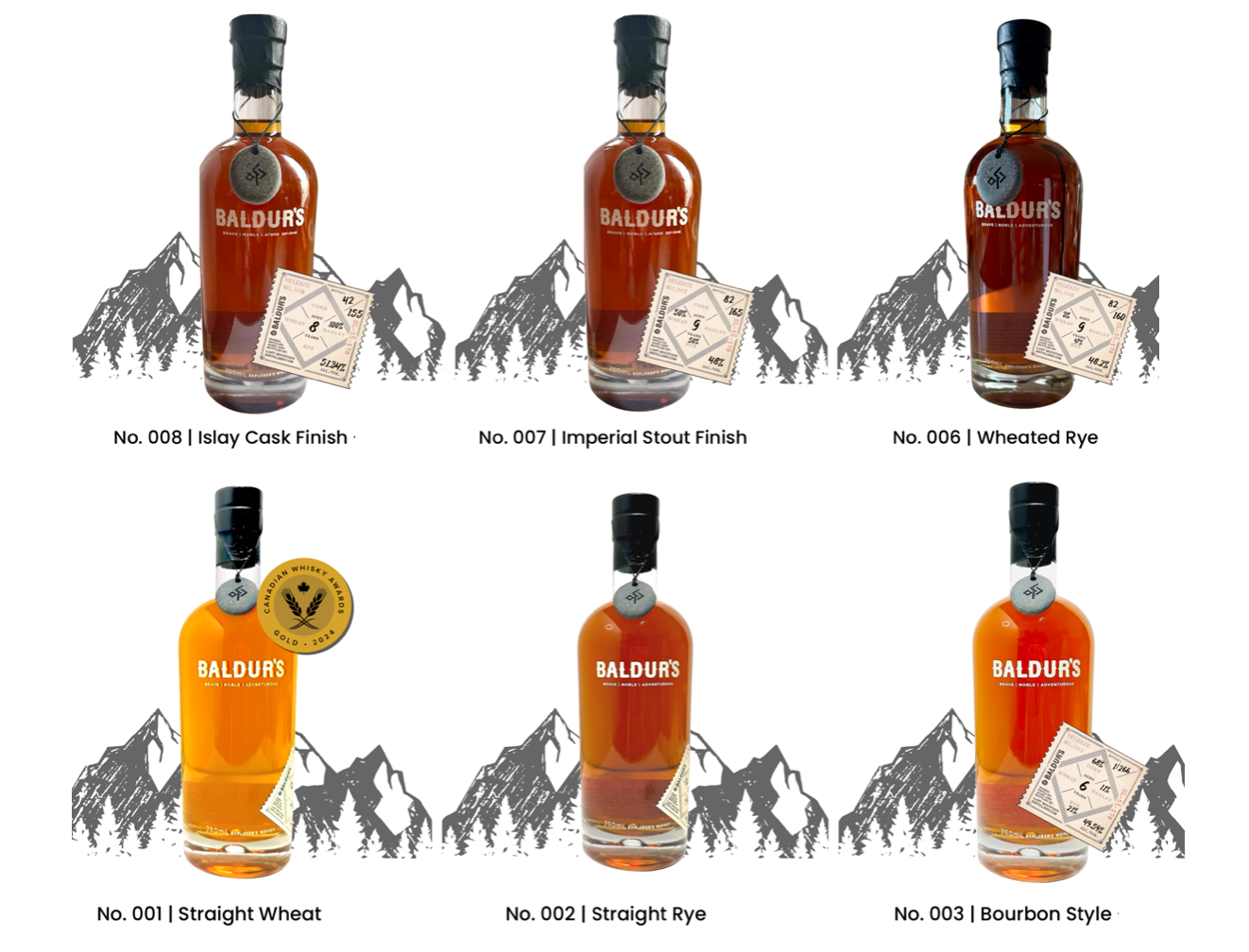
Although vodka and gin provided the financial foundation that allowed the business to grow, Schmidt's long-term passion was always whisky. Canadian whisky production presents unique challenges because federal regulations require a minimum of three years of barrel aging before the spirit can legally be sold as whisky. As a result, distillers must invest significant capital and storage space long before receiving any financial return. Despite those obstacles, Schmidt committed to whisky production from the earliest days of the distillery, convinced that Saskatchewan grain could produce an exceptional whisky.
The learning curve, however, proved steep. Schmidt later recalled producing an early batch of rye whisky that tasted so poor he was prepared to pour it down the drain. Before doing so, he contacted an excise officer, who advised him to allow the spirit additional time in the barrel. The decision proved pivotal. Continued maturation transformed the whisky, and what Schmidt had nearly discarded eventually became an award-winning product. The experience reinforced one of the most important lessons in whisky making: patience is often as essential an ingredient as grain, water, or oak.
As the years passed, Last Mountain Distillery developed a reputation for innovation and experimentation. Schmidt embraced Saskatchewan rye, a grain deeply connected to prairie agriculture but notoriously difficult to distill successfully. Rather than avoiding those challenges, he and his team persevered, refining their techniques until they produced rye whiskies that earned recognition across Canada. In the process, industry observers credited Last Mountain Distillery with helping establish Saskatchewan as a serious participant in Canada's growing craft spirits movement.
Throughout that growth, the business remained firmly rooted as a family enterprise. Schmidt has repeatedly emphasized that from the beginning he and Meredith sought to build something meaningful together. Today, the couple are the parents of two sons, Griffen and Ryker, who have quite literally grown up around the distillery, along with Chloe, the family's faithful "shop dog," who has become something of a mascot for the operation.
Today, Colin Schmidt stands among the pioneers of Canadian craft distilling. His journey to whisky was anything but conventional, taking him from the hockey rinks of Regina to the professional ranks, and ultimately into the world of entrepreneurial distilling. Through Last Mountain Distillery, he helped demonstrate that Saskatchewan could produce spirits every bit as distinctive as those from Canada's more established whisky regions. In doing so, he transformed an entrepreneurial idea born in a family garage into one of the country's most respected craft distilleries and an enduring landmark in the evolution of Canadian whisky.
Sources:
Last Mountain Distillery, “Our Story,” lastmountaindistillery.com
Taste the Dram, “Last Mountain Distillery – Premier Canadian Spirits Distillery,” 23 May 2017, tastethedram.com
The Rum Howler Blog, “Introducing: Last Mountain Canadian Rye Whisky,” 20 March 2012, therumhowlerblog.com (Arctic Wolf)
Ed White, “Using Rye to Make Whisky Can Be a Challenge,” 16 November 2023, producer.com
Global News, “Saskatchewan’s First Micro-Distillery Making Vodka,” 1 September 2011, globalnews.ca
Val Bradshaw, “Last Mountain Distillery Cask Strength 100% Rye Whisky,” 4 April 2018, valbradshaw.com
Reddit /r/worldwhisky, “Last Mountain 100% Wheat Whisky Single Cask [Review],” 2017, reddit.com
Last Mountain Distillery, “Last Mountain Canadian Whisky,” youtube.com
Last Mountain Distillery official website, “History and Brand Story”, lastmountaindistillery.com
Facebook Community Post, “Last Mountain Distillery Crafts Unique Saskatchewan Spirits,” facebook.com
Contributed by Tracy McLemore, Fairview, Tennessee USA