David Stewart


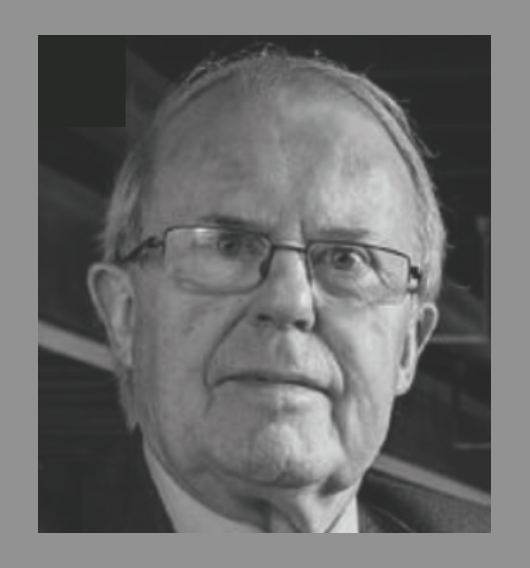
David Stewart’s life in Scotch whisky is one of the most sustained and influential careers in the modern history of the industry. Born in 1945 in Ayr, on Scotland’s west coast, he would enter whisky at a moment when single malt Scotch was only beginning to find a wider audience. Over the course of more than half a century with William Grant & Sons, Stewart helped shape not only the character of individual distilleries such as Glenfiddich and The Balvenie, but also the broader trajectory of Scotch whisky itself.
Ayr is a coastal town with long-standing ties to Scotland’s industrial and maritime economy, and Stewart grew up in this region before entering the whisky trade at a remarkably young age. At just seventeen years old, in 1962, he joined William Grant & Sons as an apprentice. That decision placed him within one of Scotland’s most important family-owned distilling firms. Founded in 1887 by William Grant in Dufftown, the company had built its reputation on craftsmanship, continuity, and independence, values that would define Stewart’s epic career.
Stewart’s apprenticeship was long and exacting. He spent twelve years learning the craft of whisky production, focusing particularly on nosing, blending, and cask management. Those were not skills to be acquired quickly; they required repeated exposure, sensory discipline, and mentorship within the company’s refined, established traditions. By the time he completed this apprenticeship, he had developed a deep familiarity with the character of both malt and grain whiskies and the ways in which they matured in wood. In 1974, at roughly twenty-nine years old, Stewart was appointed Malt Master of William Grant & Sons, placing him in charge of shaping the flavor profiles of the company’s key brands, including Glenfiddich, The Balvenie, and Grant’s blended Scotch. He would hold this position for decades, becoming the longest-serving Malt Master in the Scotch whisky industry.
The timing of his appointment was significant. During the 1970s and 1980s, Scotch whisky was undergoing structural change, with single malts beginning to emerge for the first time as distinct commercial products rather than primarily blending components. Stewart played a central role in this transition, and his work helped define how single malt Scotch would be presented to consumers, both in terms of flavor and identity. One of Stewart’s most influential contributions in that area was his pioneering use of wood finishing. He developed The Balvenie DoubleWood 12 Year Old, widely recognized as the first single malt Scotch whisky to be finished in a secondary cask, specifically transferring whisky from traditional oak barrels into sherry casks for additional maturation. This innovation introduced a new layer of complexity and opened the door for a wide range of finishing techniques that have since become standard practice across the industry. He also played a key role in the development of Glenfiddich Solera Reserve 15 Year Old, which employed a solera-style maturation system more commonly associated with sherry production. This approach allowed for greater consistency and depth of character by continuously marrying whiskies of different ages.
In addition to these innovations in single malt whisky, Stewart contributed significantly to blended Scotch. He developed cask-finished expressions for Grant’s, including Ale Cask Reserve and Sherry Cask Reserve, demonstrating that the techniques applied to single malts could also elevate blended whisky. His influence extended across the entire William Grant & Sons portfolio, reinforcing the company’s reputation for experimentation within a framework of tradition.
Throughout his career, Stewart remained closely tied to the operational life of the distilleries. His work required extensive travel across Scotland, particularly between Dufftown, where Glenfiddich and The Balvenie are located, and Girvan, the company’s grain distillery. Despite the global reach of the brands he oversaw, his focus remained rooted in the physical processes of whisky-making: selecting casks, evaluating maturation, and refining blends.
His achievements were widely recognized within the industry. Over the course of his tenure, William Grant & Sons received multiple “Distiller of the Year” awards from major international competitions, including the International Spirits Challenge and the International Wine and Spirit Competition. Stewart himself received lifetime achievement awards and other honors, reflecting both his technical contributions and his influence on the modern whisky landscape. Despite these accolades, Stewart developed a reputation for modesty and restraint. Contemporary accounts consistently describe him as unassuming, a craftsman more concerned with the quality of the whisky than with personal recognition. This demeanor aligned closely with the culture of William Grant & Sons, which has remained family-owned and relatively understated compared to larger corporate distillers.
In his personal life, Stewart has maintained a stable family foundation. He still lives outside Glasgow with his wife, Ellen. The couple has three adult children: Heather, Colin, and Alan. Later in life, he also became a grandfather, with two grandchildren that he enjoys spending time with. Also outside of whisky, Stewart’s interests reflect a traditional Scottish profile, and he is an avid supporter of Ayr United Football Club, maintaining a connection to his birthplace. He also enjoys curling and golf, both longstanding elements of Scottish sporting culture. He readily admits that his tastes in drink extend beyond whisky, and include Guinness and French white wine.
David Stewart’s career stands as a bridge between eras. He entered whisky at a time when single malts were still emerging and helped guide them into global prominence. His innovations in cask finishing reshaped how whisky could be matured and presented, while his long stewardship ensured continuity within one of Scotland’s most important distilling houses. His legacy is not defined by a single product or moment, but by a sustained body of work that altered the expectations of Scotch whisky. Across decades of quiet, disciplined craftsmanship, he helped define how whisky is made, matured, and understood in the modern age.
Source:
PMA Canada, “Meet the Maker: David Stewart”,www.pmacanada.com/meet-the-maker/david-stewart/
Contributed by Tracy McLemore, Fairview, Tennessee USA