Drew McKenzie Smith

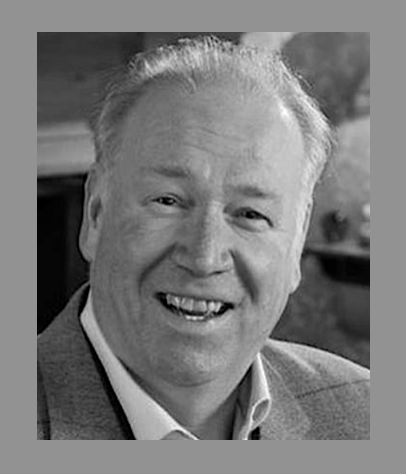
Andrew James McKenzie “Drew” Smith belongs to the kind of modern Scotch story that begins far from a stillhouse yet ends with one. He was born in December 1963, but the more revealing markers of his early life are geographic and familial: a boy born in Sussex to a father from Aberdeen and a mother from Fife, raised first in southern England on a property where his father kept a herd of pedigree Aberdeen Angus cattle, then “hauled up to Scotland” for school. In his own telling, the shift was not subtle. He attended a preparatory school and then Strathallan public school in Perthshire, an adjustment he remembered as a culture shock for a “soft southern boy.” That detail hints at the two forces that would later define his work at Lindores: ease with the worlds of privilege and hospitality coupled with a lasting sense of Scotland as something you reluctantly arrive into then decide to build your life around.
Before whisky, Drew had a varied career that included work at an auction house in London, periods on the family farm, and time connected to his father’s hotel in Aberdeenshire. In parallel, he spent much of his working life as a chef, cooking for the “rich and famous.” It was not, at first, a path aimed at distilling; it was the long apprenticeship of someone learning how taste, place, and service become reputation, and how reputation, in turn, becomes a business durable enough to carry a family name.
His marriage became part of that working education. Drew’s wife, Helen McKenzie Smith, appears throughout the Lindores story, not as a footnote but as a partner with her own professional identity. In one account, Drew places himself in the whisky world earlier than Lindores by way of Helen’s role running Glenmorangie House, where he worked as chef. Another interview describes the couple later running “luxury exclusive use” properties from the Lake District north to Wick, with Helen managing the house and staff while Drew cooked. Their children, two daughters, Poppy and Gee, grew up amid those itinerant hospitality postings.
Still, for all that movement, Lindores remained “home.” The family’s connection to the place runs through Drew’s great-grandfather, who bought Lindores Abbey Farm in 1913. The ruined abbey on the land was, for decades, simply part of the working backdrop, with its stone arches and old walls woven into ordinary rural life. Drew has recalled that the ruins were once overgrown and treated more as familiar scenery than sacred heritage, until an encounter in 2001 changed the scale of what the site could mean.
That year, a visitor arrived at the door and asked Drew’s father for permission to walk the abbey grounds. Nothing dramatic happened in the moment; permission was granted, the man walked quietly, and left. Months later, a book arrived in the post: Scotland and Its Whiskies by the late whisky writer Michael Jackson, signed, with an instruction to turn to a particular page. The words that caught Drew were simple and catalytic: Jackson’s description of Lindores as a kind of pilgrimage site for whisky lovers. For a family that had not grown up thinking of the ruins as anything more than part of the farm, it was a jolt: someone outside the gate was assigning world-level meaning to what they lived beside, and frankly, ignored, every day. Research followed curiosity. Drew’s digging led him to the famous entry in the 1494 Exchequer Rolls, recording malt issued for aqua vitae for King James IV, associated with Friar John Cor, a line widely treated as the earliest documentary reference connected to Scotch whisky making. Drew has said he has seen the original scroll and that, whatever the scholarly debates around interpretation and certainty, the discovery was personal: it tied his family’s ground to the oldest written whisky tradition Scots can point to with a date attached. The idea took hold that Lindores should not only be remembered; it should distill again.
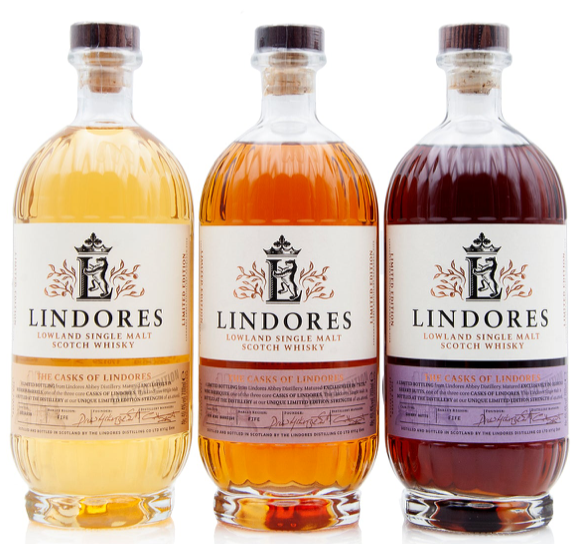
Turning that conviction into copper and concrete took time, decades, in fact, but by the mid-2010s, the timeline becomes firm. Lindores’ own materials state that building commenced in 2016, the visitor center opened in 2017, and the first distillation took place in 2017, bringing spirit back to the site after more than five centuries. The distillery was built with serious technical intent; in at least one extended conversation, Lindores is described as a modern operation guided by the late whisky consultant Dr. Jim Swan, with early strategic discussions framed around a choice between “gimmick” and genuine whisky ambition. Drew’s stated goal was the latter: history treated as responsibility, not costume.
The family element, meanwhile, remained explicit rather than decorative. Drew and Helen now describe Lindores as their family home, and they name relatives involved in the business: Drew’s sister Jane, his brother-in-law Ross, and his younger brother Robbie. They also name their own daughters, Poppy and Gee, within the working life of the distillery itself. In fact, Lindores distillery’s sister spirit stills are named “Poppy” and “Gee” making those names part of the site’s daily vocabulary.
The last step in the arc is the one whisky always demands: waiting. Lindores states that the first Scotch whisky went on sale in 2021, meaning the distillery had to live for years in the patient gap between first spirit and first mature release, exactly the gap that breaks many new ventures. In Drew’s case, the long pre-build gestation likely helped: this was a project he had already carried for twenty years before it produced a bottle, and he had already lived in industries such as hospitality, service, and cooking, where reputation is built slowly but lost quickly if an inattentive rush is undertaken.
Drew McKenzie Smith’s Lindores story is still unusually complete. It begins with a family farm and a ruined abbey treated as ordinary landscape; it passes through schooling that pulled him into Scotland’s social and cultural machinery; it spends long years in kitchens, properties, and practical work; and it turns, decisively, on a mailed book and a single line in a medieval account. The distillery that resulted is not a reenactment. It is a contemporary business run by a family that is openly trying to act as custodian of land, of ruins, and of a name that predates the modern whisky industry itself. And if the point of Lindores is to be more than a monument, that may be the most telling fact of all: the pilgrimage site did not stay a place people only came to see. It became, again, a place that makes spirit.
Sources
Companies House/UK Government, “Officer record for Andrew James McKenzie Smith”
ScotchWhisky.com, “Five Minutes With… Drew McKenzie Smith…”,
World Whisky Day, “Q&A with Drew and Helen McKenzie Smith…”,
Lindores Abbey Distillery official website, “Lindores Single Malt Scotch Whisky MCDXCIV (1494)”,
The Whisky Wire, “Whisky Insiders Interview – Drew McKenzie Smith”,
Whisky My Life/Episode 72, “Whisky Talks…Drew McKenzie Smith”,
WhiskyScholar (Substack), “In Conversation with Drew McKenzie Smith of Lindores Abbey”,
Square Mile, “Drew McKenzie Smith: ‘Whisky is gradually shaking off the snobbery’”
Contributed by Tracy McLemore, Fairview, Tennessee USA