

George Shwab

The above image of George Shwab is an AI-generated age-regressed photo based on a real image of his father
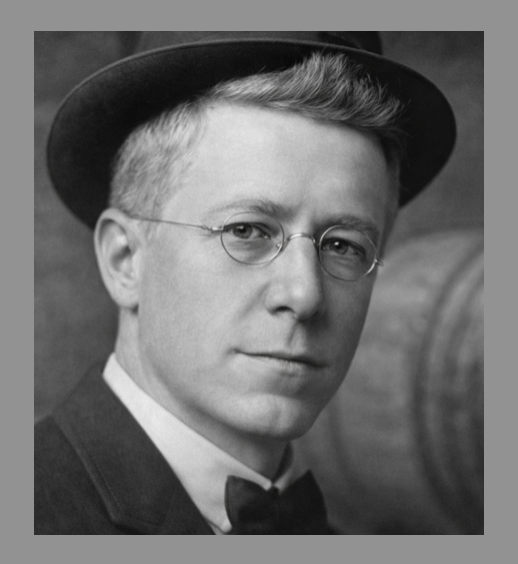
George Augustus Shwab, Sr., was born on November 18, 1874, into a family business that was never merely commercial. By the time he was old enough to understand his surroundings, his father, Victor Emmanuel “Manny” Shwab, had already become a central figure in Nashville’s liquor trade and in the larger Cascade whisky story. Whiskey distilled at Cascade Hollow in Coffee County was bottled and distributed through the George A. Dickel & Company network and promoted nationwide under the slogan “Mellow as Moonlight.” This was the world into which George was born, one where family ties, production, and branding were inseparable.
Manny Shwab’s path into that world had begun years earlier. As a young man in Nashville, he entered the Dickel orbit first as a bookkeeper, then as a trusted partner, and eventually as the holder of the Cascade distillery interests themselves. In 1888, Manny purchased a major interest in the Cascade distillery. A decade later, in 1898, after the heirs of McLin Davis sold their remaining share, Shwab became the sole proprietor of the distillery, even though the “Dickel” name remained the public-facing distributor of the whisky.
Manny had married Emma Banzer, the sister of Augusta Dickel, George Dickel’s wife. The Dickels never had children of their own, which made the Schwab children their natural heirs within the extended family circle. Manny and Emma had six children, among them George Augustus Shwab and his younger brother, Hugh McNeilly Shwab. Of the siblings, only George and Hugh showed any sustained interest in the liquor trade. As a result, they came to represent the second generation of Shwab involvement in the Cascade and Dickel whiskey enterprise, positioned to inherit responsibility rather than merely ownership.
That responsibility became real rather than theoretical in the years just before World War I. In 1909 and 1910, Tennessee enacted prohibition measures that ended the legal manufacture of spirits within the state. Like many established whiskey operations, Cascade and Dickel were forced either to shut down or to move. The response was relocation. Production shifted first to Hopkinsville, Kentucky, and later to Louisville, where whiskey was produced at the Stitzel distillery. Records from the Stitzel operation state that this Kentucky phase ran “under the direction of V. E. Shwab’s son, George.” This single line carries significant weight. It establishes George not as a passive heir but as the individual entrusted with directing production at a moment when the brand’s survival depended on operating outside Tennessee. The Tennessee whiskey made in Kentucky continued to sell until nationwide Prohibition under the Volstead Act brought even that chapter to a close.
George’s personal life unfolded alongside these business upheavals. In 1900, he married Deane Mason, when he was 26 and she was 22. The couple suffered the loss of a child who died in infancy in 1909, but three years later they welcomed a son, George Augustus Shwab, Jr. Family life continued even as the whiskey business faced mounting external pressure and eventual shutdown under national Prohibition.
In 1924, during the depths of those dry years, Manny Shwab died. Although distilling remained illegal, the surviving brand assets still carried value: the name, the reputation, and the promise that genuine Cascade Hollow whiskey might one day be made again. The Shwab family, however, did not hold those rights indefinitely. In 1937, Schenley, Inc., purchased the company from the Shwab heirs for $100,000, acquiring the Cascade trademark along with the original recipe and production process. That process reportedly had to be reconstructed with the help of men in Coffee County who had previously worked at the distillery.
George Augustus Shwab, Sr., died in 1949 at the age of 75. Deane survived him by nearly three decades, passing away at the age of 98 in December 1976, just days before Christmas. Both were buried in the Dickel/Shwab family plot at Mount Olivet Cemetery in Nashville, Tennessee.
If the older generation’s story was about acquiring and consolidating a distillery, George Shwab’s was about keeping a whiskey brand alive when Tennessee attempted, unsuccessfully, to erase the industry altogether. It is unfortunate that George did not live to see the resurgence of George Dickel whisky at Cascade Hollow in the late 1950s, or the first bottlings of its second revival in the 1960s. Even so, the historical record assigns him a clear and consequential role. When Tennessee went dry and the business was forced to move, George A. Shwab was the son named as directing the whiskey’s continued production. That practical responsibility helped preserve a famous label long enough for a later era to reclaim it and allow it, finally, to thrive again.
Sources:
Tennessee Encyclopedia of History and Culture, “George Dickel Distillery”, Kevin Cason
PDF hosted via MTSU/Georgetown College archival page, “Tennessee Distilleries: Their Rise, Fall, and Re-emergence”, Kay Baker Gaston
Book,“Manny Shwab and the George Dickel Company: Whisky, Power, and Politics During Nashville’s Gilded Age”, Clay Shwab, McFarland, 2024.
Mt. Olivet Cemetery tree compilation (PDF), gleavesfamily.com
Find a Grave, “George Augustus Shwab Sr.”, findagrave.com
Ancestry (genealogy website), “Manny Shwab”, ancestry.com
Contributed by Tracy McLemore, Fairview, Tennessee
