
George Smith

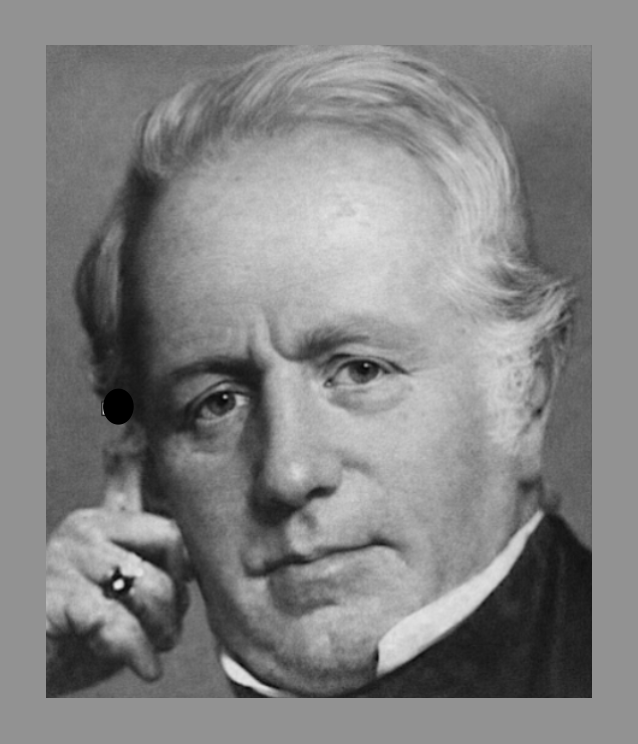
George Smith was born in 1792 at Upper Drumin, on the Duke of Gordon’s Glenlivet estate in the Northeast Highlands, a landscape of hard farming and, in those years, a whisky economy that ran as much on secrecy as it did on skill. In the Livet Valley, distilling was not a novelty, it was part of local survival, practiced in bothy-sized stillhouses and hidden hollows, with inconspicuous scouts posted liberally to watch for Excise men. Smith grew up inside that world, learning how grain, water, peat, and patience could be turned into a spirit that traveled far beyond the glen’s narrow tracks.
What set Smith apart was not that he made whisky—many did—but the way he built a life around improvement and scale. However, Smith first began his remarkable career as a builder and architect. Those skills later shaped The Glenlivet: measuring, planning, building for permanence, and thinking beyond the next season. In 1817, George first leased part of the farm of Upper Drumin, a step that anchored him in the place that would later become synonymous with his name. In 1817, Smith also married Ellen Stewart, daughter of Lieutenant Stewart of the 1st Royals, who had fallen at Aboukir serving under Napoleon. George and Ellen eventually had three children: two sons, William and John Gordon; and a daughter, Margaret.
Fortune shined on Smith and his distillery in that, by the early 1820s, Scotland’s whisky laws were shifting. The Excise Act of 1823 made it more practical for small operators to go legal, but legality carried its own danger in Glenlivet where illicit distilling had long been the norm and where neighbors often saw a licensed still as betrayal. Nevertheless, in 1824, Smith took the leap that ultimately defined him and built a legal distillery at Upper Drumin. The result is that his own friends and neighbors, many having known him a lifetime, threatened him and his family; he responded by openly carrying a pair of flintlock pistols as he moved through the district, making it plain that he would not be intimidated because of his licensed livelihood. That choice, public legality in a region accustomed to concealment, did more than protect Smith’s own operation, it helped set a template for the industry that followed: whisky made openly, sold openly, and defended in courts and contracts rather than in midnight runs across the dales.
Smith’s now-legal distillery succeeded quickly enough that it did not remain small for any time at all, and quickly had to be extended four times. The Glenlivet’s official narrative adds a glimpse of output: by the late 1830s, the distillery was producing more than 200 gallons a week, and Smith was forced to bring in help and sales support from well beyond the glen. As the whisky side grew, Smith’s farming footprint grew with it to supply the needed grain. In 1837, he bought the farm of Castleton of Blairfindy; in 1838, the farm of Nevie; and in 1839, the “fine farm of Minmore,” a property long associated with the Gordons. Later, in 1850, he bought Delnabo above Tomintoul and built a separate distillery there known as Cairngorm. Finally, in 1858, he united his distilleries by building another large distillery on the Minmore property. Read as a sequence, Smith’s life looks less like a single lucky venture and more like a long, deliberate campaign: expand land, improve land, and build the whisky works to match.
The scale of those improvements was substantial. The Smith family history credits him with reclaiming 300 acres and leaving his son with more than 800 acres of arable land, plus 10,000 to 12,000 acres of hill pasture. The history also notes that he was “famous as a breeder of Highland cattle and shorthorns.”
His children’s known details reinforce the same picture of a family building durability. His son, William, who was born in 1817, farmed Nevie, but died unmarried at the age of 29. The younger son, John Gordon, was born at Upper Drumin on 22 June 1822 and was educated at Blairs College in Aberdeen. He worked first at the Caledonian Bank in Elgin, then in the Edinburgh office of John Shand, before returning home in 1846 after his brother’s death to farm and assist his father. A few years later, George took him into partnership in the distillery. The firm soon became “G. and J. G. Smith”. Meanwhile, George and Ellen’s daughter, Margaret, married William Grant of Ruthven and had children including George Smith Grant, who later owned The Glenlivet distillery.
George Smith lived long enough to see his name become both famous and contested. The Glenlivet’s whisky’s reputation traveled far beyond Speyside, in fact, so far that Charles Dickens himself regularly recommended “rare old Glenlivet” to friends. Smith also lived long enough to know that once a whisky is prized, others will try to borrow its identity, and after his death, his son had to fight hard to secure the defining word “The” in the brand name in order to stave off infringement.
George Smith died in November 1871, about 18 months after his beloved Ellen. Both were buried at Tombae Catholic Churchyard in Banffshire.
Sources:
Electric Scotland/National Library of Scotland,“The Gordons and Smiths at Minmore, Auchorachan, and Upper Drumin in Glenlivet”, 1910, electricscotland.com
The Glenlivet/official website, “Our Story”, theglenlivet.com
Find a Grave, “George Smith”, findagrave.com
Contributed by Tracy McLemore, Fairview, Tennessee USA