
James Stewart

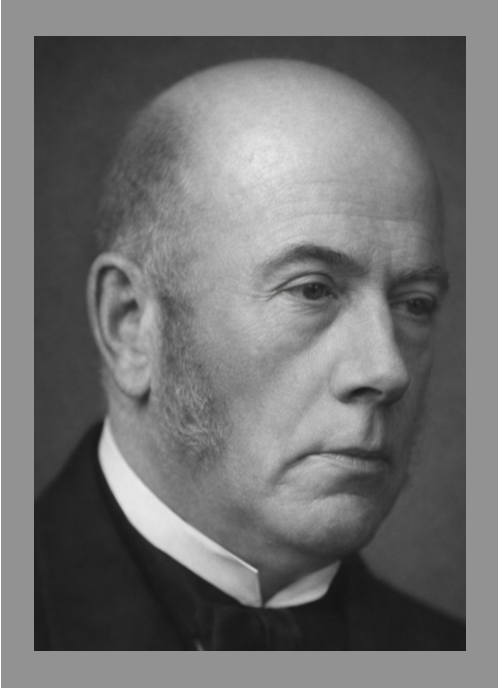
There above AI-generated image of James Stewart is based on a painted portrait
James Stewart was born 16 Jun 1807 to Peter and Janet McMurchy Stewart in Campbeltown, Argyll, Scotland. He had four older brothers, William, Duncan, Peter, and John, and two sisters, Mary and Ann. Not much is known about Stewart’s childhood and early life, but at the age of only 25, he became Campbeltown’s Dean of Guild. That prestigious municipal office was tied to the town’s building standards, local commerce, and the practical governance of a growing city. In an era when towns were run by overlapping networks of merchants, trades, and civic officers, “Dean of Guild” was not a ceremonial flourish. It was the kind of position held by someone already embedded in property, money, and the local decision-making class. Stewart’s public role offered him exactly the combination needed to finance, as well as quickly push through the red-tape legalities and legitimize a distilling venture in a boomtown. So in that same year of 1832, Stewart, along with his friend and co-worker John Galbraith, founded the spirits company Stewart & Galbraith Co., and set about building a distillery in Campbeltown, on the city’s most popular thoroughfare, High Street. The result, Scotia Distillery, was completed in 1835, and was said to take up the space of about two acres of prime Campbeltown ground.
By the time Scotia was ready to begin making whisky, Campbeltown was moving fast. Though is contained only about 1,800 residents at the time, it was reputed to be the richest town in Britain per capita. The city’s harbor and maritime connections helped it turn local grain, water, and fuel into whisky that could reach the blending houses and markets on the mainland quickly. Steam navigation made it possible to ship goods to Glasgow in about nine hours, shrinking distance and making large-scale commercial whisky more viable from a remote peninsula town. It was roundly upon this frenetic, cash-rich, whisky-fueled bustle that Stewart and Galbraith, both still in their early 20s at the time, tied their reputations and their fortunes.
Stewart served as the chairman of the Campbeltown Distillers' Association for 25 years. Records suggest that Stewart never married, nor ever had any children. This is significant because in that day, it was exceedingly common for sons to inherit a business interest, particularly distilleries, and take over operations when their father passed away. On 5 March 1853, James lost his beloved mother, Janet, but he continued to take care of his two spinster sisters, Mary & Ann, until Ann died in 1870. Likely because no children were born to him, Stewart managed the Scotia Distillery until he was age 84, nearly 60 years, before its sale in 1891.
On 15 January 1895, James Stewart died at the age of 87. He was buried in Old Kilkerran Cemetery in Campbeltown. The distillery he had co-founded was entirely successful during his lifetime, but storm clouds were on the cool, wet Campbeltown horizon that signaled trouble for its 30-odd remaining distillers.
In 1919 when James Stewart retired perhaps already sensing the future problems for a small independent producer, the firm was sold to West Highland Malt Distillers (WHMD), whose plan was to bring together six Campbeltown distilleries to share costs. The plan failed, and by 1924 West Highland Malt Distillers collapsed when the owner went bankrupt. Scotia’s doors, however, stayed open when Duncan McCallum, former director of WHMD, took over. In no time, he reshaped the physical frontage along High Street, further hardening the connection between the distillery and the town’s main street presence. Unfortunately, during that era, war, world financial crises, rising costs, as well as changing tastes had begun to shutter distilleries across the region rapidly and Campbeltown’s distillery count soon fell from over 30 to fewer than ten. Although McCallum certainly had a keen nose for business, and was managing Scotia itself well enough, he was dealt a devastating blow when one of his business deals turned out to be a complete scam, costing him his entire fortune. McCallum took his own life in 1930 by drowning himself in Crosshill Reservoir, the very water source for many of Campbeltown’s distilleries. At that point, Scotia closed and changed hands yet again. The new owner, Glasgow blender Bloch Brothers, had the stills running by late 1933. They also coined a new name for the distillery, first used in 1939: Glen Scotia.
The next 70 years remained a continually turbulent time for Glen Scotia as owners came and went faster than the distillery’s workers could keep up with whom their newest boss was. Veteran spirits conglomerates Hiram Walker, and A. Gilles & Co., both tried their luck with Campbeltown whiskey in the form of Glen Scotia, but times remained tougher for hard spirits than any of them could risk in their longterm portfolios. By 2007, the distillery had endured five more owners. But at that time, new leadership came in the form of engineer Iain McAlister. Since that time, McAlister has provided more stability that Glen Scotia has known since its founding nearly 190 years ago.
James Stewart’s initial plan was clear: he was co-founding not an idealized cottage still, but a working industrial center designed to expand, to ship, and to last. The core of Glen Scotia’s modern identity of small scale today, but historically built for real throughput, has its roots in that first Campbeltown chapter, when demand for the town’s style of malt made (Glen) Scotia a rational response rather than a risky gamble. Therefore, the distillery’s later history isn’t a detour from Stewart’s story, it’s the measure of it. Founders are often remembered not because they stayed famous, but because what they built stayed standing. Glen Scotia’s modern narrative of resilience throughout an astounding number of episodes of closure and revival only exists because the original builders was substantial enough to makes something lasting. James Stewart’s name is thus attached to Glen Scotia for the simplest and most durable reason: as Campbeltown’s Dean of Guild, he helped turn civic authority and local capital into a working distillery. It has remained an enterprise robust enough to be expanded, inherited, sold, renamed, and revived, yet still identifiable as the same place nearly two centuries later.
Sources:
WhiskyShop blog, “The Whiskiest Place in the World – Glen Scotia Distillery”, Frances Wilson, 11 April 2022, whiskyshop.com
Ascot on Scotch, “Glen Scotia 11 Year Old Sherry Double Cask…”, ascotonscotch.com
Whiskypedia, “Glen Scotia”, scotchwhisky.com
Historic Environment Scotland, “High Street Dalintober, portal.historicenvironment.scot
InsideTheCask, “The Distilleries of Campbeltown”, 4 July 2025, Andre DeAlmeida
Glen Scotia distillery official website, www.glenscotia.com
Find-A Grave, “James Stewart”, findagrave.com
Contributed by Tracy McLemore, Fairview, Tennessee USA