James Stuart

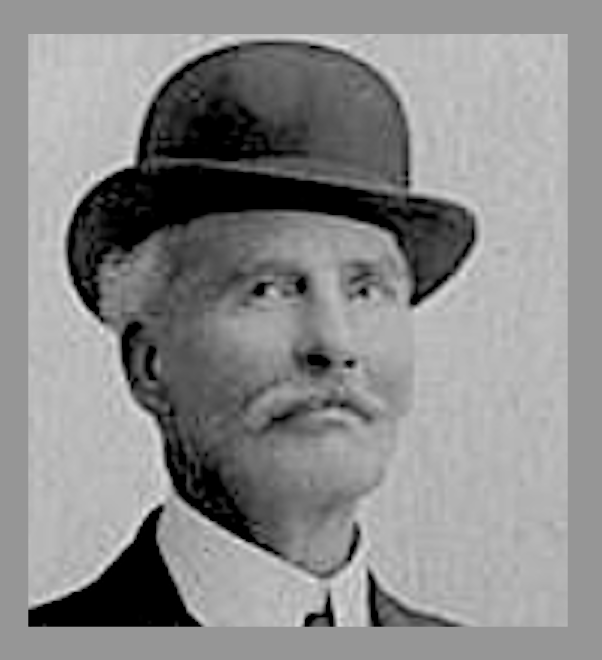
There are no actual photographs of James Stuart.
Above is an AI-generated image of him based on facts known about his life.
James Stuart emerged during the great Victorian expansion of Scotch whisky, a period when distilling evolved from small agricultural operations into an industrial business with global ambitions. Though later overshadowed by the legendary figures who followed him at The Macallan Distillery and The Glenrothes Distillery, Stuart played a foundational role in shaping both distilleries during the late nineteenth century.
Born and raised in the town of Rothes around 1835, Stuart was a corn agent and businessman with a deep interest in whisky. Because he was neither a major landowner nor a member of the aristocracy, relatively little about his personal life was formally recorded. Even so, by the 1860s he had already established himself within the commercial life of Speyside, where farming, milling, and distilling were closely intertwined. Men in Stuart’s position often stood at the center of rural business networks, managing grain, transport, and agricultural finance alongside whisky production. Stuart clearly belonged to that class of ambitious Speyside businessmen who recognized the growing opportunities within the expanding Scotch whisky trade.
In 1868, Stuart acquired the lease and operational control of The Macallan distillery from James Davidson. At the time, Macallan was still essentially a farm distillery: respected locally, but far from the internationally renowned name it would later become. Stuart immediately began rebuilding and improving the operation. The whisky industry was expanding rapidly following the 1823 Excise Act, which had legitimized distilling, and Speyside was emerging as one of Scotland’s most important whisky-producing regions. Stuart understood that Macallan needed to expand if it hoped to compete with the larger and better-financed distilleries appearing throughout the region. By this point he was also proprietor of the Mills of Rothes, giving him valuable experience in grain commerce and local industry. More importantly, however, he understood whisky itself. He believed that truly exceptional single malt depended upon patience, quality ingredients, and careful maturation. Rather than rushing production to maximize output, Stuart emphasized a slower distillation process designed to create a fruitier and creamier spirit. He also recognized the importance of wood in shaping whisky character. Under his management, casks were carefully sourced and maintained by skilled local coopers whose expertise had been passed down through generations. These principles helped lay the groundwork for the elegant Speyside style that would later become associated with Macallan. Under Stuart’s leadership, Macallan became far more commercially ambitious. The noted Victorian whisky writer Alfred Barnard later visited the distillery while it remained under Stuart’s ownership. Barnard described a traditional operation that nevertheless produced substantial volumes of whisky, much of it destined for the English blending market. Stuart’s tenure, therefore, represented a transitional period in Scotch whisky history: the movement from small farm-scale distilling toward larger industrial production tied to international commerce.
As the whisky boom of the 1870s accelerated, Stuart’s ambitions extended beyond Macallan itself. Demand for blending stock had increased enormously, and distillers capable of producing elegant, reliable spirit stood to make fortunes. Stuart clearly believed there was room in Speyside for another major operation. So in 1875, he partnered with several influential local businessmen, including Robert Dick, William Grant, and solicitor John Cruickshank. Together they formed James Stuart & Co., a partnership intended to expand their influence within the whisky trade. Their most ambitious project was the construction of a completely new distillery at Rothes. That distillery would become Glenrothes.
Glenrothes was officially founded in 1878, with Stuart named as proprietor of the firm. From the outset, James Stuart & Co. aimed to produce a high-quality single malt with a lighter and fruitier character, rather than the heavier peat-forward styles then common in many parts of Scotland. However, the venture nearly collapsed before construction was even completed. In 1878, the failure of the City of Glasgow Bank triggered a financial crisis that affected businesses throughout Scotland. The resulting suspension of business at the Caledonian Bank led to the dissolution of the original partnership. John Cruickshank, William Grant, and Robert Dick subsequently formed a new company, William Grant & Co., and continued construction of the Glenrothes distillery so that the project moved forward.
The first spirit flowed from Glenrothes on 28 December 1879, the very same day as the catastrophic collapse of the Tay Bridge in Dundee. The coincidence became one of the enduring legends associated with Glenrothes, and was often regarded as an ominous beginning for a site that would later endure fires, explosions, and warehouse disasters. Nevertheless, Glenrothes eventually developed into one of the major Speyside distilleries of the Victorian era. Stuart’s role in its creation secured his place in Scotch whisky history, even if later ownership changes gradually obscured his name.
Throughout the 1880s and early 1890s, Stuart continued overseeing whisky operations during a period of extraordinary industry growth. Scotch whisky exports expanded dramatically across Britain and abroad, fueled largely by the growing popularity of blended whisky. Distilleries capable of producing consistent, high-quality malt spirit became increasingly valuable. Although Stuart’s personal life remains difficult to reconstruct in detail, surviving records suggest he married and raised a family in the Rothes area while continuing to build his business interests. Like many Victorian industrialists outside the aristocracy, much of his private life went undocumented, leaving historians to piece together his story primarily through commercial and legal records.
James Stuart is believed to have died around 1895. During his lifetime, he was clearly ambitious, financially daring, and willing to undertake major industrial projects during periods of uncertainty. Building and expanding distilleries in Victorian Scotland required far more than technical whisky knowledge. It demanded expertise in banking, agriculture, transport, labor management, and commercial negotiation. Stuart operated successfully in all of those spheres.
In the end, James Stuart’s influence on Scotch whisky was substantial. He bridged two eras: the older world of farm distilling and the industrial age of large-scale Speyside whisky production. He refurbished Macallan at a pivotal moment in its history and helped build Glenrothes from the ground up. Both distilleries would later become internationally recognized names associated with high-quality Speyside malt whisky. Yet, long before collectors paid fortunes for rare Glenrothes vintages or Macallan bottlings, James Stuart recognized the commercial and creative potential of whisky made along the banks of the River Spey and pursued that vision with uncommon determination.
Sources:
The Spirits Business, “The Glenrothes: A Brand History”, Annie Hayes, 12 September 2016
JISC Archives Hub (Records of Glenrothes-Glenlivet Distillery)”, archiveshub.jisc.ac.uk
Whiskipedia, “History of Glenrothes Distillery”, whiskipedia.com
Vinum Fine Wines, “Glenrothes: A Distillery Profile”, Vinum Fine Wines, Chris Kelly, 20 December 2023
Contributed by Tracy McLemore, Fairview, Tennessee USA