John Sinclair

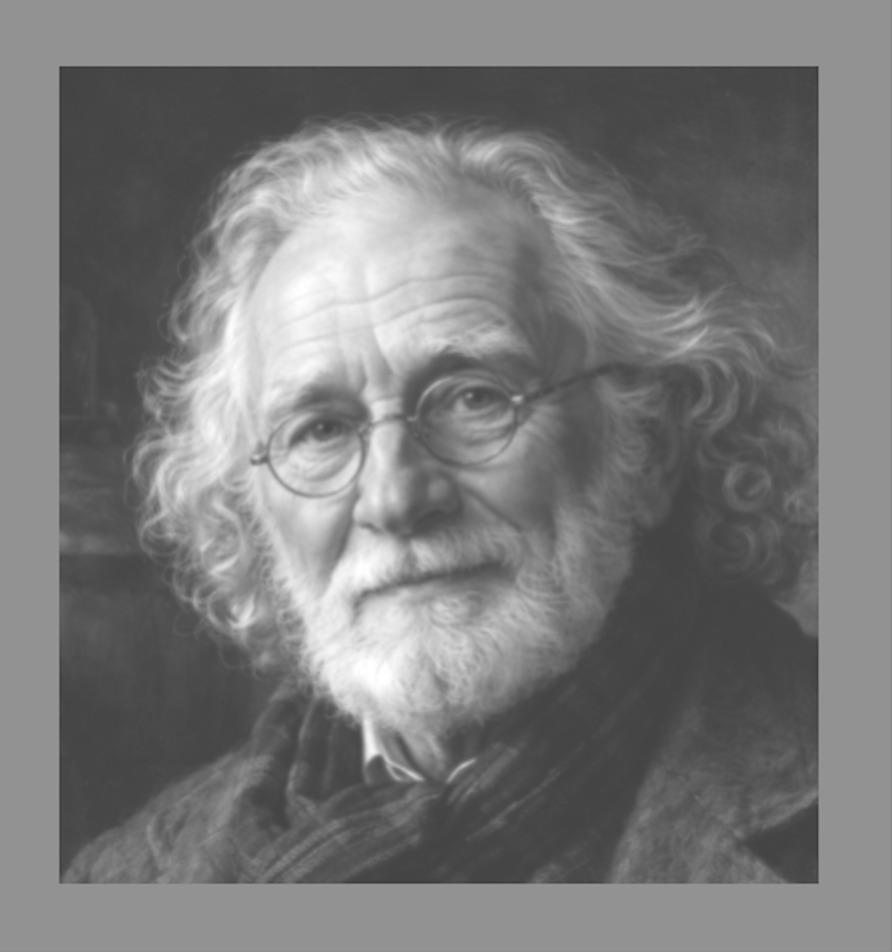
There are no known photographs of John Sinclair known to exist. Above
is an AI-generated image of him based on facts known about his life.
John Sinclair was born in November 1770 at Ardchattan, near Glen Kinglas. His father died while he was still young, and the family responsibilities that followed became part of the pattern of his life: practical decisions made early, with an eye toward what could actually endure.
When Sinclair reached working age, the place that mattered was not Loch Etive, but Mull, and specifically Tobermory. That settlement was created in 1788 by the British Fisheries Society as one of its planned “habitations.” Tobermory’s objective was not fanciful; it was economic and social engineering: gather people into villages, build harbor infrastructure, and tie Highland livelihoods to fisheries, small manufacture, and trade. In any case, Sinclair arrived at Tobermory as a merchant in a town still new enough to feel experimental. The island economy around him was built from what was available: farming, fishing, and, crucially, kelp that was burned to create ash used in industrial processes such as soap and glassmaking. Sinclair’s first footing in Tobermory lay in that world, dealing in soda ash from locally available kelp.
Then came the move that makes him central to Scotch whisky history. In April 1797, Sinclair applied for 57 acres south of the harbor to build houses and a distillery. The timing was almost perverse. Distilling had been banned since 1795 as Britain tried to conserve grain during wartime pressures. Predictably, Sinclair was initially told to build a brewery instead, but he persisted with his plan. He also built a pier, “Sinclair’s Quay,” so that goods could move in and whisky could move out in a harbor town, where a working pier was not a minor detail but potentially the difference between solid commerce and destitute isolation.
By 1798, the distillery existed. Sinclair called it Ledaig, Gaelic for “safe haven,” a name that made sense in a harbor town and even more in a period when legal and economic weather could change against a man without warning. In time, the distillery would be known by the town’s name, Tobermory, but it began as Ledaig: a distillery born in a planned settlement meant to turn a remote bay into a working port.
Meanwhile, Sinclair’s personal life was taking shape as well. In 1814, he married twenty-eight-year-old Catherine MacLachlan. They soon had six children—four daughters and two sons: Margaret, Catherine, Flora Anne, Mary Elizabeth, John, and Robert. Tragically, both of his sons, John and Robert, died shortly after birth.
The physical legacy of that first period as a functioning distillery mattered to the town. Its early buildings were tied to Sinclair’s initial occupation, and the operation’s legitimacy proved its place in the formal system rather than the grey market that had long surrounded Highland distilling. The success can also be traced to licensing. The distillery was licensed in 1823, the year Scotland’s whisky landscape began to harden into a new legal shape. The historical record preserves a blunt measure of activity: in 1822, it was reported that the distillery produced 6,686 gallons of spirit between 10 November 1820 and 10 November 1821. For a founder, figures like that are revealing. They show a working plant that had to obtain grain, pay labor, move product, and survive the long interval between spending money and earning it back.
Sinclair’s distilling years cannot be separated from the Hebridean economy that fed them. Mull’s trade had long been shaped by kelp and by the sea-lanes to larger markets, and Tobermory itself was designed to face outward. That context helps explain why Sinclair did what he did: he was not merely building a stillhouse, but anchoring himself into a commercial ecosystem of housing, harbor access, and value-added industry inside a settlement founded for exactly that kind of experiment.
Unfortunately, the distillery’s first life ended hard. Production ceased in 1837, and in 1844 the property was put up for sale by Sinclair. By then, his identity had widened beyond Tobermory. He was now known as John Sinclair of Lochaline, a man whose mercantile profits had been converted into land and into a second career as a Highland proprietor. He acquired substantial acreage in Morvern and developed the Lochaline estate. The shift reflected a broader Highland pattern: wealth increasingly came from trade and industry, while status was still purchased in land, houses, and local authority.
Catherine Sinclair died in 1825, a loss that marked a turning point in his life and came shortly after the family had moved into Lochaline House. The estate was a physical marker of the new stage he had built for himself across the Sound of Mull. By the 1840s, Sinclair appears not merely as a private landowner but as a recognized local figure. During the years of Highland hardship that followed the collapse of older economic supports and the shocks of bad harvests, he is listed among those associated with Morvern in contemporary compilations addressing Highland destitution.
Ledaig distillery, meanwhile, fell silent. It lay mothballed for forty-one years before reopening in 1878, operating under a succession of owners until it was purchased in 1916 by Distillers Company Limited. Fourteen years later, it closed again.
Sinclair himself lived a long life. He died on 11 January 1863 at Lochaline, Morvern, aged ninety-three. He had outlined his beloved Catherine by almost forty years.
Viewed whole, his career traces a distinctly Hebridean arc: a merchant who seized the opportunity of a planned harbor town, founded a distillery when policy made distilling politically fraught, built the infrastructure needed to move goods, and then outlasted the enterprise he created, re-emerging in later life as a laird-like landowner on the mainland shore opposite Mull. The “safe haven” name he gave his distillery reads, in hindsight, like a businessman’s hope made permanent in Gaelic: a harbor, a pier, an industry, and a place on the map strong enough to survive him.
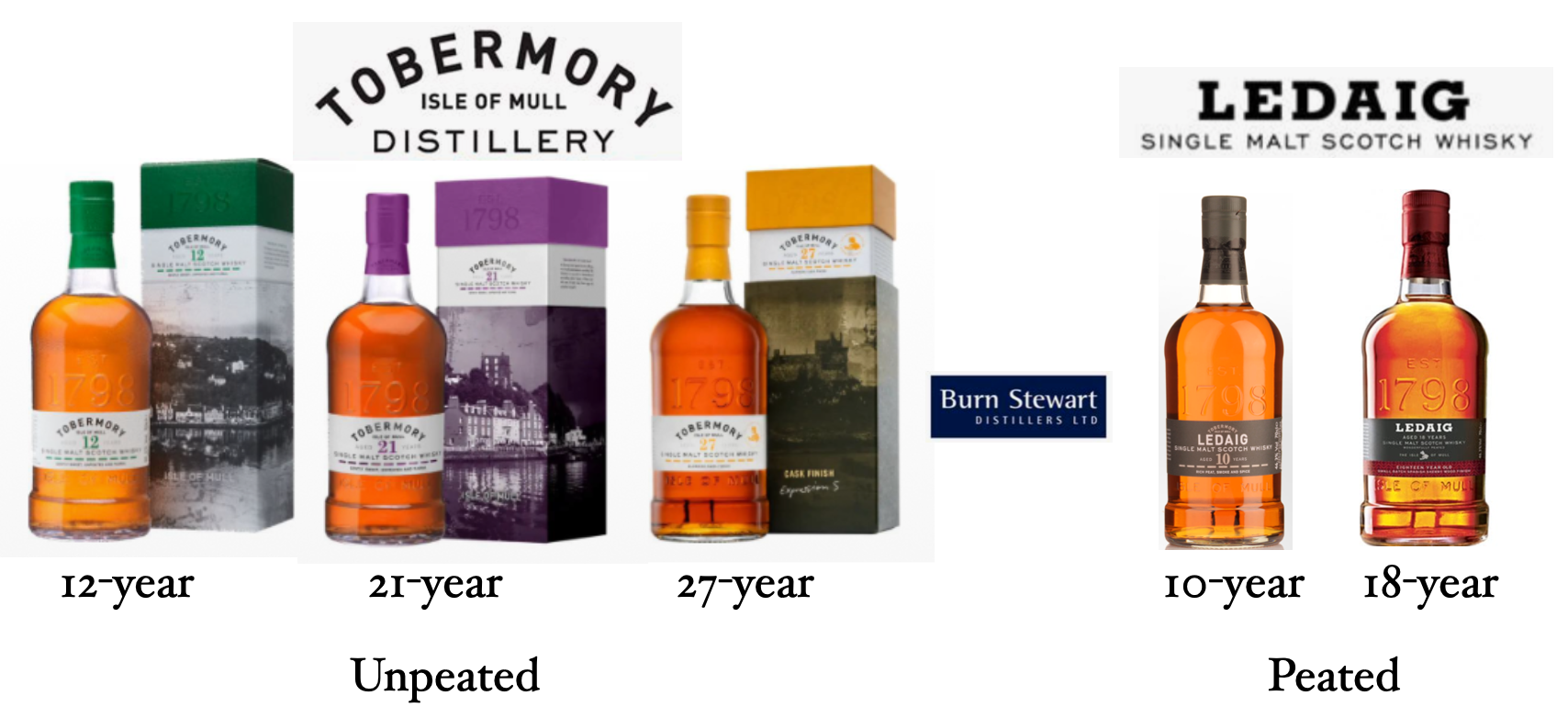
More than a century after its founder’s death, the name itself found new life. In 2007, under Burn Stewart Distillers, Tobermory’s original name was revived as Ledaig and launched as a heavily peated ten-year-old single malt, standing in deliberate contrast to the unpeated Tobermory. The distillery that had begun as a safe haven in an experimental harbor town once again carried the name its founder had chosen, linking modern whisky back to a merchant’s gamble on a remote Hebridean bay.
Sources:
Argyll Family History Society, “John Sinclair of Lochaline”, www.afhs.org.uk
Tobermory distillery, “Official History”, www.tobermorydistillery.com/our-story
British Fisheries Society, “Tobermory town history”, www.scotlandspeople.gov.uk
University of Edinburgh ERA, “The British Fisheries Society…”, Jean Dunlop, 1952
Publication, “The Whisky Distilleries of the United Kingdom”, Alfred Barnard, 1887
WikiTree genealogical summary, “John Sinclair”
Contributed by Tracy McLemore, Fairview, Tennessee USA