John Smith

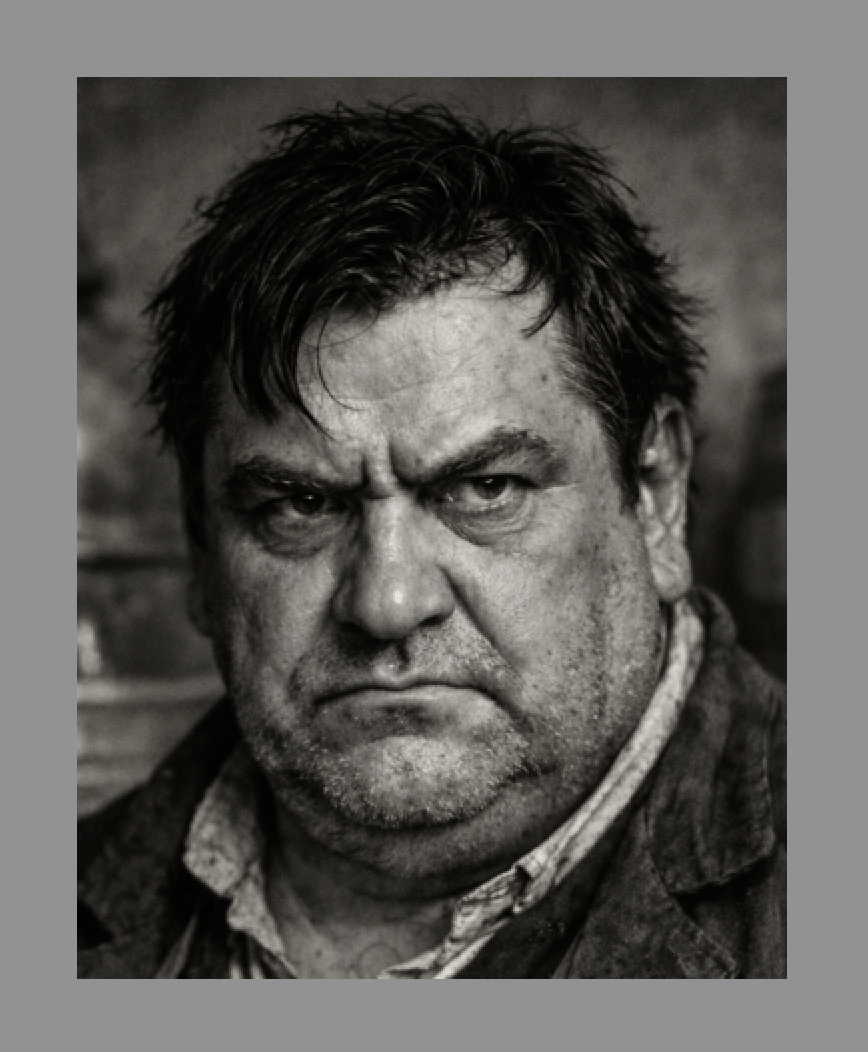
There are no known pictures of Cragganmore’s John Smith. Above is an AI-generated image of him based on facts known about his life.
“Big John” Smith was born in 1833. He came up in the Speyside–Glenlivet world at a moment when Highland distilling was shifting from a landscape of illicit bothies and local barter into a disciplined trade that depended on leases, water rights, transport, and dependable buyers. Big John was the son of the former brewer at Auchorachan, which places his earliest influences inside the working, hands-on culture of malt and wash. He was described as a distiller “graduate” of The Glenlivet, where he rose to become head brewer and manager, while his younger brother George also began his career under their father’s tutelage. Clearly, Big John was a man shaped by the process and routine of mashing, fermentation, still work, and excise realities, long before he ever laid a foundation stone.
By the mid-1860s, Smith had moved beyond apprenticeship into responsibility. In 1865, the Grants leased the farm and distillery at Rechlerich in Strathspey and initially sub-let the distillery known as Glenfarclas, to John Smith. This was not a small vote of confidence. Glenfarclas sat in a district where reputation traveled quickly, and leasing a distillery demanded both technical competence and the ability to handle contracts, labor, and sales. The same period is remembered as the phase when Smith had already accumulated experience in leadership roles at other distilleries, named variously as Macallan, The Glenlivet, Glenfarclas, and Wishaw.
In 1869, Smith made the move that fixed his name to a place. He secured land leased from Sir George Macpherson-Grant of Ballindalloch and built a distillery beside the Craggan Burn, close to the River Spey and near the Strathspey railway line. The decision was strategic rather than scenic: water, power, and transport were the essentials. When Alfred Barnard visited the distillery in the mid-1880s, he recorded the basics with an engineer’s eye; water supply from the Craggan Burn, buildings spread over several acres, and a site that faced the Spey with the hill of Cragganmore rising behind. Barnard’s account also preserves something rarer than production figures: a glimpse of how recently the shadow of illicit distilling still lay over the district. He notes that the receiving and “ball room” at Cragganmore was the remaining portion of a smuggling bothy that had not been demolished when the distillery was built, and he adds that Smith told him that only a few years before Cragganmore’s construction, there had been as many as 200 illicit distilleries at work in the Glenlivet area. One can then understand what Smith was doing. He was not simply making whisky; he was building a lawful industrial plant in a region where illegal production had once been common enough to shape the very architecture of his distillery.
Cragganmore’s early operation was also, unmistakably, a family enterprise. Barnard stated that William Smith, Big John’s son, was the manager of the works and personally guided the tour. In the same description, Barnard reported that William rented the nearby Lagmore farm, while John Smith rented additional farms and was “noted for his breed of cattle.” These points show the typical Victorian Highland business pattern, where farming, fuel supply, and distilling sat side by side, each supporting the other.
Commercially, Cragganmore had the kind of dependable outlet every new distillery needed. Barnard wrote that the annual output was being purchased by James Watson & Co., Scotch whisky merchants of Dundee, “ever since the distillery has been established,” and that the firm had first introduced it to the market. It is an early sign of how Speyside malt was becoming inseparable from the blending trade: secure buyers, secure contracts, and create reputation through consistency.
Big John’s personality became part of the distillery’s legend, but even the “legend” rests on practical facts. Modern distillery material emphasizes that he lobbied for a railway siding, and that his ability to use rail transport, along with his skill as a distiller, helped turn Cragganmore into a high-quality malt. A whisky publication adds a vivid detail that aligns with multiple retellings: Smith was so large that he reportedly traveled in a guard’s van because he could not fit through normal carriage doors. The point is not the anecdote for its own sake, but what it suggests about the man’s habits: he traveled, inspected, pushed projects forward, and treated transport as central to whisky’s future.
The later management story also reveals the shape of his family life more clearly than any surviving personal diary. Barnard’s text includes a sober postscript: John Smith died in 1886, and thereafter “his son, in connection with his uncle,” carried on the business. In the broader distillery histories, that transition is described as a period of trusteeship and family oversight, led by Smith’s brother George, until John’s youngest son Gordon was old enough to take control. At that point Gordon, then only 14 years old, was too young to assume control immediately, so George oversaw operations until Gordon’s maturity. In 1887, only a year after John’s death, Cragganmore’s rail advantage was showcased when a “whisky special” train left Ballindalloch carrying a substantial load for shipment. It was presented as a milestone, proving how Speyside distilleries exploited modern transport.
By 1893, the succession had settled into its next generation: Gordon Smith had by then assumed control of the distillery. He went on to modernize and rebuild significant parts of the site in the early twentieth century, but the essential point for John Smith’s biography is that the distillery he founded was stable enough and structured enough to outlast him and remain in family hands for decades.
So John Smith’s life reads as the arc of a nineteenth-century whisky professional who rose through the Glenlivet sphere, handled leases and management posts, and then built a distillery designed for the modern era: water-driven, contract-supplied, and rail-connected. Cragganmore’s name means “great rock,” and Smith’s real legacy is the solid structure he left behind: a distillery fitted to its landscape, but also fitted to a changing industry that was learning how to move whisky reliably and in volume from Speyside to the wider world.
Sources:
Malts.com by Diageo, “Cragganmore brand page”, www.malts.com/en-us/cragganmore
Whiskipedia (transcription from Alfred Barnard, The Whisky Distilleries of the United Kingdom, 1887), whiskipedia.com/barnard/cragganmore
Whisky Magazine Issue 25, “Cragganmore: Reclusive Classic”, Gavin Smith, 16 Aug 2002
Edinburgh Whisky Academy, “A history of Glenlivet (the place)”, www.edinburghwhiskyacademy.com/blogs/feature/a-history-of-glenlivet-the-place
Master of Malt (blog), “The changing role of the whisky distillery manager”, Nicholas Morgan, 18 May 2022
The Whisky Exchange, “Cragganmore overview”, thewhiskyexchange.com
whisky.com, “Cragganmore”, www.whisky.com
Contributed by Tracy McLemore, Fairview, Tennessee USA