John Stevenson

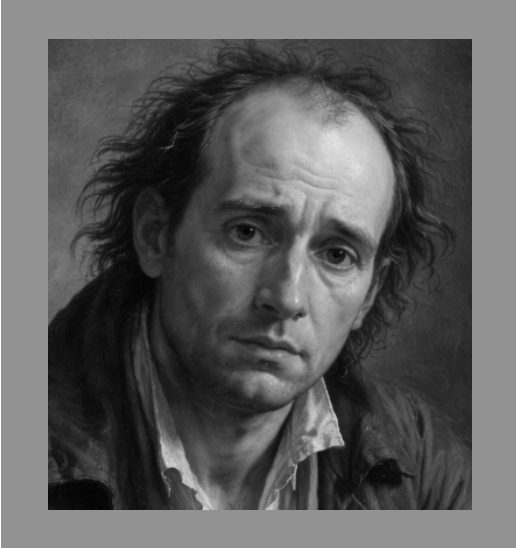
There are no known photographs of John MacDougall known to exist. Above
is an AI-generated image of him based on facts known about his life.
John Stevenson stands at the very beginning of Oban’s whisky story, but he is also the biggest part of the rise of the town of Oban itself from a tiny coastal settlement into a busy, working town with shipyards, trade, and an enduring industrial heartbeat.
In 1792, the Duke of Argyll, keen to build businesses, and thus collect tax revenue from his duchy, offered low rent to anyone who would build there. By the time Oban begins to appear as a place being actively “made” rather than merely inhabited, John Stevenson is already established as a tenant of Dunstaffnage and as an energetic participant in local commerce. This is because Stevenson’s entrepreneurship in his pre-distillery activities were not small. He was a merchant, dealing in goods that reflect the practical economy of the West Highlands—wool, oak, fish, and other local produce. Tax records for 1793 reported 28 ships registered in Oban, and 12 of them belonged to John Stevenson and his brother Hugh. Those 12 vessels totaled 720 tons, with one employed in foreign trade and the rest working coastal and fishing routes. In other words, John Stevenson’s world was maritime as much as it was agricultural or industrial: supply lines, cargo, barrels, timber, fish, and the steady movement of goods that made a distilling business plausible in the first place. Throughout this period, Oban’s reputation was growing, but transport was always difficult. Although Oban was by now a thriving port it took time to get the whisky to the main market of Glasgow. It was given a lifeline in 1888 when the railway from Glasgow arrived.
In early Oban, Stevenson also appeared as a civic leader. He was instrumental in establishing a Masonic lodge formed in 1791, a detail that hints at local standing and social organization in a growing community. Against that background, whisky arrives in the record not as a sudden leap, but as an extension of what John Stevenson was already doing: building businesses that needed workers, materials, and routes to market.
In 1793, Hugh and John Stevenson established a brewery in Oban; in 1794, that brewery became the Oban distillery. Oban’s modern reputation is as an “urban” distillery, that is, still sitting within the town rather than out in the countryside, which shows that it was there early, before Oban fully encased it. The Stevensons’ role in town development treat the distillery as one element of a broader commercial ecosystem that included a tannery and ship-related trades.
John operated the distillery with his brother, Hugh, as hands-on proprietors, overseeing production while navigating an environment of inconsistent regulation, fluctuating grain prices, and competition from both legal and illicit distillers. The distillery appears to have functioned steadily during this period, producing spirit for local sale and regional trade rather than large-scale export. By the 1810s, however, pressures on the business intensified. Changes in taxation and excise enforcement increased operating costs, while periodic economic downturns and wartime disruption affected demand and access to capital. Records suggest that the Stevensons struggled to keep the business solvent as debts accumulated, a common fate for small early distillers operating without deep financial backing. Following Hugh’s death in 1820, Hugh’s son, Thomas Stevenson, took over the distillery. Unfortunately, a series of unsuccessful business investments forced him into bankruptcy on 21 March 1829 with debts of over £8,000. His assets included the distillery, the unfinished Caledonian Hotel on George Street, the slate islands of Belhahua, a house in Oban called Boglehall with the garden ground attached and his house on George Street, were all put up for sale. Thomas’s business life, then, ended in financial collapse. At that point, the distillery passed again to a John Stevenson, but not the founder-brother John. This was Hugh’s grandson who bought the distillery and related properties, keeping Oban in Stevenson hands for another generation.
After the bankruptcy of the Oban distillery in 1820 and the death of his brother Hugh in the same year, John Stevenson disappeared from the public and commercial record. Unlike Hugh, whose death is clearly documented, no probate file, burial record, or contemporary obituary has yet been reliably linked to John. There is also no evidence that he re-entered distilling, held another licensed still, or played a visible role in whisky commerce after Oban’s failure. This silence suggests that John likely withdrew from business life altogether, either through ill health or quiet retirement rather than relocating to a larger distilling center such as Campbeltown or Glasgow, where records are typically more robust. As for Oban distillery, after it finally left Stevenson family control for good in 1866, ownership passed through a series of different proprietors and companies before finally becoming part of what is now Diageo.
If John Stevenson’s personal life is difficult to reconstruct from history, his public footprint is not. He was a founder at the moment Oban’s whisky identity first becomes fixed in the historical record and as a builder of the commercial groundwork that made such a distillery viable: shipping capacity, tradespeople, local commerce, and property development. In the story of Oban, John Stevenson is less a solitary character than a force embedded in a family enterprise, one that not only produced whisky, but one who literally shaped the town that grew up around it.
Sources:
Squarespace-hosted PDF, Stevenson Street”, static1.squarespace.com
Bournemouth University, “The development of Oban as a tourist resort 1770–1901” (PhD thesis), Fiona Morrison, January 2015
scotchwhisky.com (Whiskypedia entry), “Oban”
whisky.com, “Oban Distillery”
Contributed by Tracy McLemore, Fairview, Tennessee USA