
William SImpson

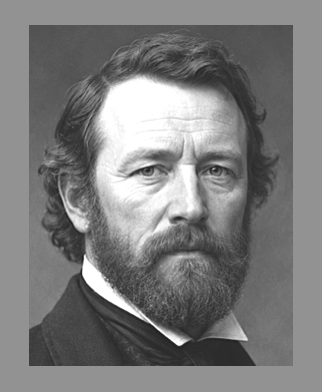
There are no actual photographs of William Simpson
Above is an AI-generated image of him based on facts known about his life.
William Simpson is best remembered as one of the 1898 founders of Speyside’s Glen Elgin Distillery. Simpson belonged to a generation of whisky men who combined agricultural knowledge, distillery management, and financial risk-taking in an era when fortunes could be made quickly and lost just as fast. Nevertheless, he was a capable and ambitious whisky professional whose career unfortunately intersected with what is the most turbulent period in Scotch whisky history.
Simpson was born around 1855. Unfortunately, few records regarding Simpson’s personal details exist, and relatively little is known about his parents, siblings, or early life. By the 1880s, however, Scotch whisky was booming across Britain and throughout export markets, fueled by advances in blending, rail transport, industrial production, and international commerce. Men with practical distilling experience suddenly found opportunities not merely in managing distilleries but to build and own them.
Before establishing Glen Elgin, Simpson worked as a manager in one of Speyside’s best-known whisky houses, Glenfarclas Distillery. It was a role that would have placed him at the center of production, warehousing, labor supervision, and commercial planning. In the nineteenth-century whisky industry, a distillery manager needed technical expertise as well as diplomatic skill. Managers dealt with excise officers, barley suppliers, blenders, transport companies, and workers, often while navigating fluctuating whisky prices and unpredictable harvests. The position also would have carried considerable prestige in Speyside communities. Distilleries were among the major employers in Morayshire, and successful managers often became locally influential figures. Simpson’s years at Glenfarclas gave him practical credibility at a time when investors increasingly sought experienced operators rather than purely financial speculators. So by the late 1890s, Simpson was prepared to move beyond management into ownership. He entered into partnership with James Carle, a banker and agent connected to the North of Scotland Bank. Together, the two men founded Glen Elgin Distillery in 1898 in Fogwatt, Morayshire. Their timing reflected both optimism and danger. The Scotch whisky industry was then nearing the end of an enormous speculative boom. Investors across Scotland were pouring money into new distilleries, expecting global demand to continue rising indefinitely.
Construction of Glen Elgin began during this euphoric period. Simpson and Carle reportedly invested approximately £13,000 into the project initially, a substantial sum for the era. Glen Elgin was designed as a modern Speyside malt distillery, intended to supply fillings both for blends and for independent whisky merchants. The site sat strategically near Elgin, with access to rail transport and the agricultural resources that made Speyside ideal for whisky production.
The distillery began production in May 1900, Unfortunately, by then, storm clouds were starting to gather upon the horizon of the scotch whisky industry. Though no one knew it at the time, storage capacities were high, price manipulation was rife, and demand had been artificially inflated. The market was overheating and the catastrophic failure of Pattison, Elder & Co. in 1898 had sent shockwaves through the industry. Pattison was one of the largest whisky blending houses in Scotland, but reckless speculation and fraudulent accounting drove the company into bankruptcy. That collapse destroyed confidence across the industry almost overnight. The Pattison crash struck Glen Elgin directly, and the project had to be scaled back even before completion because of the whisky market contraction. Simpson and Carle had entered the market at the exact worst possible moment, and optimism suddenly turned into retrenchment. As feared, before long there was a severe downturn in the entire industry, and Glen Elgin shut down after being in operation for only five months. With that, Glen Elgin would be the last distillery to be built in Speyside for the next 50 years.
In February 1901, the distillery was sold to Glen Elgin-Glenlivet Distillery Co., at auction for a mere £4,000. With no appreciable change in the commercial conditions five years later, the distillery was put back on the market, and wine merchant J.J. Blanche Co. bought Glen Elgin, resuming production. Upon the death of Mr. Blanche in 1929, Glen Elgin was to be sold yet again. This time, the distillery was acquired by the Scottish Malt Distillers, which eventually became part of Diageo.
Although Glen Elgin thrived under later ownership, circumstances conspired so that William Simpson himself faded from the public narrative after the early years of the Glen Elgin distillery story. Surviving records become fragmentary regarding his later career, personal finances, and family life. Even so, his role in whisky history remained significant. Glen Elgin ultimately endured when numerous speculative distilleries disappeared permanently. The distillery’s long survival ensured that Simpson’s original venture continued to influence Scotch whisky long after the financial circumstances that nearly destroyed it had dissipated.
William Simpson’s story ultimately reflects both the promise and peril of Scotch whisky’s great expansion era. He represented the ambitious professional distiller willing to risk reputation and capital on an independent venture. Glen Elgin was born from confidence in Scotch whisky’s future, nearly destroyed by financial collapse, and ultimately preserved long enough to become one of Speyside’s enduring distilleries. Today, visitors to Glen Elgin encounter a mature and respected distillery whose survival through wars, consolidations, and changing ownership structures stands as a quiet monument to the determination of its founders. Although William Simpson never became one of the universally famous names in Scotch whisky history, his role in creating Glen Elgin secured him a lasting place within the story of Speyside distilling.
Sources:
ScotchWhisky.com, “Glen Elgin”, scotchwhisky.com
Scotch Malt Whisky Society, “Unsung Hero: Glen Elgin” (from Unfiltered’, Issue 100), Gavin D. Smith, smws.com
Whiskipedia, “Glen Elgin Distillery”, whiskipedia.com
Contributed by Tracy McLemore, Fairview, Tennessee USA