
Adam Teacher

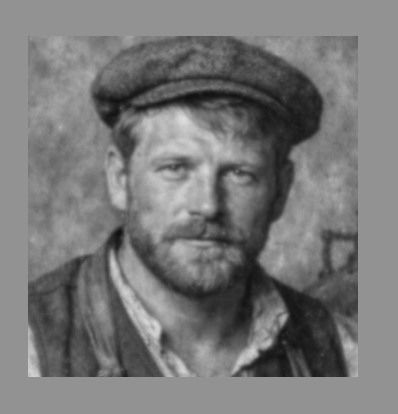
There are no known photographs of Adam Teacher in existence.
Above is an AI-generated image of him based on facts known about his life.
Adam Teacher’s story is inseparable from a blunt commercial truth that many Scotch blenders eventually faced in the late 1800s: if your blend is growing faster than the market can reliably supply malt whisky, you either secure your own source, or you gamble your future on other people’s stills. Adam was about 35 by the time he was in a position to make that decision, and by then, the Teacher family business had already moved through several distinct phases. William Teacher, the original founder of the firm, died in 1876, leaving the company to his sons, including Adam. In 1884, the company registered the Teacher’s Highland Cream name, formalizing a blend that would become the engine of their growth. The more Highland Cream sold, the more the question of malt supply stopped being theoretical. Malt whisky was no longer just an ingredient; it was a dependency.
That pressure is what pushed Adam toward a distillery of his own, and it needed to be one built in a place chosen for logistics. So in 1895, Adam purchased land near Kennethmont in Aberdeenshire at what it called the highest point of the Northern railway line, roughly 600 feet above sea level. In those days, rail access brought most building materials from Glasgow into that rural corner of Scotland without customary delays and costs that could cripple a large industrial build. The distillery would be created for a specific purpose: to guarantee malt whisky for Teacher’s blends, especially Highland Cream. This is often summarized as “securing fillings” for the blend, but that phrase hides the stakes. In a blended-whisky business, supply reliability is market power. Owning a distillery meant the Teachers would not be forced to dilute quality or production based on what they could buy on the open market.
There were other practical criteria of the build, too. The Kennethmont location offered a dependable water supply, nearby peat, and was conveniently located in barley-growing country. These were all inputs that were not decorative details but working requirements for a distillery designed to run at scale. The land belonged to a family friend, Colonel Leith-Hay, so, the site was likely a relationship-based decision as well, with access secured through a local landholding network. Construction followed in stages, and building work started in 1897. Ardmore’s “founded” date is officially 1898, which aligns with the common practice of dating a distillery to the year it was formally established or constructed, even if spirit did not yet flow. From Adam’s view, he had committed a large portion of the firm’s capital, reputation, and future supply chain to a distillery that was still nothing more than a building site.
Then comes the unfortunate twist that makes Adam Teacher both historically important, and personally elusive: he did not live to see the project finished.
Adam died a year after building work began, on 31 March 1898, “just when the finishing touches were being made,” according to Teacher’s own history. In any case, Ardmore was completed in the summer of 1899, but the distillery still had to be brought online. That event occurred later in 1899, however, summaries of the start-up period emphasized how much the Teachers were still learning on the job. Despite Adam’s father’s having distilled his entire life, the rest of the family “didn’t know that much about distilling,” and first relied heavily on the charity of the manager of nearby GlenDronach. Walter Carl Bergius, a civil engineer, and husband to Adam’s sister Agnes, also helped run the business while Ardmore was getting going, again pointing to how the firm depended on experienced knowledge around them.
Adam’s death, though, was not just an emotional blow or a leadership change. It intersected with finance, debt, and timing, exactly the things that would have led to many sleepless nights for any blender building a distillery for strategic stability. Because of the popularity of his father’s brand, Adam had left over half a million pounds, but that the money was tied up in the business, and that it took many years to pay off debt incurred by the building of a distillery. Importantly, the Scotch industry as a whole was also being rocked by the Pattison crash, and heavy debt at that moment was especially dangerous. In other words, Ardmore began life as a solution to supply risk, but it arrived into the world carrying a different kind of risk; financial exposure at a time when confidence across whisky was collapsing. And yet the underlying logic of Adam’s decision held. Ardmore became central to Teacher’s identity as a brand, even to this day. Ardmore is repeatedly described as the principal malt component behind Teacher’s Highland Cream and the “fingerprint” style of the blend in modern brand language. Even without leaning into tasting notes, the historical point stands: building Ardmore anchored the Teacher firm’s blending strategy, because it was an investment in a continuous supply of peated malt, without which, a Highland scotch company is useless.
The most honest way to frame Adam Teacher is this: he was a blender’s heir who treated whisky as a commodity with a supply chain problem before he treated it as a finished product; he read rail lines and land elevations as carefully as any ledger; he bet on a distillery to protect a brand, and although he died before he could see his creation finished, the distillery became exactly what he intended it to be: a secure malt foundation for a brand that would stay in the Teacher family and outlive him by generations.
Ardmore was handed down through the Teacher family’s sons, nephews, and grandsons, staying in the family until 1976, when it was sole to Allied distillers. After Allied distillers itself was sold to Beam Global in 2006, including Ardmore and Teachers, and including Laphroaig, in 2014, Suntory merged with Beam, and that conglomerate still owns Ardmore today.
Sources:
Teacher’s Whisky official site, “Our Story”, teacherswhisky.com
Whiskypedia, “Ardmore”, scotchwhisky.com
Archives Hub (University of Glasgow Archive Services), “Records of Ardmore Distillery…”, archiveshub.jisc.ac.uk
Diving for Pearls, “Part 2: Ardmore history retelling”, 25 January 2017, divingforpearlsblog.com
Whiskypedia, “Teacher’s”, scotchwhisky.com
Contributed by Tracy McLemore, Fairview, Tennessee USA