John Thompson

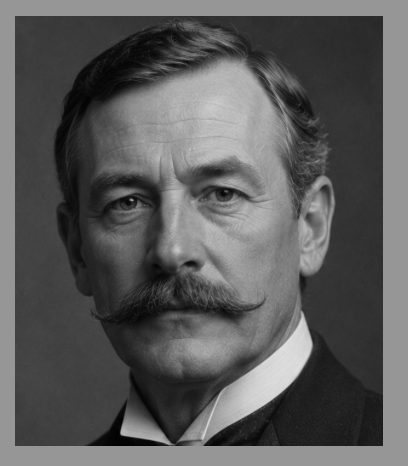
Knockando Distillery was born during one of the most turbulent periods in Scotch whisky history. The man responsible for bringing it into existence, John Tytler Thomson, stood at the center of that volatile age. Investor, gambler and entrepreneur Thomson was part industrial dreamer, and part Victorian opportunist. Although the distillery that he founded would eventually become one of Speyside’s enduring names, Thompson’s own tenure at Knockando was remarkably brief; yet his vision, timing, and willingness to build during the final years of the nineteenth-century whisky boom permanently shaped the landscape of Speyside whisky.
John Tytler Thomson was born near Glasgow in 1850, and though surviving public records regarding his upbringing are scarce, they are clear that in May 1874, Thomson married Christina Johnstone. The couple soon became the parents of a daughter, Joan, born in 1876. As a young husband and father in search of a meaningful career, Thomson found himself firmly within the class of commercially minded businessmen who desired a move into whisky during the enormous expansion of Scotch production in the late Victorian era.
Unlike many earlier distillery founders who emerged directly from farming or illicit distilling traditions, Thomson belonged to a generation that approached whisky as modern industry. By the 1890s, distilling in Scotland had become increasingly corporate, capital-intensive, technologically ambitious, and was booming. Blended Scotch whisky had become internationally fashionable. New distilleries appeared rapidly across Speyside, fueled by investor enthusiasm and easy access to capital. Railways finally connected remote regions to urban markets, while advances in engineering allowed distilleries to operate on a larger and more efficient scale than ever before. During those whisky heydays, Thompson was successfully involved in other commercial ventures connected to trade and investment. His rise in society coincided with the extraordinary speculative expansion that overtook Scotch whisky during the final decades of the nineteenth century.
It was into this atmosphere that John T. Thomson launched his most ambitious idea to build a brand new distillery at Knockando on the banks of the River Spey. The location was strategically chosen. The area possessed excellent spring water from the Cardnach spring, access to barley-growing districts, and proximity to railway transportation. Thomson secured the services of Charles Doig, the legendary distillery architect whose pagoda-roof ventilators became iconic symbols of modern Scotch whisky production. Doig was told to build the first Speyside distillery to be connected to the electricity grid, a remarkable innovation at the time. The build started in 1898 and the distillery opened in May 1899. Less than six months later the distillery produced its first spirit. For a brief moment Thomson appeared poised for success. The distillery itself was handsome and modern, standing above the River Spey among forests and rolling hills. Workers’ cottages were constructed nearby, and railway access soon connected the distillery directly to the broader transportation network of northern Scotland.
Yet Thomson’s timing could not have been worse, and soon proved catastrophic.
The same year that Knockando entered production, the great Pattison crash devastated the Scotch whisky industry: Pattison Ltd., one of the era’s largest whisky firms, collapsed spectacularly in 1898 after financial fraud and reckless speculation were exposed. The resulting panic shattered investor confidence across the Scotch industry. Distilleries that had expanded aggressively during the boom suddenly faced collapsing demand, tightening credit, and severe financial pressure. Knockando became one of the casualties, and the distillery survived only about ten months before operations ceased. Thomson’s company, J. Thomson & Co., encountered severe financial difficulty almost immediately. Within a year, the distillery had closed and Thomson lost effective control of the enterprise he had only recently established. He put his beautiful new distillery up for sale, but it lay dormant until 1903, when wine merchants W&A Gilbey purchased their third distillery in the area, after they had already taken ownership of Glen Spey and Strathmill. Closed distilleries came cheap in that time, and the wine merchants took their chances for their whisky blending operations
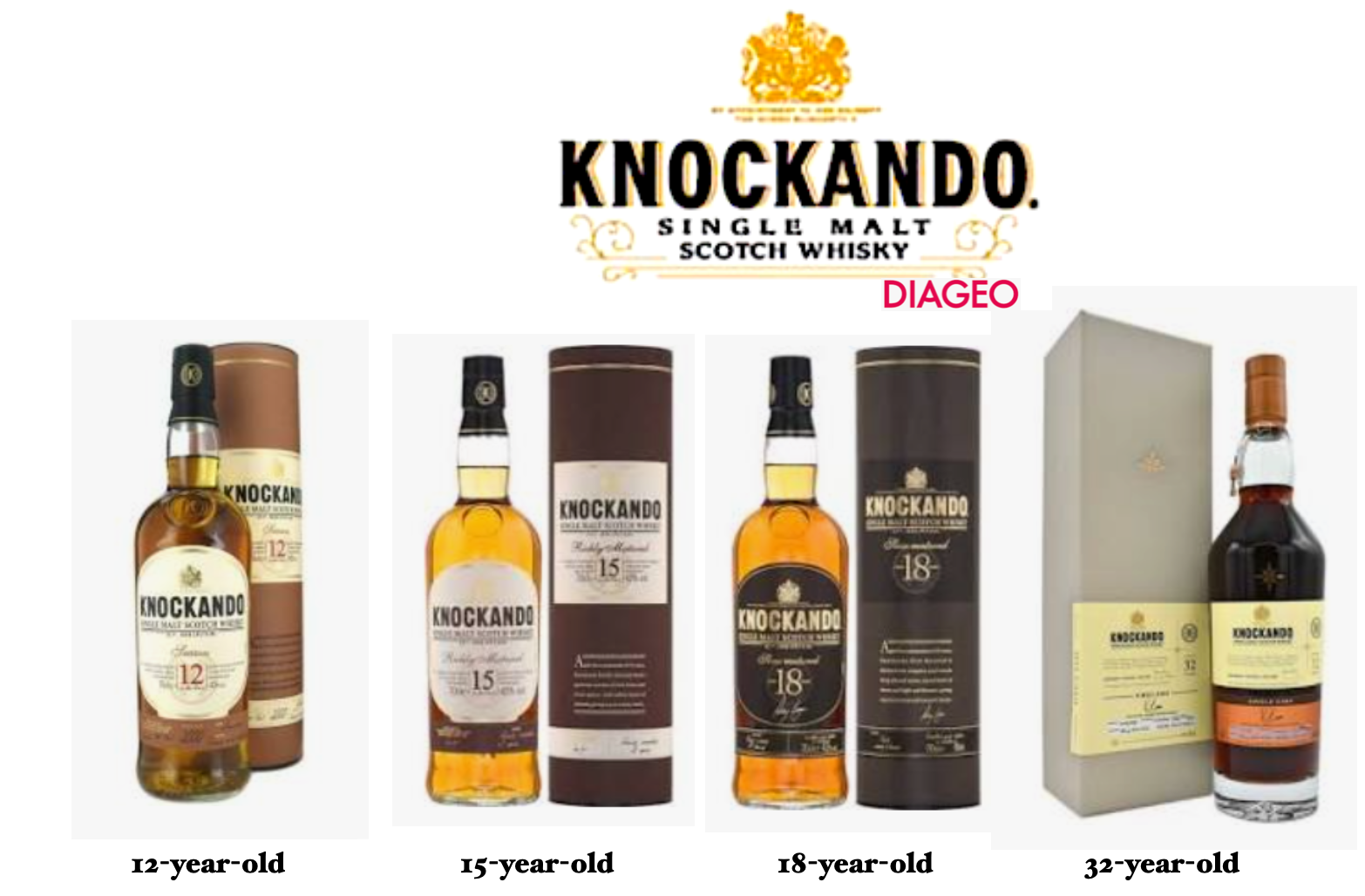
Since that dark time, Knockando has survived Prohibition in the 1920s, two World Wars, and has stood strong through another major industry contraction in the 1980s. It has only changed ownership through mergers; never again closing, and remains under the strong ownership of Diageo today, and is one of the key components within J&B Rare. Yet the brevity of Thomson’s ownership has obscured his importance in the history of Knockando. Later owners have certainly enjoyed far longer and more commercially successful associations with the distillery. However, the essential character of Knockando originated with Thomson’s founding vision. He selected the site, commissioned the architecture, established the production philosophy, and created the physical distillery that still survives today
Disappointingly, the historical record concerning Thomson’s life is frustratingly limited. Unlike some nineteenth-century distillers whose family dynasties remained closely associated with their distilleries for generations, Thomson’s connection to Knockando effectively ended after the financial collapse. And while John T. Thomson may not possess the extensive surviving biography of some larger-than-life whisky barons, his importance is undeniable. He founded one of Speyside’s enduring distilleries at the precise moment when Scotch whisky was transforming into a global industry. He embraced technological innovation, invested heavily in modern production, and helped define the industrial character of late Victorian Scotch whisky. In the end, Thomson’s greatest achievement was not commercial success during his own lifetime, it was creating a distillery strong enough to outlive the financial disaster that destroyed his ownership. More than a 125 years later, Knockando still stands elegantly above the River Spey, continuing the work that John Tytler Thomson began in 1898.
Sources:
Scotch Whisky, “Knockando”, scotchwhisky.com
Distilando Beta, “Knockando Whisky”, distilando.com
Whisky.com, “Knockando Distillery”, whisky.com
Family Search (ancestry), “John T. Thompson, b.1850”, ancestors.familysearch.org
Contributed by Tracy McLemore, Fairview, Tennessee USA