Marko Tayburn

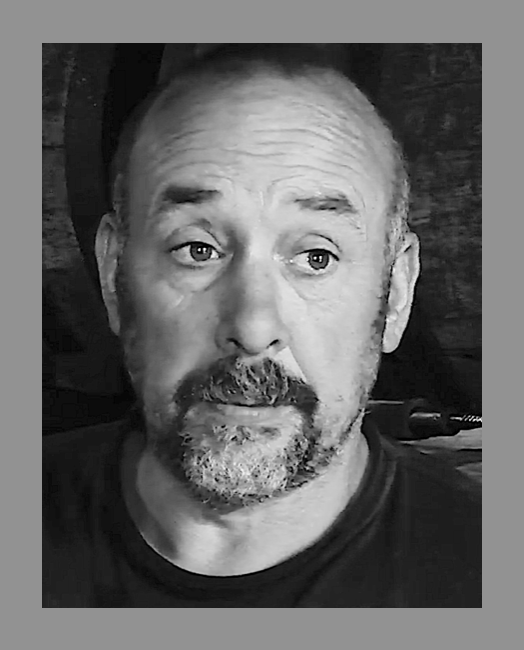
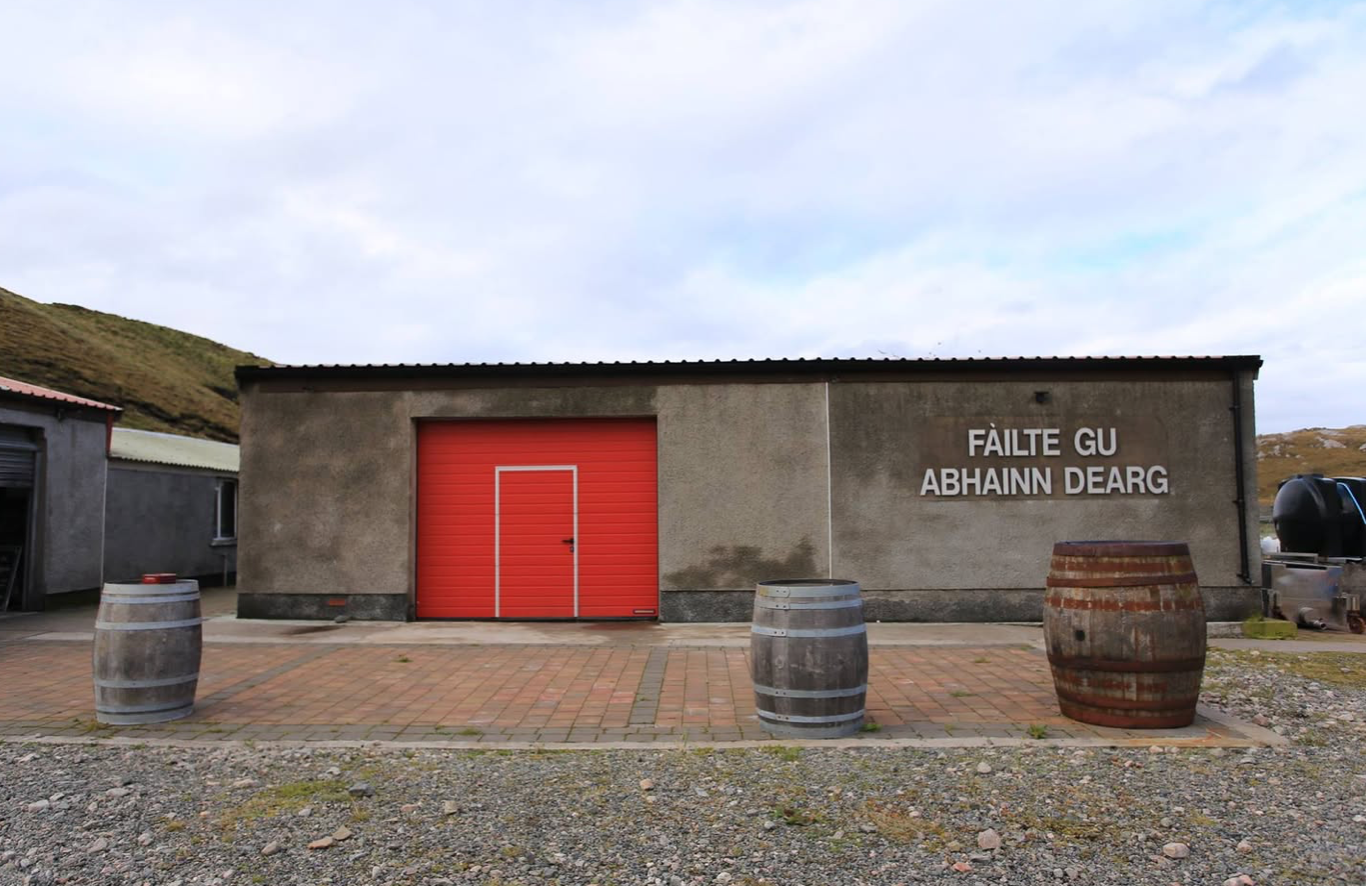
Marko Tayburn built Abhainn Dearg the way remote places often build anything that is meant to last: with stubbornness, improvisation, and a refusal to wait for mainland permission. On extreme northwestern Scotland’s Hebridean Isle of Lewis, where Gaelic remains a living language and the Atlantic dictates the pace of life, he reintroduced legal whisky-making to the Outer Islands after a gap measured in generations. Abhainn Dearg (pronounced “AVun-JURrig”, which is Gaelic for ‘Red River’), opened in 2008 at Carnish, near Uig. It was Lewis’ first legal distillery in roughly 170 years and one of the most geographically isolated whisky sites in Scotland.
Tayburn is not an absentee owner who parachuted in with a brand deck. He was born & bred on the Isle of Lewis, a local figure operating inside a culture where provenance is not a marketing feature, but a social fact. His distillery’s guiding premise is equally direct: Lewis should be able to supply its own whisky, and it should taste like Lewis. That is, made in small batches, with local raw materials where possible, and with a process designed around the realities of island logistics rather than the efficiencies of a large industrial plant.
Abhainn Dearg’s origin point was a piece of redundant rural infrastructure. Tayburn developed the distillery on the site of a former salmon hatchery, an abandoned complex near the coast that was structurally useful, if not glamorous. The stillhouse itself was a new structure, but the broader site carried the bones of its previous life. Tayburn’s adaptive-reuse choice signals the practical, do-it-with-what-you-have mindset that shows up repeatedly in descriptions of Tayburn and his operation. That attitude shows up most dramatically in the stills. When it came time to equip Abhainn Dearg, Tayburn did not follow the standard path of commissioning a major manufacturer. Instead, he designed and built the stills himself, modeling them on an old illicit still he had discovered locally. The stills sport elongated necks with “witches’ hat” profiles, thin descending lyne arms, and worm tubs set outside; choices that lean into older styles of condensation and heat management, and that fit a distillery built to be distinctive rather than merely compliant.
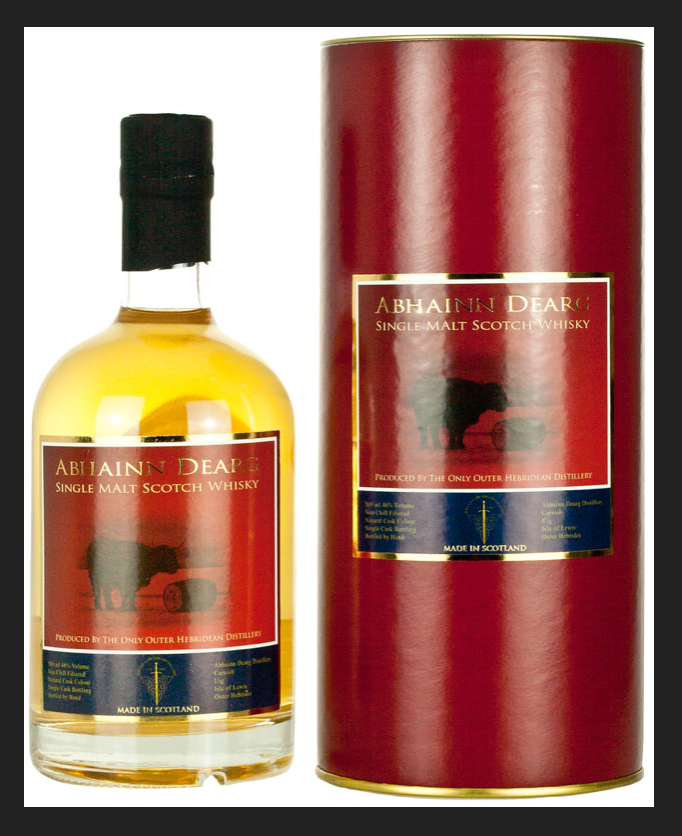
Production began under Tayburn’s ownership in September 2008. The distillery’s early releases were shaped as much by time as by ambition. The Outer Hebrides had not had modern legal whisky stocks lying in warehouses for decades; Tayburn then had to create inventory from scratch. In 2010, Abhainn Dearg shipped its first spiritoff the island: The Spirit of Lewis, described by the distillery as “new spirit.” In 2011, Abhainn Dearg launched a limited edition three-year-old single malt, and tied its public debut to a major cultural event: the Royal National Mòd in Stornoway, a flagship festival of Gaelic music and arts that the distillery calls, with island affection, the “Whisky Olympics.”
This early phase established a pattern that still defines Tayburn’s role: he was not simply putting whisky into bottles; he was re-stitching whisky into Lewis’ public identity. The Isle of Lewis had a short-lived legal distillery in the 1850s, then a long period where Lewisians imported whisky or relied on illicit local production. Abhainn Dearg’s arrival in 2008 was presented as a reset; legal whisky-making on Lewis again, built by one man’s determination and executed with island resourcefulness. The distillery has remained intentionally small. Abhainn Dearg is a modest operation with a limited annual capacity and a hands-on, craft workflow. Regardless of age, Abhainn Dearg will always be limited in output, oriented toward quality and toward people who visit or support directly, an approach that fits a remote distillery where the romance of place is real, but the economics require careful control of stock.
That stock-management reality became more visible as the whisky matured. In December 2018, Abhainn Dearg released its first 10-year-old single malt. Tayburn spoke candidly about the balance required when a small distillery tries to age whisky longer. The problem is simple: if you sell too much of the oldest whisky you have, you eat the future. The work becomes a constant juggle, matching today’s demand with tomorrow’s ambitions.
Even the distillery’s basic inputs are treated as part of the story. Abhainn Dearg’s identity leans on Lewis’ physical environment: the Red River itself, nearby water sources, and local barley where feasible. The result is a whisky narrative that does not need invented drama. The drama is alreadythere. In the geography, in the remoteness, and in the decision to buildstills inspired by illicit island history, the slow patience required to make mature whisky when you start with empty warehouses.
Tayburn’s personal life, by contrast, remains largely private, and public information does not reliably document Tayburn’s spouse, children, nor a birthdate. His early life, including parents or siblings is not posted. His education and early jobs are also not consistently detailed in high-quality public sources; instead, the record emphasizes only the practical competence implied by what Tayburn built: a functioning distillery on a harsh, remote, converted industrial site, equipped with idiosyncratic stills, producing highly sought-after whisky that has progressed from new spirit to a decade-agedsingle malt.
Taken as a whole, Tayburn’s timeline reads like a modern Hebridean version of an older Scottish pattern: a single determined operator revives a local craft, not as a nostalgic reenactment, but as a working business rooted in place. Abhainn Dearg’s story is inseparable from its founder, because the distillery is an expression of his choices: site, equipment, scale, and cultural alignment. Every step Tayburn took required patience, because whisky cannot be hurried, and on the untamed Outer Hebrides, neither can much else.
Sources:
Abhainn Dearg Distillery official website, “About”, abhainndeargdistillery.co.uk
Whiskypedia, “Abhainn Dearg”, scotchwhisky.com
Scotch Whisky, “Abhainn Dearg releases first 10 Year Old”, Matt Evans, 31 December 2018
Contributed by Tracy McLemore, Fairview, Tennessee