
William Teacher

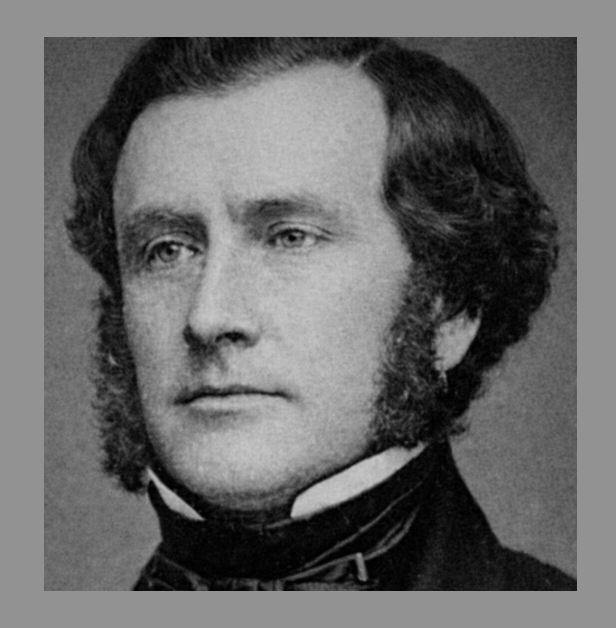
Born in Glasgow in 1811, William Teacher experienced the hard-edged world of early industrial Scotland quickly. That era and place were a time when a family’s fortunes could abruptly turn on a single mishap at sea or a single lost job on land. Teacher’s story matters because he helped shape how everyday Scots bought, drank, and trusted whisky, one bottle at a time, until his name became utterly synonymous with steady quality in a city that had no shortage of drink to sell.
Teacher’s childhood was marked by misfortune, disruption, and hard work. His father was reported lost at sea when he was still small, and following that tragedy, Teacher moved with his mother into rough textile mill life just outside the city. He had only about six months of formal schooling before labor became the family’s practical education. At roughly seven years old, young William was working in a spinning mill, learning the discipline of long hours and the sharp arithmetic of wages and rent. For a time he was apprenticed to a tailor, and the small kindness of that household left a mark: the tailor’s wife read to him while he stitched, giving him a glimpse of a wider world than the mill floor allowed. The reprieve did not last; he was soon required to return to mill work, but the idea that a better life could be built patiently but deliberately stayed with him.
By 1830, Teacher was 19 and ready to leverage a shifting legal landscape. He applied for and secured a license to sell whisky from part of a grocer’s shop in the Anderston district of Glasgow. The shop was tied to the MacDonald family, in which there was a pretty daughter named Agnes; Teacher’s early retail whisky trade matured in that orbit. Two years later, Teacher married Agnes MacDonald, and the partnership then anchored his personal life as well as his business life.
At that time, whisky in Glasgow was still largely a matter of place, reputation, and who trusted whom across a counter. But by the mid-1830s, Teacher was expanding beyond simple sales. In 1836, when opening a second shop, he acquired a license that allowed the sale of bottled whisky, a practical step that widened his market far beyond those who simply drank on the premises. In those years, Glasgow was booming, crowded, and thirsty, and Teacher proved unusually systematic. He didn’t merely operate a single storefront; he built a network. Over time he developed a chain of “dram shops” where customers could buy and consume whisky. At one point, Teacher was said to have had 20-such Glasgow shops tied to his name.
As his businesses grew, Teacher pushed into wholesaling and warehousing. In 1851, the company moved into the wholesale wine and spirits market and opened a warehouse in the city, positioning itself not only to serve walk-in customers, but also to supply the overall trade. By the time the Spirits Act of 1860 made blending and certain commercial practices clearer and more workable, Teacher was positioned to do more than sell other people’s whisky—he would create and refine whisky intended for his own premises and customers. At that point, he developed a style with unusually high peated malt content for the period, building a profile that was more robust than delicate. The point of the whisky was not novelty for its own sake; it was consistency that resulted in giving patrons a dram that tasted the way they expected it to taste, week after week, shop after shop.
William and Agnes eventually had eight children. Two of their sons, William, Jr., and Adam, were central figures to the Teacher’s story after William died in 1876; at that point, the firm would thereafter be remembered as William Teacher & Sons. One of their daughters, also Agnes, married Walter Bergius in the same year William died, and Bergius was also active in the business’s later governance, ensuring that the brand stayed in the family for a few more generations after its founder’s death. At his passing, therefore, William Teacher left behind more than a whisky label—he left a family-run urban whisky institution. He had taken a tragic life that began with a lost father, exhausting manual labor from an early age, and scant schooling, and turned it into a commercial model: build trusted premises, control the experience, insist on reliable supply, and treat quality as a business system rather than a romantic ideal.
William never lived to see his famous “Highland Cream” brand become a worldwide sensation. The blend was so successful that, in 1890, the company felt it necessary to ensure its own malt supply for the spirit by constructing Ardmore Distillery. However, the foundation for the entire narrative was unmistakably the remarkable William Teacher: a Glasgow retailer-blender whose climb was powered by discipline, a sharp eye for licensing and law, and a belief that if you served customers the same honest dram every time, they would return and probably bring their friends.
Sources:
Teacher’s Whisky official website, “Our Story”, teacherswhisky.com
Scotchwhisky.com (Whiskypedia), “Teacher’s timeline” , scotchwhisky.com
Scotchwhisky.com (Whiskypedia), “William Teacher & Sons”, scotchwhisky.com
Whisky Magazine Issue 28, “Top of the class”, Tom Bruce-Gardyne, 16 January 2003, whiskymag.com
TheGlasgowStory/Glasgow Museums, Teacher’s label 1900s, theglasgowstory.com
Contributed by Tracy McLemore, Fairview, Tennessee USA