Alexander Walker II

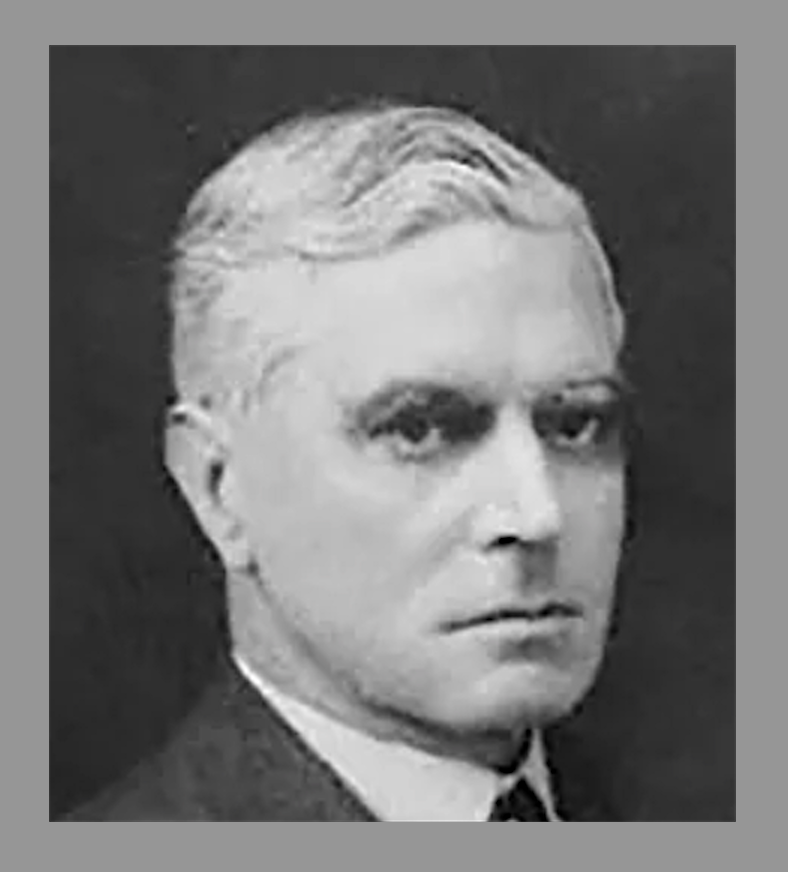

Alexander Walker II was born into a whisky dynasty, but he did far more than inherit a famous name. During one of the most transformative periods in Scotch whisky history, he helped guide John Walker & Sons from a successful Victorian blending house into an internationally recognized brand. If his elder half-brother George Paterson Walker became the public-facing architect of Johnnie Walker's marketing identity, Alexander Walker II became the steward of the whisky itself, preserving and refining the blending traditions that had made the family business successful.
Alexander Walker II was born on 22 March 1869 in Kilmarnock, Ayrshire, Scotland, to Alexander Walker and his second wife, Isabella McKemmie. His father was already one of the most respected whisky merchants in Scotland, having inherited and expanded the business founded by John Walker, Alexander II’s grandfather. The Walker household occupied a privileged position within Kilmarnock society, but the family's prosperity had been earned through decades of work, not through inherited wealth. Alexander's grandfather had begun as a grocer and spirits wholesaler, but it was his father who had transformed the family concern into a thriving whisky business. Alexander's older half-brother, George Paterson Walker, would become his lifelong business partner, and together, the two represented the third generation of family leadership.
Alexander was groomed from an early age for a role within John Walker & Sons, but he did not attend a traditional college. Instead of university, he was educated at the Ayr Academy in Scotland, and subsequently underwent legal training and a trade apprenticeship with Robertson and Baxter Ltd, wine and spirit merchants in Glasgow. Unlike his half-brother George, whose talents gravitated toward sales, promotion, and commercial strategy, Alexander developed expertise in production, blending, and quality control from his time at Robertson & Baxter
The defining event of Alexander's early adulthood occurred in 1889. His father died unexpectedly at the age of fifty-one, leaving the family business in the hands of the next generation. George, then twenty-four years old, assumed responsibility for the London operations and commercial development of the company. Alexander, still only nineteen, became increasingly involved in overseeing the production side of the enterprise. That partnership proved remarkably effective. While George concentrated on markets and customers, Alexander focused on the whisky itself. During the late nineteenth century, Scotch whisky exports expanded dramatically throughout the British Empire and beyond. Maintaining consistency across growing volumes of production became one of the central challenges facing every major blender, and Alexander was keen to play a key role in meeting that challenge on behalf of his family’s company.
The brothers inherited a business that already possessed a strong reputation, but they understood that future success required both innovation and discipline. Alexander became closely associated with the refinement of the company's blending practices. His work helped ensure that consumers purchasing a bottle of Walker whisky in London, New York, Sydney, or Calcutta would encounter a product that met the same exact standards. Such consistency was becoming increasingly important as Scotch whisky developed into a global commodity
Alexander II married Lady Rosaline Josling, daughter of Arthur S. Josling of Arkley, Hertfordshire on February 5, 1895. In time the couple shared two sons and two daughters, though none of the following generation showed much interest in the family business. Another aspect of Alexander's personal life that is well documented is his commitment to public service and civic engagement. Like many successful Scottish businessmen of his era, he openly participated in local and national affairs. His standing within both business and society reflected the prominence that John Walker & Sons had achieved by the early twentieth century.
The year 1909 marked a turning point not only for the company but also for Alexander personally. During that year, John Walker & Sons introduced the now-famous Red Label and Black Label names, replacing the more cumbersome Victorian designations that had previously been used. The company also adopted the Striding Man figure that became one of the most recognizable trademarks in the spirits industry. While George was particularly associated with the marketing side of these developments, Alexander's responsibility remained the maintenance of the liquid inside the bottle, ensuring that the quality justified the growing reputation.
In 1920, Alexander was knighted by King George V for his "services to the nation". This was largely due to his entrepreneurial craftsmanship, which saw Johnnie Walker successfully distributed to 120 countries worldwide, generating massive revenue for the British Empire. To honor this momentous occasion, the blenders at Johnnie Walker created the John Walker & Sons XR 21. This ultra-premium blend is a tribute to his legacy and was crafted using extra-rare whiskies, all matured for at least 21 years, and sourced from the private reserves of the Master Blender, including the "ghost" Port Dundas distillery and Speyside malts.
But Alexander's influence extended beyond individual blends. He helped oversee the expansion of production and the acquisition of whisky supplies necessary to support the firm's growing international business. During the early twentieth century, John Walker & Sons strengthened relationships with numerous distilleries and suppliers throughout Scotland. These connections helped secure the diverse range of malt and grain whiskies required for large-scale blending operations. As the company grew, Alexander became one of the most respected figures within the Scotch whisky trade. He represented a generation of blenders who viewed consistency as both a technical challenge and a commercial necessity. At a time when scientific methods were increasingly being applied to industrial production, successful blending required not only experience and judgment but also careful attention to record-keeping and quality standards.
In 1925, John Walker & Sons, Ltd. ceased to be self-governing when it became part of the Distillers Company Limited, one of the most significant consolidations in Scotch whisky history. Though it was somewhat of a hostile takeover on the part of DCL, Alexander was offered a coveted spot on the board of DCL. The transaction marked the culmination of decades of growth, and transformed the family enterprise into part of a much larger corporate structure with successes that Walker & Son could likely never have managed on its own as an independent company.
Alexander Walker II retired from DCL in 1940, effectively ending his association with whisky production and the company started by his grandfather some 120 years prior. Walker died on 27 July 1950 at the age of eighty, and he left all of his blending notes to the now public company. By then, the whisky brand he had helped guide for more than sixty years had become a global institution. Although marketing symbols such as the Striding Man often receive public attention, the success of Johnnie Walker depended equally upon the consistency and quality of the whisky itself. That responsibility had fallen largely to Alexander. In the 1990s John Walker and Sons introduced Johnnie Walker Gold Label based in large part on the notes that Alexander had left to the company upon his death.
History often remembers founders more readily than caretakers, yet Alexander Walker II was far more than a caretaker. He represented continuity between generations, preserving the standards established by his father while helping adapt the company to the demands of an international market. His legacy survives in every bottle that bears the Johnnie Walker name, a reminder that great brands require not only vision and promotion, but also an unwavering commitment to quality.
Sources:
Moss, Michael, and John Hume, The Making of Scotch Whisky: A History of the Scotch Whisky Distilling Industry, published by Edinburgh University Press.
Scotch Whisky Association, historical industry materials and company histories, scotch-whisky.org.uk.
Diageo, “Johnnie Walker History,” johnniewalker.com.
Ancestry, “Alexander Walker (1869–1950),” ancestry.com (genealogical database; birth, death, marriage, and family relationships).
Scotland's People, statutory birth and death records relating to Alexander Walker, scotlandspeople.gov.uk.
Contributed by Tracy McLemore, Fairview, Tennessee USA