Emma Walker


Dr. Emma Walker was born in 1979, but her route into whisky began in the most Edinburgh way possible: friends, university life, and a bottle with a smoky, coastalpunch. While studying chemistry, she encountered the peated single malts Talisker and Lagavulin, and the combination of intense aroma and layered flavor stuck with her. That interest did not immediately translate into a “whisky career,” though, in part because the role itself is not obvious until you meet the people who actually do it. She trained first as a chemist in the conventional sense, pairing academic study with industrial experience. Her foundation included a two-year apprenticeship at Imperial Chemical Industries (ICI) in Teesside, followed by a master’s-level chemistry education at the University of Edinburgh and then a PhD in organic chemistry at the University of Sheffield. That combination gave her the toolkit that later made whisky feel less like a curiousleap and more like a serious technical craft.
But before Diageo, Walker worked in pharmaceuticals. She was first a process chemist at GlaxoSmithKline in Montrose, a job that kept her close to applied chemistry and manufacturing discipline. The whisky turn came in 2008, when she interviewed for a “project scientist” position at Diageo’s technical center in Menstrie. The interview was not with generic corporate hiring staff; it put her across the table from some of the most influentialblenders in Scotch. Shegot the job, and she stayed. In the early Diageo years they trained her nose as much as her résumé. She spent four years in the whisky specialist team developing sensory skills and learning how flavor is built at every stage, from fermentation to distillation through to maturation, and how inventory becomes the raw material of blending. And this, according to Walker, is where whisky differs from most consumer products: a blender is not simply “creating” a recipe; a blender is also planning a future. Years before a bottle is released, someone must decide what to distill, what to fill it into, and what kind of whisky it might become, guided only by a hunch and a hypothetical projection.
Walker’s career then broadened beyond the blending room into production leadership. She moved into operations for several years, working as a technical specialist at Leven, then managing quality laboratories serving Diageo’s Leven spirit supply operations at Cameronbridge Distillery. Cameronbridge, one of the great engines of Scotch grain whisky, later reappears in her public comments as a place she feels connected to, partly because it sits in Fife, the county she’s from, and partly because its importance cannot be overstated since it supplies, at least in part, nearly every major Scotch brand.
From quality and supply work, she shifted again, this time toward distillery leadership training. She went to Knockando as a trainee distillery manager, adding on-the-ground distillery management to an already technical profile. That sequence, blending training, then production and site responsibility, then back to blending, built the kind of perspective that makes a Master Blender credible inside a large company. The job demands aesthetic decisions, but it also demands respect for the practical realities of making spirit, maintaining quality, and managing stock.
By the mid-2010s, Walker’s work was public enough to be profiled in business and lifestyle press as part of Johnnie Walker’s innovation machine. In October 2016, she was depicted in the tools-of-the-trade setting of a modern blending lab with test tubes, pipettes, and nosing glasses, working to create new expressions for the world’s best-selling Scotch brand. By then, she was already positioned as someone trusted to both protect the core taste of Johnnie Walker and push it into new territory. That “push” became more visible in the years leading up to her promotion. In March 2018, she described a career built on technical training and deliberate skill-building: entering Diageo with no drinks-industry background, but learning fast, then taking on big roles that stretched from blending to production and back again.
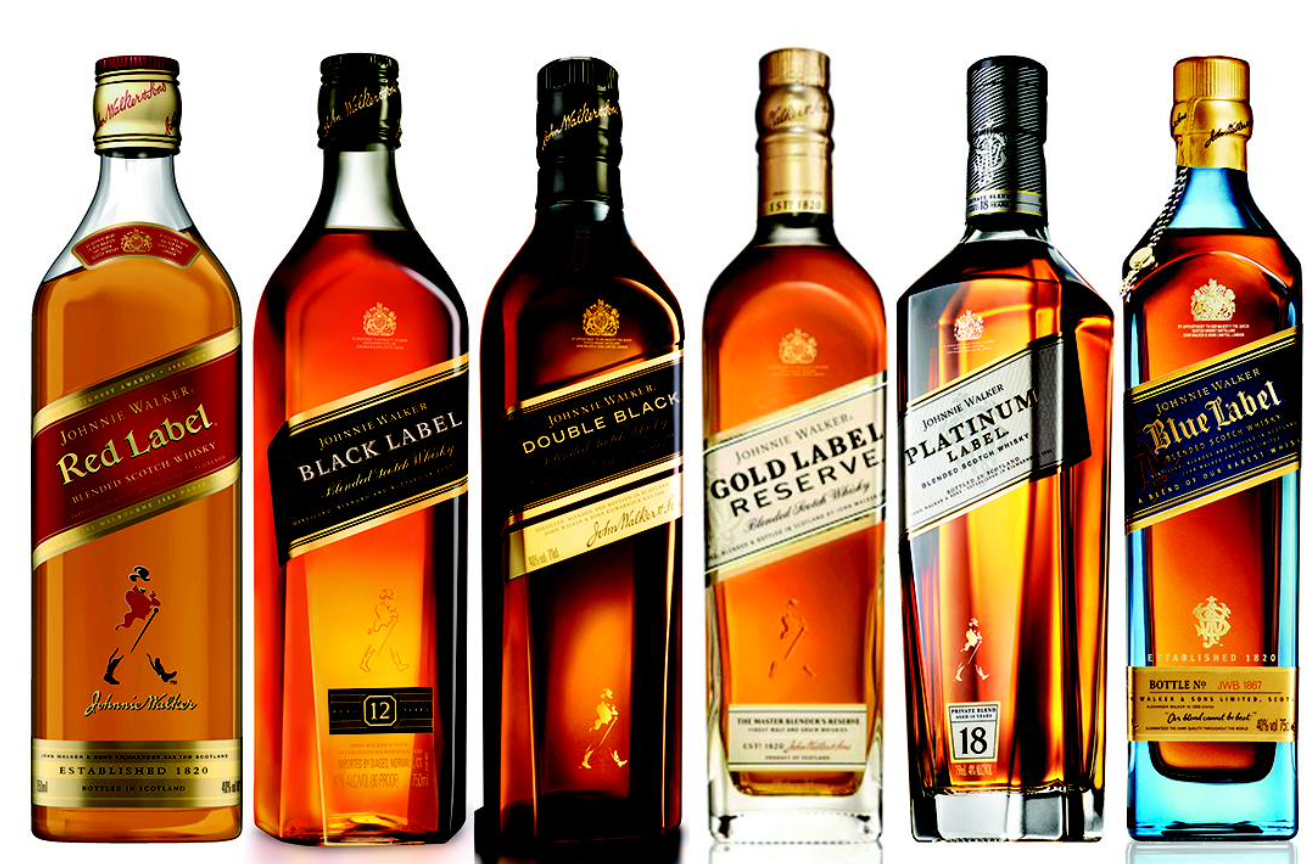
It was little surprise, then when on October 20, 2021, Diageo announced that Walker would succeed Dr. Jim Beveridge as Master Blender for Johnnie Walker, making her thefirst woman to hold the title in the brand’s history. The announcement credited her with major Johnnie Walker innovations, including the Blue Label Ghost and Rare series and “Jane Walker by Johnnie Walker,” and placed her at the head of a 12-person whisky-making team responsible for variants sold in more than 180 countries.
In early 2022, the new title came with the ongoing burden that defines a great blending job: managing not just releases, but a living inventory. One recent long-form profile described her overseeing a maturing inventory of more than 11 million casks and leading a 12-person team, numbers that illustrate why the role is as much planning as it is tasting. Her working method is explicitlyhybrid: decisions begin on paper with detailed maps of distilleries, styles, and cask types, then move into sensory assessment where the spirit either behaves as expected or surprises her.
Public information about Walker’s personal life is limited. A major profile in 2022 stated that she lives in Edinburgh with her partner. Reliable published sources in the open press do not provide confirmed details about marriage or children, and she does not appear to foreground family information in the career-focused interviews that dominate coverage of her work. What the record does show, clearly and repeatedly, is how unusually complete her preparation has been for a job that is often described in near-mystical language. Walker is not presented as a palate-only prodigy. She is presented as a scientist who became a production operator, a quality leader, and then a blending leader—someone who understands the chemistry of flavor, the manufacturing constraints behind consistent spirit, and the long time-horizon logic of Scotch maturation. That combination is what makes her appointment feel less like a symbolic breakthrough and more like a hard-earned promotion into one of whisky’s mostconsequential seats.
And, no, she is not descended from the company’s namesake. That part, unlike the sum of her spectacular career, is just coincidence.
Sources:
The Business Times, “Johnnie Walker rebound rests with Emma Walker”, 12 October 2016, www.businesstimes.com.sg
Diageo, “New Master Blender for Johnnie Walker…”, 20 October 2021, www.diageo.com
Inside Hook, “An Enlightening Q&A With Johnnie Walker’s First Female Master Blender,” Kirk Miller, 22 November 2021
Master of Malt, “International Women’s Day with… Emma Walker of Johnnie Walker”, Annie Hayes, 8 March 2018
The Cut, “How Johnnie Walker’s Master Blender…”, Sangeeta Singh-Kurtz, 1 August 2022
Men’s Journal, “Emma Walker: The Master Blender Behind Johnnie Walker”, Gina Pace, 27 February 2026
88 Bamboo, “Johnnie Walker’s Master Blender Emma Walker Wants To Capture Your Life In Whisky…”, 24 April 2025
Contributed by Tracy McLemore, Fairview, Tennessee USA