Forbes Thomson Wallace
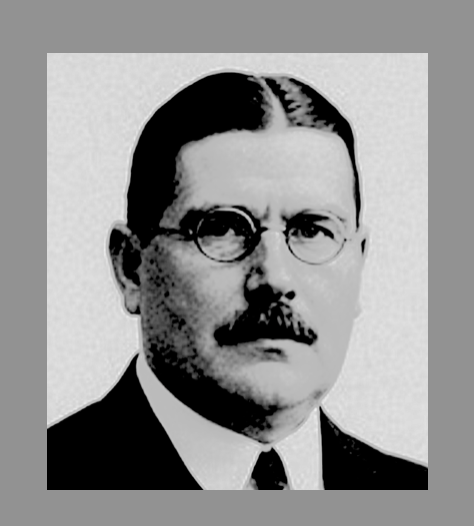

There are no known photographs of Forbes Thomson Wallace known to exist. Above is an AI-generated image of him based on facts known about his life.
Forbes Thomson Wallace was born on December 13, 1874, in Leven, Fife, and his life unfolded along two parallel tracks that rarely draw much attention in whisky histories: a private domestic one, and a professional one rooted in banking, corporate governance, and institutional trust. Around 1900, he married Mary R. Clark, and in November 1904 the couple’s only son, Douglas Clarke Wallace, was born.
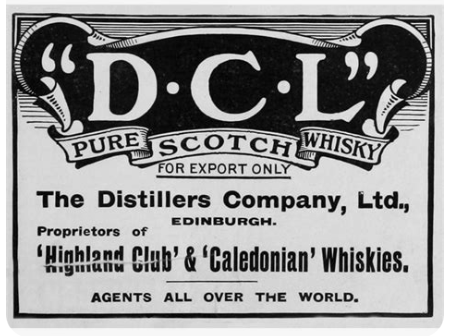
While Wallace does not enter the historical record as a whiskey-man who hands off his industrial distilling acumen to his son, he does emerge as the kind of figure big Victorian and Edwardian whisky required in order to become “big” at all. By the early twentieth century he was established as a banker, a company director, and a trusted local man whose name carried enough weight to appear on boards at precisely the moment when whisky firms were reorganizing themselves into modern corporate structures. His name surfaces most clearly in connection with John Haig & Co., the Cameronbridge-based concern that helped found Distillers Company Limited (DCL) and later became part of DCL’s expanding whisky empire.
One Haig-family history, quoting the DCL Gazette from 1932, lists the directors when John Haig & Co. first incorporated as a limited company. Alongside Hugh Veitch Haig, Alex Hutchison, Charles Taylor, and Captain Douglas Haig appears the line: “Forbes Thomson Wallace, of The Royal Bank.”
That last brief phrase is the key to understanding Wallace’s place in the whisky story. “Of the Royal Bank” did not mean a back-office clerk. In a Scottish town, a bank agent was a central node in local economic life. He knew which firms were thriving, which were struggling, who carried heavy debt, and whose reputation could be trusted. He assessed collateral, recommended credit limits, and served as the human interface between head-office policy and the lived realities of local commerce. When distilling companies began floating as limited concerns and forming boards with outside directors, they often sought exactly this type of person: someone who understood money, risk, and reputational capital, and who could lend both practical financial oversight and social credibility.
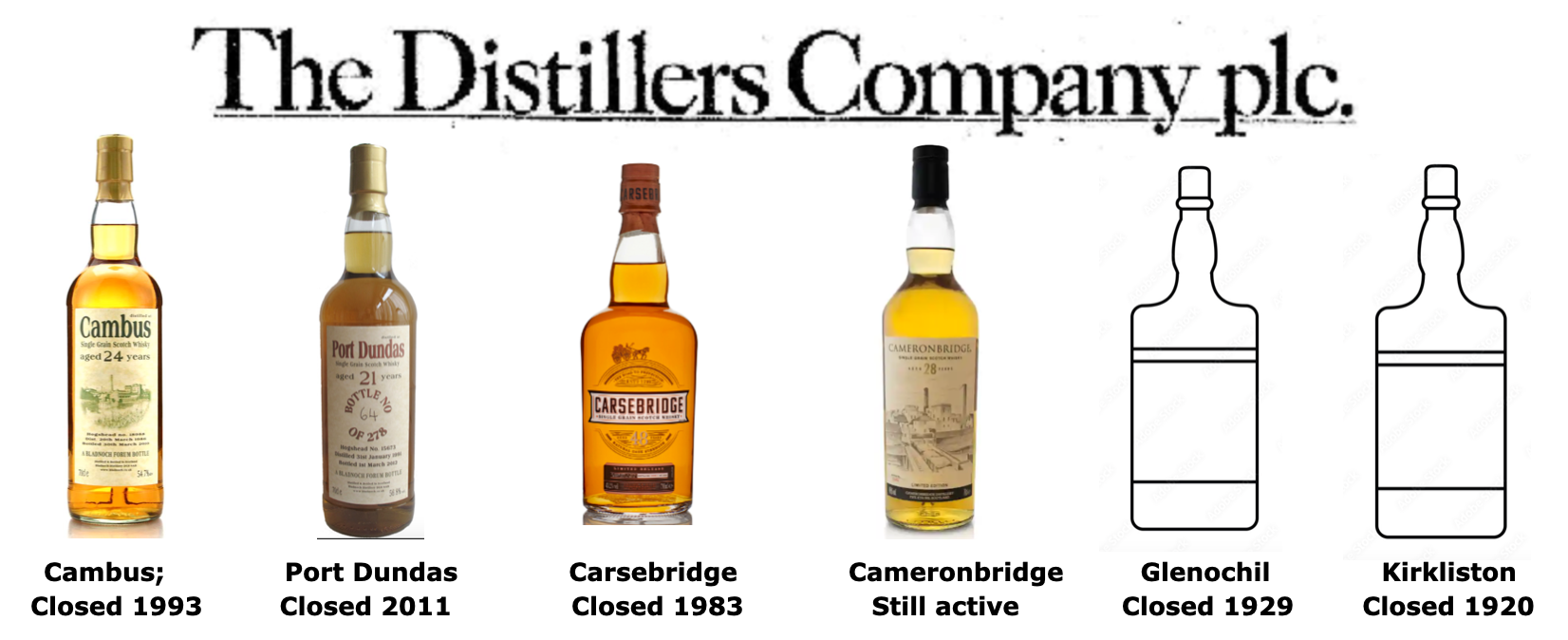
DCL itself had been formed much earlier, in 1877, as an amalgamation of six Lowland grain distilleries with a specific purpose: to control production, stabilize prices, and prevent destructive competition in the grain-spirit market. It was an early example of coordinated industrial strategy rather than whimsical whisky-making. Cameronbridge, operated by John Haig & Co., was one of the cornerstone sites in that original structure, producing vast quantities of grain spirit destined for blending. Over time, the Haig business fell fully under DCL ownership, becoming part of a tightly organized system that linked distilleries, blending houses, bottling operations, and brand companies.
Wallace’s documented role sits at the seam between those worlds: the Royal Bank on one side, and the Haig/DCL distilling machine on the other. His presence on the board of John Haig & Co. demonstrates how deeply financial institutions were embedded in whisky’s transformation from a collection of family-run concerns into a capital-intensive industry. Cameronbridge, with its large throughput and continuous-distillation heritage, was exactly the sort of operation that invited banker involvement. It required significant working capital, long-term investment, and steady credit arrangements, all areas in which a seasoned bank agent could exert real influence.
If DCL’s later history is followed forward, its trajectory becomes clearer. After first consolidating grain production, it expanded aggressively into malt distilleries, blending houses, and branded bottlings. Over decades, it became one of the dominant forces in Scotch whisky, eventually forming part of the lineage that lead to today’s Diageo. That modern corporate giant rests on foundations laid in the late nineteenth and early twentieth centuries by men whose names rarely appear on labels, but frequently appear in director lists, legal filings, and banking records.
Wallace was one of those men. He was not shaping mash bills or designing stills, but helping to ensure that companies had access to capital, that balance sheets made sense, and that boards included people capable of weighing risk against opportunity. His contribution was small on the page but meaningful in structure: a financial steward during the period when Scotch whisky’s industrial architecture was being rebuilt for scale.
Forbes Thomson Wallace died on September 26, 1945, at the age of seventy. By the time of his death, the Scotch whisky industry he had quietly helped steward through its corporate adolescence had become one of Britain’s most sophisticated industrial systems. Seen in full, Wallace’s life reflects the dual nature of the era in which he lived. At home, he was a husband to Mary and a father to Douglas, part of the steady domestic fabric of Fife. In business, he was a quiet participant in one of the most consequential transformations in whisky history. The industry that emerged, highly organized, capitalized, and globally ambitious, owed as much to men like Forbes Thomson Wallace as it did to the distillers whose names are far better recalled.
Sources:
Clackmannanshire.scot, “The Haig Family”, 10 Jan 2026, www.clackmannanshire.scot
ScotchWhisky.com, “Distillers Company Limited”
Whisky Magazine Issue 203, “Strong foundations: The history of Diageo…”, Mark Jennings, 6 January 2025
Trove (National Library of Australia), “Forbes Thomson Wallace of Leven, Bank Agent,” 4 August 1893, trove.nla.gov.au
Electric Scotland (PDF), “Published Family Histories…”, electricscotland.com
Contributed by Tracy McLemore, Fairview, Tennessee USA