George Paterson Walker


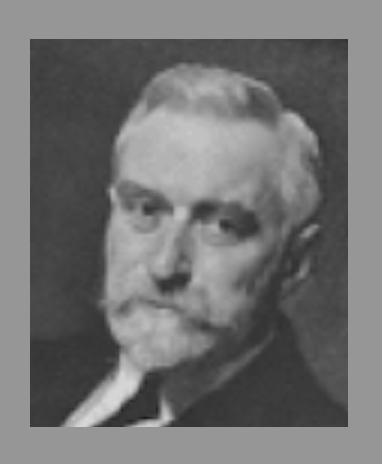
George Paterson Walker was born into one of the most important whisky families in Scottish history. Although his grandfather, John Walker, gave the famous brand its name, George played a crucial role in transforming a successful family whisky business into one of the world's most recognizable commercial enterprises. If John Walker laid the foundations and Alexander Walker built the structure, George Paterson Walker, along with his half-brother Alexander II, helped turn it into a global brand.
George Paterson Walker was born on 15 October 1864 in Kilmarnock, Ayrshire, Scotland, the eldest son of Alexander Walker and Georgina Paterson. From infancy, George experienced significant tragedy when his mother, Georgina, died two weeks after his birth. When George was not quite three years old, his widowed father remarried Isabella McKemmie and soon a large family was born to that couple, including who was to become George’s half-brother, lifelong friend, and business partner, Alexander Walker II. By that point, George’s father had inherited the business from John Walker and was steadily expanding its reach throughout Britain and abroad.
George’s childhood had come during a period of exponential growth for the family business, which had already evolved into a respected whisky concern, and his father was by then busy establishing himself as one of the most talented whisky merchants and blenders of his generation. Then in 1889, when George was approximately twenty-four years old, necessity dictated that he take charge of the firm's London office after his father died unexpectedly at only fifty-one years of age. This position placed him at the center of distribution, sales, and marketing activities at a time when London served as the commercial heart of the British Empire. While George concentrated on distribution, promotion, and commercial development of the company, his younger half-brother Alexander II stepped in to focus on production, blending, and product creation. The division of labor proved remarkably effective, and their partnership mirrored the complementary strengths that had helped previous generations of the family succeed.
In 1891, George married Helen Thomson Monteith Calder, and the couple eventually shared four children: Jane, Helen, George, Jr., and Constance, and though they were successful in their own fields, none of his children would inherit the desire to work for the family concern.
But George's most enduring contribution emerged from his understanding of advertising. At the turn of the twentieth century, whisky companies relied primarily on reputation and trade relationships rather than any public-facing promotion. But George recognized the power of branding long before it became common practice. In 1909 he helped oversee one of the most important marketing transformations in whisky history when, during a lunch, George asked illustrator Tom Browne to devise a memorable advertising image and Browne quickly sketched a walking gentleman on the back of a restaurant menu. The drawing became the Striding Man, one of the most successful commercial symbols ever created which is still synonymous with Johnnie Walker more than 125 years later.
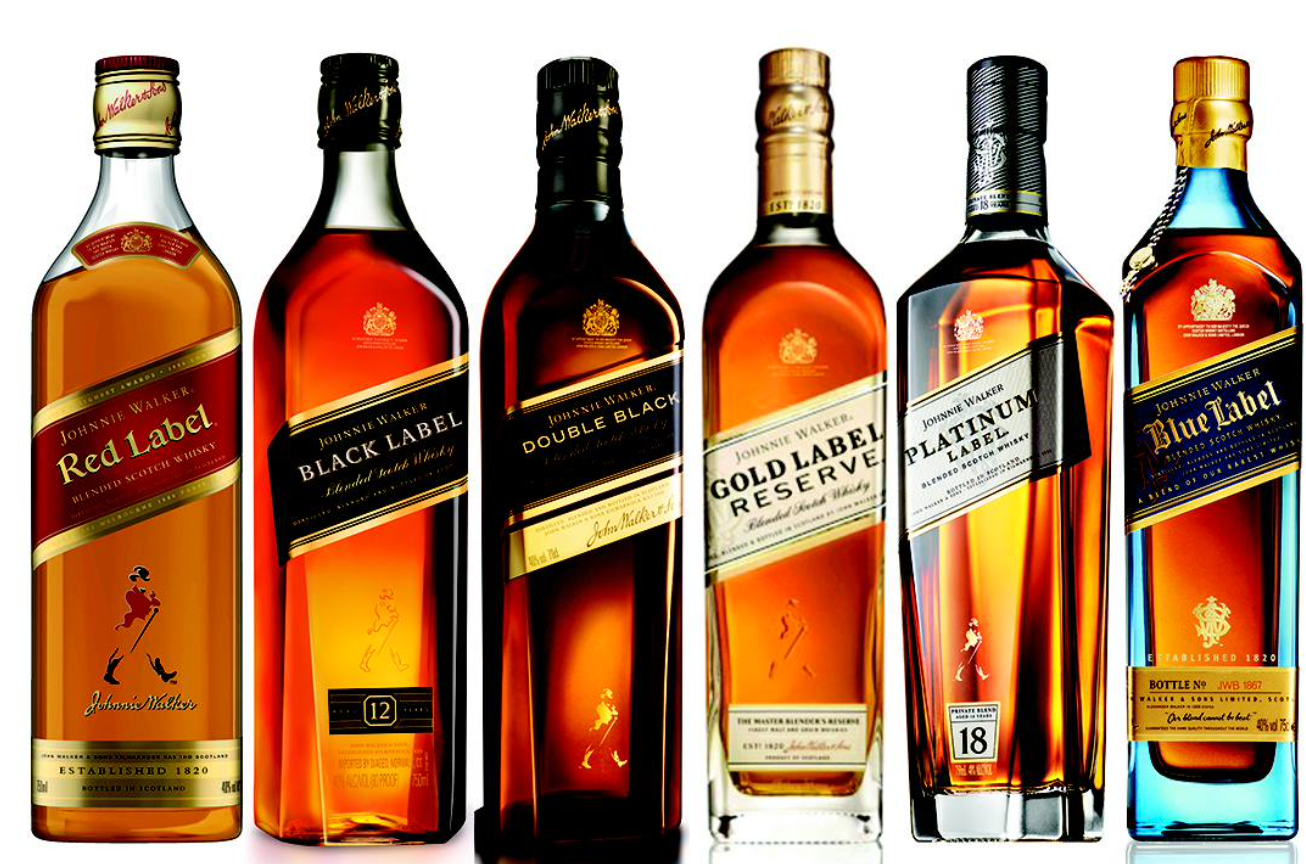
That same year also witnessed a major simplification of the company's product names. Thanks to George’s new renaming strategy, the somewhat cumbersome "Special Old Highland" and "Extra Special Old Highland" designations gave way to the now-familiar “color-label” (i.e., Red Label and Black Label) names. The change made the products easier for consumers to recognize, remember and re-order, strengthening brand identity across worldwide markets. These decisions reflected George's belief that quality products deserved memorable presentation.
Walker's business acumen proved instrumental in navigating the volatile early 20th-century trade landscape, including spikes in global demand driven by economic booms and imperial expansion, while maintaining branding uniformity across distant markets. He adeptly responded to challenges like fluctuating raw material costs and competition from Irish whiskeys by streamlining supply chains and enforcing strict quality controls, which helped sustain growth even amid events like the 1900s patent medicine scares, which affected alcohol perceptions.
Then in 1925, John Walker ceased to be self-governing when it became part of the Distillers Company Limited, one of the most significant consolidations in Scotch whisky history. The merger was somewhat of a hostile takeover on the part of DCL, and while Alexander II was offered a coveted spot on the board of the newly-formed DCL, George received no such offer. Still, the transaction marked the culmination of decades of growth, and transformed the family enterprise into part of a much larger corporate structure with successes that Walker & Son could likely never have managed on its own as an independent company.
After World War I, Johnnie Walker became the world's best-selling Scotch whisky brand and had become so popular domestically that that in 1920, Alexander II was knighted by King George V for his "services to the nation.” Yet again, George Paterson Walker, the eldest son, received no such accolades. Yet while George did not achieve the same public recognition as his grandfather, his father, or even his younger brother, most of the marketing principles he had championed were absolutely central to the firm's success.
George Paterson Walker died on 11 October 1926 in Wandsworth, Surrey, England, just four days before what would have been his sixty-second birthday. He left his family an estate valued at what would be the modern equivalent of £13 million. That amount reflected George’s substantial business acumen and vision for marketing, promotion, and brand identity which had lead to the prosperity of the family legacy. DCL was later acquired by Guinness in 1986 and merged into what is now spirits behemoth Diageo in 1997.
Unfortunately, still today, whisky enthusiasts most often remember John Walker, Alexander Walker, and the master blenders who created the contents inside the bottle; however, George Paterson Walker deserves equal recognition for shaping what consumers bought from what they saw on the outside. After all, his greatest achievement was not creating a blend, but creating a brand. In doing so, George Paterson Walker helped transform a locally successful Scotch whisky into a global icon that is still admired and loved a full century after his death.
Sources:
Ancestry, “George Paterson Walker,” ancestry.com (genealogical database; provides birth date, death date, spouse, parents, and children).
Charles MacLean, “Scotch Whisky: A Liquid History”
Grokipedia, “George Paterson Walker”, grokipedia.com
Taylor 2015 (genealogy), “George Paterson Walker”, grahametaylor.com/webtrees/individual.php?pid=I5706&ged=Taylor
Contributed by Tracy McLemore, Fairview, Tennessee USA