Harvey Williams, Jr.


Harvey L. Williams Jr.’s whiskey story begins right where he was born in 1968 in the Arkansas Delta. There, farming was not a hobby or a side identity, but an inherited discipline measured in acres, weather, and the patience to think in seasons. He grew up around the backbreakingwork of the family farm. It was that same flat, moist landscape that would later become the central “ingredient” in his business life, not just as a source of crops, but as a reason to build something that could keep the land productive and in family hands for another generation. Delta Dirt Distillery, the Helena operation he co-founded in 2017, is often introduced through sweet potatoes and a headline-making vodka. But the longer arc of Williams’ enterprise points toward whiskey. It is a deliberate attempt to take the Delta’s farm output of corn, barley, and, yes, sweet potatoes, and translate it into brown spirits that require time, barrels, and staying power.
Williams’ family history in agriculture reaches back far beyond him. Joe Williams worked the original land in the late 1800s as a sharecropper, but his grandson, UD “Daddy D” Williams purchased the same 86-acre farm in 1949. UD’s son, Harvey Williams, Sr., kept the operation viable by raising many different vegetables, but soon sweet potatoes became the farm’s core crop. It was land that carried both economic risk yet strong family meaning, and a farm identity that could never be separated from place. Harvey, Sr., ensured that his family, including Harvey, Jr., learned the value associated with hard work, integrity, and patience on that very same farm.
Williams’ own preparation for leadership came through a degree in Biological & Agricultural Engineering from the University of Arkansas, and later in the form of an MBA from Thomas More University. After college, he built a corporate career that moved his family around the country, working in operations, engineering, and plant leadership roles across major food companies. That experience would later show up in the way Delta Dirt talks about itself; not as a casual “craft” experiment, but as a production business built to run and scale.
Williams’ personal life is threaded through the business in unusually direct ways. His wife, Donna, is co-founder and chief brand officer. Harvey and Donna were high school sweethearts. Their three children are not treated as “next generation someday” either. Sons Thomas and Donavan are current key leaders, with Thomas serving as head distiller (and also taking on some marketing functions), and Donavan running operations and sales. Daughter, TaHara, takes on some responsibilities in the family business as well. In short, the operation is structured as a true family firm: co-founders at the top, grown children running the production floor and day-to-day execution.
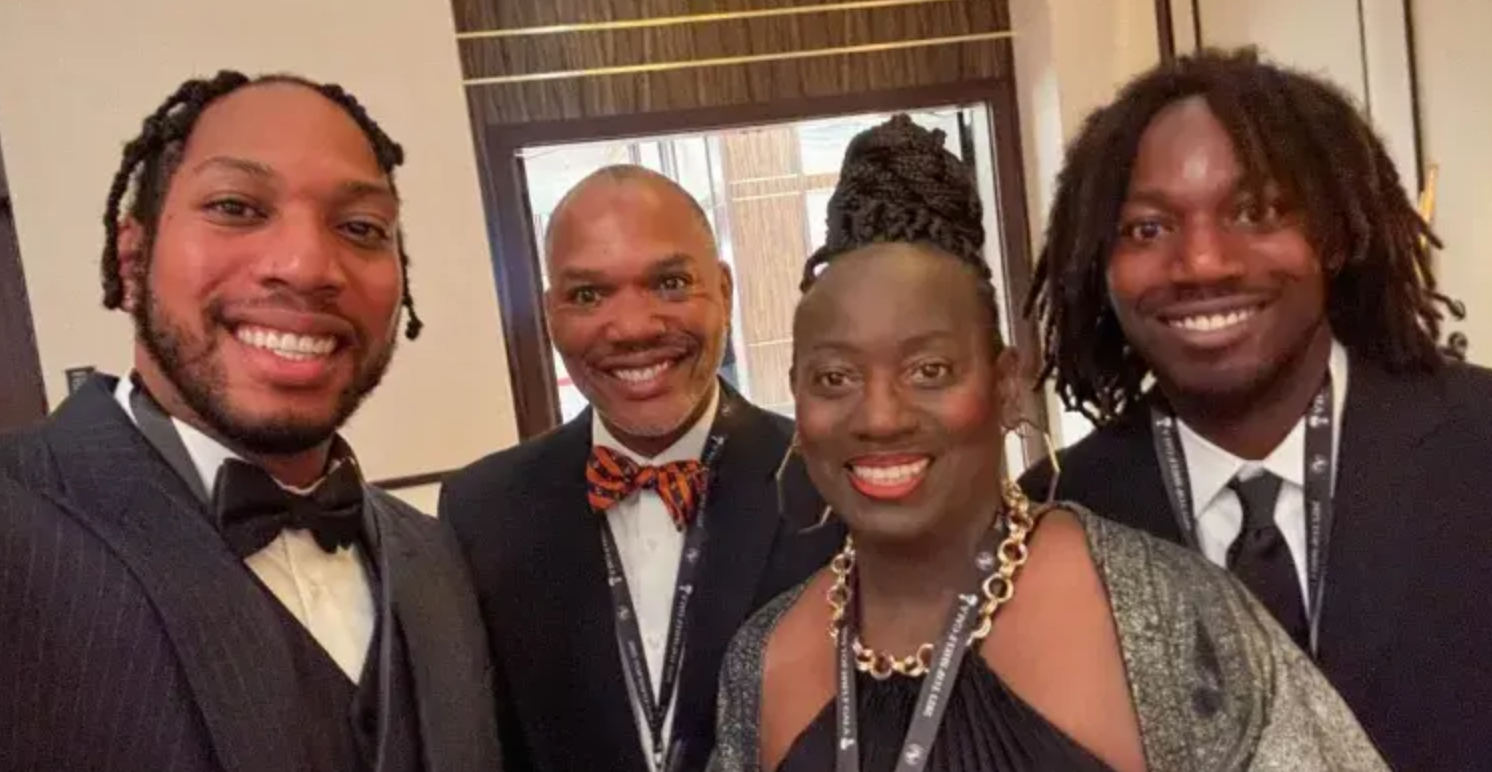
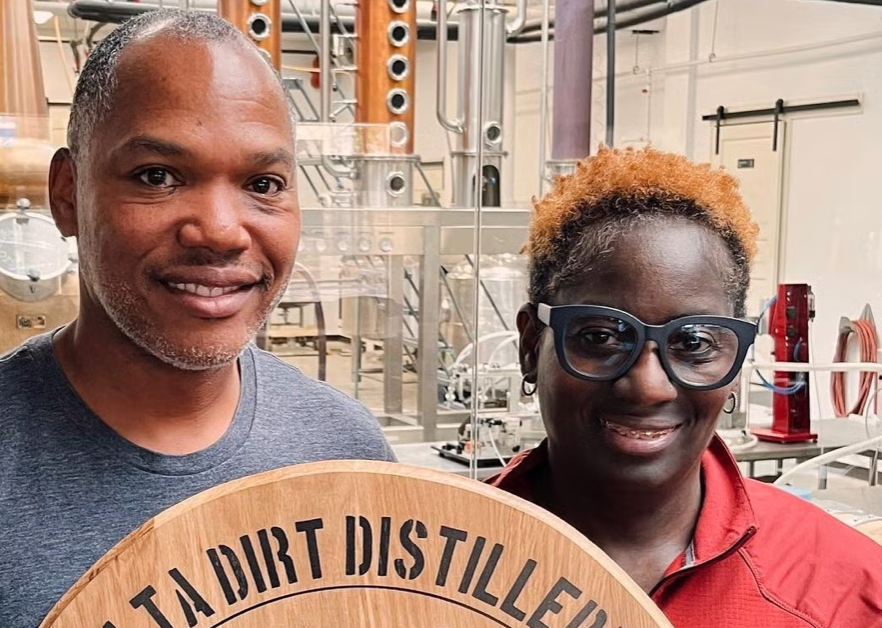
The Williams distilling family: (L) Harvey with Thomas, TaHara and Donovan; (R) Harvey and Donna
The hinge in the distillery’s chronology came in 2016. After decades in corporate food manufacturing, Harvey and Donna executed the long-awaited return home to Helena, Arkansas. By 2017, they made the commitment concrete, co-founding Delta Dirt Distillery and beginning the long process of converting a downtown building into a working distillery. The storefront is designed to be visible and welcoming, which signals that the business is designed to sell a good story as well as a good bottle of spirit. The result is a farm-to-bottle pipeline rooted in Phillips County crops, made in a town with deep Delta history, but in need for new economic anchors.
Delta Dirt’s early production widely publicized sweet potatoes because that was the family’s signature crop, and because sweet potato distillation is known to be technically demanding. Yet even in those earliest descriptions, the company’s ambitions leaned toward a broader spirits portfolio that included whiskey. By December 2020, the distillery completed its first production run, and it opened its doors to the public on April 1, 2021. With that opening, the family moved from renovation and experimentation into the operating reality of fermentation schedules, distillation runs, bottling, distribution, and compliance. Within that same period, another piece of inherited family history surfaced into the open, and that is the “moonshine story.” In that tale, Williams described learning that his grandfather, Daddy D, had made and sold moonshine on the side, an enterprise tied to scraping together money in order to resist the economic traps of sharecropping. That revelation functions as more than folklore, it supplies Delta Dirt with a historical bridge between farm survival and distilling practice, and it frames the modern legal distillery as a reversal of the old pattern: now, the family can make spirits in daylight, with licensing, equipment, and a brand, and keep the value in the community.
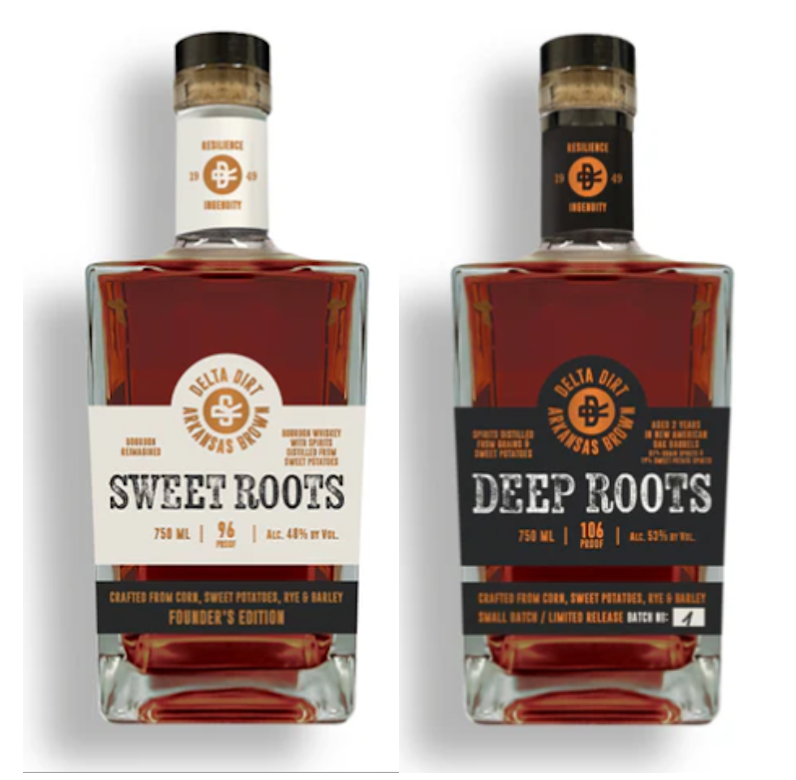
If vodka made the headlines, whiskey is where the long-term math lives. However, whiskey demands not only grain and process knowledge, but time as well. Meanwhile, inventory rests in barrels, and capital is tied up. Nevertheless, publications tease a forthcoming “Delta Blues Bourbon,” while another profile notes that the bourbon will include sweet potatoes, pushing the distillery’s farm identity into the whiskey category rather than leaving it confined to clear spirits. The family’s broader “brown” spirit story appears under different names in different write-ups. “Arkansas Brown” is said to be similar to a bourbon, with sweet potatoes described as a defining element.
The result of Williams’ work is a distillery story that is both small-town local, while unusually forward-looking. Delta Dirt ties its identity to specific land—an original 86 acres that the family treats as symbolic and practical at the same time, and a family workforce that has assigned real authority to the next generation. In the end, Harvey Williams Jr.’s whiskey story is best understood as a long game. Delta Dirt did not start with aged bourbon on day one; it started with the practical realities of building a legal distillery and learning to make spirits of commercial quality. But the public trajectory points toward brown spirits, barrels, and time; the kind of work that rewards steady operations and punishesshortcuts. For Williams, that is familiar territory. He spent a career inside systems that run on discipline, then returned home to build one of his own, this time with Delta crops as the feedstock, family as the workforce, and whiskey as the most demanding proof that the model can last.
Sources:
Delta Dirt Distillery official website “Harvey Williams Bio”,deltadirtdistillery.com
Arkansas Money & Politics, “Black-Owned Business Spotlight: Delta Dirt Distillery”, February 13, 2023, armoneyandpolitics.com
Farm Progress, “Successful business transformation: How one family revamped sweet potato production”, Whitney Shannon Heckel, December 20, 2024
Modern Farmer, “Meet the Arkansas Farmers Turning Sweet Potatoes into Spirits”, Caroline Eubanks, June 30, 2023
Eater, “How One Black Family Bet the Farm on Moonshine”, Sono Motoyama, October 1, 2024
Arkansas Living Magazine, “Delta Dirt Distillery: Sweet Potatoes, Family, and Tradition”, October 29, 2025
University of Arkansas - Phillips CC, “…Commencement Speaker Harvey Williams…”, May 12, 2025
Arkansas Department of Parks, Heritage & Tourism, “Delta Dirt Distillery: Raising ‘spirits’ nationwide”, February 1, 2024, arkansas.com
Communities Unlimited, “Raising Spirits In The Delta”, June 27, 2023, communitiesu.org/blog/2023/06/27/raising-spirits-in-the-delta/
Marquis Who’s Who induction press release, “Harvey L. Williams Jr. has been Inducted…”, September 19, 2023
Some photos courtesy of the Arkansas Department of Tourism
Contributed by Tracy McLemore, Fairview, Tennessee