
John Walker

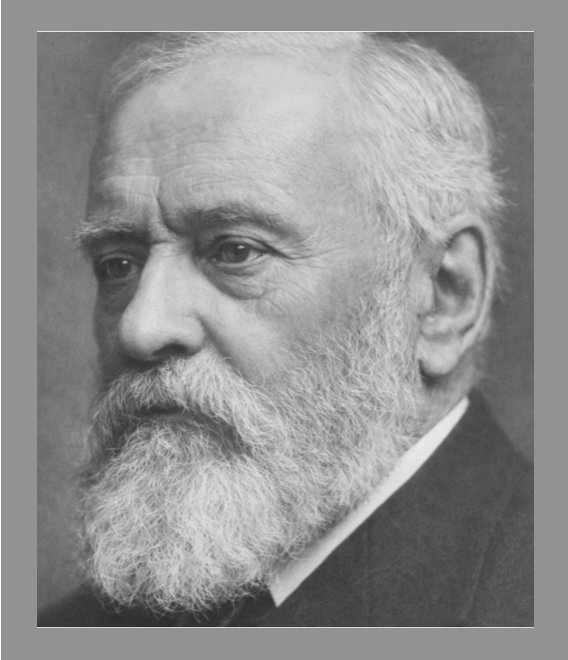
The above AI-generated image of John Walker is based on facts known about his life.
John Walker was born on 25 July 1805, near Kilmarnock in Ayrshire, at a time when whisky could be a delicious staple or an acute health scare depending on how the spirit had been made. Walker’s beginnings were rural and rough, and about the time he hit puberty, the family’s fortunes further fouled.
When John (“Johnnie”) was but 14 years old, his father, Alexander, died. The hardscrabble family farm was sold, and what started as a grim narrowing of possibilities became, in John Walker’s case, an apprenticeship in trade, customers, consistency, and the hard arithmetic of survival. The proceeds from the farm sale were placed in trust, and in 1820 the trustees used £417 of the money to invest in an established “Italian warehouse,” grocery, and wine-and-spirits business on Kilmarnock’s High Street/King Street. John was still young, yet he took on management responsibility in the shop while the town around him was shifting steadily into the modern age. Kilmarnock was not Edinburgh or Glasgow, but it was growing, and was connected to the same currents: expanding commerce, improved roads, and an expanding appetite for upscale goods and reliable products. Grocers who could supply that craving did well.
In those early years, Walker’s shop sold what a respectable customer might want at the table: groceries, specialty items, and drink, including whisky. Spirits, however, were not yet the neat, standardized product a modern drinker expects. Bottling at the source was not the norm, and quality could vary immensely from batch to batch. For a shopkeeper whose reputation depended on repeat business, inconsistency was a real problem, and Walker approached it like a merchant rather than a romantic. He aimed to supply something that tasted the way a customer expected it to taste time after time.
The law and the market helped push him in that direction. The Excise Act of 1823 reduced duties and reshaped the legal whisky trade. In the years after, Walker expanded his spirits business; by 1825, he was selling a broad range, including rum, brandy, gin, and whisky, even though Walker himself was a teetotaller. That detail is more than a curiosity—it suggests that Walker’s relationship with whisky was professional rather than personal: the drink as product, the customer as appraiser, and consistency as the goal, without emotion or prejudice.
With that in mind, Walker began blending whiskies to order, building mixtures to suit individual customers. At the time, large-scale blending as later practiced in the industry was not yet fully enabled by law, and the kind of blending Walker did was tied to retail practice: combining stocks available to him so he could produce a steadier flavor profile. Over time, his name began to appear on labels: “Walker’s Kilmarnock Whisky,” a local identity before it ever became a global one.
In 1833, Johnnie Walker married Elizabeth Purves. Their family life unfolded alongside the shop’s steady growth. Within 9 years, the Walkers boasted 5 children: Margaret, Alexander, Robert, Elizabeth, and John. The child most closely tied to the later story of the brand was Alexander, named for John’s father. Alexander would eventually become central to turning a respected local whisky into a widely distributed one.
By the 1840s and 1850s, Walker had become more than a shopkeeper behind a counter. Now at around 35 years old, he was finally a respected businessman, involved with local trade leadership and a known Freemason. Kilmarnock itself gained a powerful new advantage when the railway arrived in 1843, making it easier to move goods and making ambitious merchants think beyond the immediate radius of their town, so that while Walker’s business was still rooted in place, the infrastructure was starting to suggest a future in which a Kilmarnock product could travel.
Then came a setback that tested whether the Walker operation was merely successful or resilient over time. In 1852, a major flood in Kilmarnock nearly wiped out the town, including all of Walker’s shop stock. For many businesses, such a blow could be fatal, and for a retailer dealing in goods that spoil, break, or simply vanish under water, the loss could erase years of careful work. Yet Walker rebuilt. The business recovered within a couple of years, and he had proven the town’s trust in his steadiness and standing…he had built something people wanted back, even after disaster.
Unfortunately, John Walker’s health began to decline later in the decade that followed the flood. Luckily, Alexander came more fully into the enterprise. Accounts of Alexander’s early commercial training emphasize an apprenticeship with a tea merchant in Glasgow, where he learned the logic of blending tea by matching leaves to produce a consistent “house style.” When applied to whisky, that same logic would become a defining strategy.
John Walker died in 1857, leaving the business wholly to Alexander. He did not live to see the full architecture of what the Walker name would become: square bottles designed for shipping efficiency, the famous slanted label, the Striding Man, and the color-named range that later defined Johnnie Walker on shelves around the world. Yet the core idea that powered all of it was already present in his working life: a merchant’s insistence that a product should meet expectations every time, and that a name on a label should mean something dependable.
It is easy to imagine whisky history as the story of distillers and stills, of remote glens and smoky kilns. John Walker’s story is different. He was a grocer and blender, operating in a town street rather than a distillery yard, building his legacy through commerce, relationships, and an unusually modern idea for the era: that flavor could be designed, repeated, and trusted. He began with a teenager’s inheritance and a shop sign in Kilmarnock. By the time he died, the Walker name was already attached to whisky people asked for, and that was enough to let the next generation turn a local reputation into one of the most recognized brands in the entire spirits world.
Sources:
Johnnie Walker official website, “The Johnnie Walker Story”, johnniewalker.com
Kilmarnock History, “Johnnie Walker”, kilmarnockhistory.co.uk
Diageo Bar Academy, “A Guide to Johnnie Walker Scotch Whisky”, diageobaracademy.com
The Whisky Exchange, “Johnnie Walker History Dated Timeline”, thewhiskyexchange.com
WikiTree, “John Walker”, www.wikitree.com
NoelOnWhisky (blog), “The John Walker Story”, 16 November 2024
Contributed by Tracy McLemore, Fairview, Tennessee USA