Art Dawe

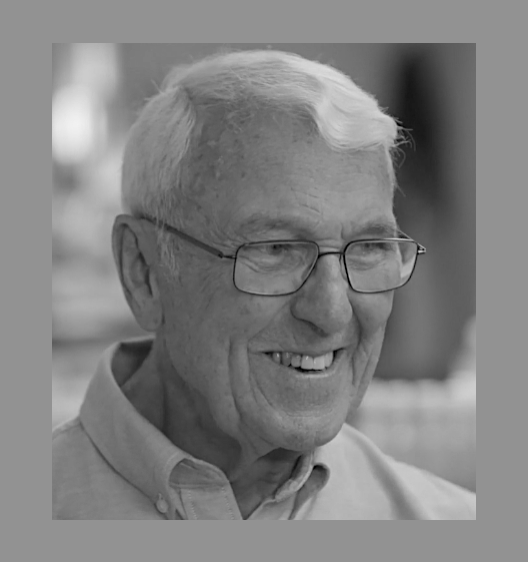
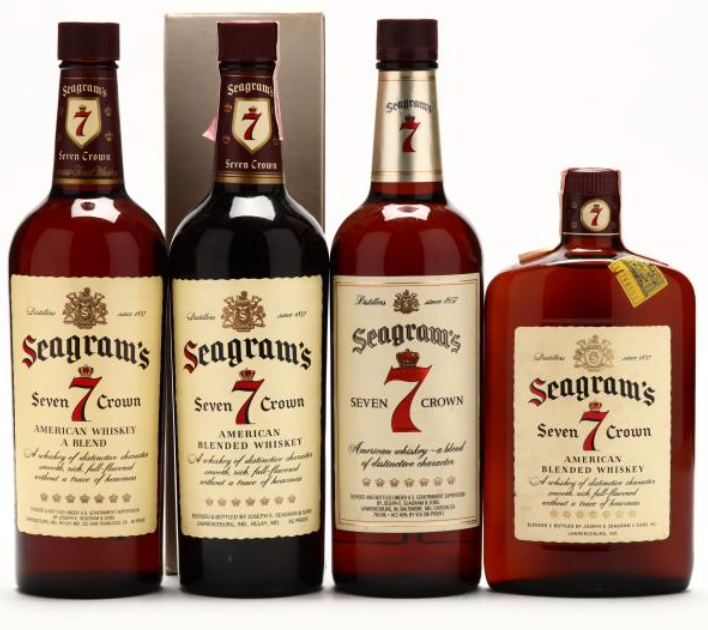
Art Dawe spent his entire professional life inside one of the most quality-obsessed empires North America has ever produced. For decades, Seagram Company Ltd. and its subsidiaries sold whisky at industrial scale while insisting that every bottle taste identical—every time, in every market, year after year. Dawe became one of the people trusted to make that standard real. He began with laboratorydiscipline and sensoryrigor and later exercised the creative authority of blending. His career tied together Seagram’s mid-century Montréal operations, its flagship Canadian whisky brands, and the final generation of Seagram-trained blenders who carried that tradition into new corporate ownership.
Arthur Dawe was born in 1928 in New Westminster, British Columbia. New Westminster was a distillery town, so although he did not immediately pursue spirits as a career, the processes of fermentation and distillation were part of the local landscape. From an early age, Dawe possessed an unusually acute sense of smell. He later recalled that his sensitivity to odors sometimes frustrated his mother when he refused to eat foods he found off-putting. That same heightened sensory perception would ultimately define the second and longestphase of his working life.
Dawe graduated from high school in 1945 as the Second World War ended. His first job was on a tugboat, a practical start for a young man in coastal British Columbia. The work, however, did not hold him for long. Seeking a different path, he listened when a neighbor suggested applying at a distillery. With little to lose, Dawe applied and was hired at the British Columbia Distillery on November 2, 1949. His first assignment was in “dumping and blending,” hands-on work that provided an early introduction to the mechanics of marrying whiskies for consistency and balance. What began as an entry-level posting would prove to be the foundation of a decades-long career.
In the early 1950s, the British Columbia distillery was acquired by Seagram. The purchase placed Dawe inside a vastly larger corporate structure, one that operated with scale, capital, and an uncompromising philosophy about productuniformity. By this point an experienced blender, Dawe was assigned to a panel of blenders sent to Montréal. The visit exposed him to the center of Seagram’s operations and made clear that meaningful advancement required relocation. If his career were to expand within the company, he would need to move east.
His sensoryprecision and blending skill didnotgo unnoticed. Edgar Bronfman, then head of Seagram, recognized Dawe’s talent. In 1955, Bronfman summoned him back to Montréal. Soon afterward, Dawe relocated permanently from British Columbia to Quebec with his wife and two young sons, committing his family’s future to Seagram’s central operations.
In Montréal, Dawe worked as a young blender during a period when Seagram produced enormous volumes of whisky while navigating the regulatory and tax realities of the United States. He later described adjusting recipes for high-volume Seagram brands destined for the U.S. market while preserving the original formulations for other regions. The challenge was not simply compliance; it was sensory continuity. Consumers were never to detect a difference. The task captured the essence of the Seagram system: the objective was not merely to make whisky, but to ensure that a brand tasted like itself indefinitely—even as inputs, laws, and economics shifted.
Within Seagram, sensory ability was treated as both craft and discipline. The company cultivated a lineage of master blenders who embodied that standard. Today, Sazerac Company, current owner of Seagram’s former Old Montréal Distillery, publicly describes that lineage as running from Sam Bronfman to Art Dawe, and from Dawe to Drew Mayville. Regardless of corporate ownership, that professional chain defines Dawe’s place in the tradition: apprenticeship, repetition, and ultimately the authority to determine what a brand is supposed to taste like.
As his career progressed, Seagram entrusted Dawe with roles that combined sensory evaluation and process control. By the mid-1970s, he had become head of quality control in Canada, a position he held for twelve years. The role required more than tasting skill; it demanded system-wide oversight to ensure that production, storage, blending, and bottling all aligned with the company’s exacting standards.
Over time, Dawe’s name became closely associated with Seagram’s crown jewel in Canadian whisky: Crown Royal. In contemporary brand history, he is credited as the creator of Crown Royal Special Reserve, an expression positioned as a more elevated interpretation of the Crown Royal style. The release reflected Seagram’s blending culture at its most refined: innovation constrained by continuity. Even as corporate structures shifted around the brand in later years, Dawe’s role remained part of how Crown Royal’s prestige tier was explained. The Special Reserve bottling was tied to a specific blender’s vision, formed within Seagram’s high-control environment.
Dawe retired from Seagram in 1993 after more than four decades in distilling. Yet his influencecontinued through the blenders he trained. Drew Mayville, who became Seagram’s last master blender before the company was broken up in 2001, has described being developed under Dawe’s guidance and deliberately moved within the company to build his skills. In the Seagram model, mentorship was structured and strategic. Assignments, relocations, and responsibilities functioned as deliberate training tools. Dawe did not simply advise; he shaped careers.
In an industry where the public often recognizes brands but rarely the individuals behind them, Dawe stands as one of the exceptions. His name surfaces whenever the industry explains how Canadian whisky achieved and maintained massive popularity while preserving meticulous consistency. His authority was not theatrical. It was cumulative—earned over decades of disciplined repetition, sensory calibration, and institutional trust. Dawe’s legacy rests on a simple but demanding principle: a whisky must taste like itself, no matter how much the world around it changes. For generations of consumers, that promise was invisible. For Art Dawe, it was the work of a lifetime.
Sources:
University of Kentucky—Nunn Ctr for Oral History, “Interview with Art Dawe”, 13 June 2018, nunncenter.net/ohms-spokedb/render.php?cachefile=2018oh333_saz001_ohm.xml
Whisky Magazine | Issue 207, “We should celebrate…controversial 9.09 per cent rule”, Blair Phillips & Davin de Kergommeaux, 30 July 2025
Sazerac, “Our Distilleries”, www.sazerac.com/our-world/our-distilleries.html
Whisky Magazine | Issue 190, “Interview: Sazerac’s Drew Mayville on his collaborative approach to blending”, Blair Phillips Davin de Kergommeaux, 28 April 2023
Contributed by Tracy McLemore, Fairview, Tennessee