Jason Grossmiller


Jason Grossmiller’s path into distilling did not follow inheritance, apprenticeship, or tradition. It began instead with dissatisfaction, a willingness to abandonstability, and a determination to build something rooted in place.
He was born in Arizona in September 1974, a fourth-generation native of the state. That continuity of place would later define his approach to whiskey. Long before distilling entered his life, Grossmiller spent approximately fourteen years working as a blackjack dealer in Arizona casinos. The work demanded composure and consistency, particularly in his role as a “cooler,” the dealer assigned to tables where players were winning heavily. The environment was high-pressure and service-driven, requiring emotional control and professionalism. Yet the career did not satisfy him. Over time, the experience clarified rather than fulfilled his ambitions. He concluded that he did not want to spend his life in that setting, and that realization became the pivot point toward something entirely different.
The transition began with a conversation. Grossmiller approached his close friend Rodney Hu with the idea of starting a business together. At first, the concept was a microbrewery, reflecting the rapid growth of craft beer in the United States. Arizona already had established players, however, including Four Peaks, and the partners recognized the competitive challenges that would accompany entry into that market. Rather than force the idea, they reassessed. Distilling, by contrast, remained relatively undeveloped in Arizona. It offered both risk and opportunity. They chose to pivot.
Grossmiller committed himself to the new direction with immediacy. He purchased a small still and began experimenting in a backyard setting, producing early batches of agave-based spirits. These first efforts were not supported by formal training or institutional structure. They were practical, iterative, and self-directed. At the same time, he sought to accelerate his learning. He attended workshops and seminars and spent time with Don Poffenroth at Dry Fly Distilling in Spokane, Washington, gaining exposure during the release of that distillery’s first whiskey. The combination of independent experimentation and targeted mentorship provided the technical foundation he needed.
At a certain point, experimentation was no longer enough. Grossmiller made a decisive commitment. He left his casino career, cashed out his 401(k), and leased a warehouse space in Tempe, Arizona. The move came without secured investment capital and was met with skepticism. It was, however, definitive. The decision transformed a developing idea into an operating business and prompted the formal involvement of additional partners.
Arizona Distilling Company was established in 2012 by Grossmiller, Rodney Hu, Jon Eagan, and Matt Cummins after securing a distilling license. Grossmiller assumed the role of master distiller, responsible for the scientific and technical aspects of production. In its early phase, the distillery operated on a small scale, with much of the work conducted manually. Mashing, fermenting, distilling, and bottling were carried out in a modest warehouse environment. The scale was limited, but the intent was clear: to produce whiskey from grain to bottle within Arizona itself.
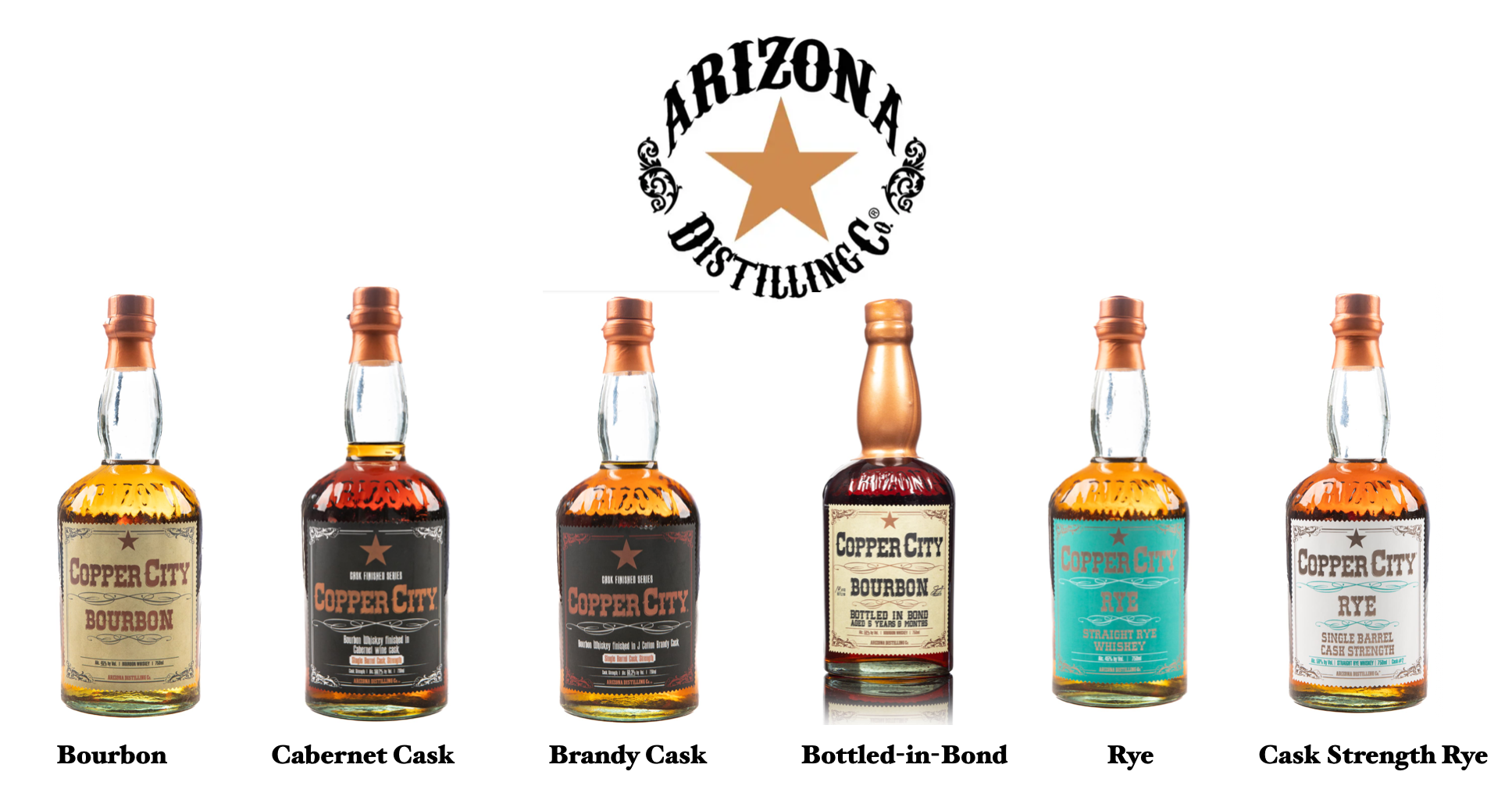
The company quickly established a place in the state’s history. In 2013, it released Copper City Bourbon, recognized as the first legally distilled bourbon produced in Arizona since Prohibition. The release marked more than a product launch. It represented the reemergence of whiskey distillation in a region where it had been absent for decades. Soon after, Arizona Distilling Company introduced Desert Durum Wheat Whiskey, described as the state’s first grain-to-bottle spirit. Both products reinforced the same principle: whiskey should be made entirely in-state, using local raw materials wherever possible.
The business operated within a difficult regulatory environment. At the time of its founding, Arizona lacked a well-developed framework for small-scale distillers. Proposed legislation threatened to impose production caps that would limit growth and distribution. Grossmiller became an outspoken advocate on these issues, arguing for conditions that would allow craft distilling to develop within the state.
On a personal level, Grossmiller’s life included experiences outside of distilling. He appeared as an Iraqi refugee in the film Three Kings, which was filmed in Casa Grande, Arizona. His wife, Genell, remained part of his life throughout his transition from casino work to distilling. He also articulated a simple guiding principle—“Ignore negativity”—a phrase consistent with the decisions that defined his career, particularly his willingness to move forward despite skepticism and uncertainty.
In its early years, Arizona Distilling Company operated with minimal staffing. Grossmiller himself carried much of the workload, effectively running production as a one-man operation. That level of involvement reflected both the scale of the enterprise and his direct engagement with every aspect of the process. It also reinforced the practical nature of his work. The distillery was not an abstract concept or a managed brand; it was a physical operation built through daily labor.
By 2024, the company had undergone operational changes. The original Tempe location closed, and production was consolidated in Mesa. At the same time, Grossmiller and his partners expanded their focus beyond distilling itself. They developed a malt house concept aimed at supporting local brewers and distillers through the production of regionally sourced malted grain. This shift extended his role within the broader supply chain, moving from spirit production into ingredient development and agricultural processing.
Across each stage of his career, Grossmiller’s decisions followed a consistent pattern. He left a stable profession that did not satisfy him, invested his own resources into an uncertain venture, acquired technical knowledge through both experimentation and mentorship, and built a distillery grounded in local identity. The result was not only the creation of Arizona Distilling Company but also the reestablishment of whiskey production in the state.
His work demonstrated that a grain-to-bottle approach could succeed outside traditional whiskey regions. It also contributed to the broader expansion of American craft distilling into new geographic and cultural territory. Grossmiller’s career, defined by deliberate action rather than inheritance, stands as a record of how a regional industry can be built from the ground up through persistence, technical commitment, and a clear sense of place.
Sources
Phoenix New Times, “Jason Grossmiller of Arizona Distilling Company on SB 1397: ‘It’s a Shame’,” Lauren Saria, March 25, 2014, phoenixnewtimes.com
The State Press, “Arizona Distilling Co. conjures spirits in Tempe,” Joey Hancock, January 29, 2014, statepress.com
YourValley.net, “Celebrate all things cigars and bourbon in Carefree,” March 5, 2026,
What Now Phoenix, “Arizona Distilling Co. Closes in Tempe; Sonoran Rows Coming Soon to Mesa,” Joey Reams, October 30, 2024, whatnow.com
Straightbourbon.com, “Arizona Distilling Co. Distillery Trip,” September 29, 2014, straightbourbon.com
WhiskeyPhoenix.com, “Arizona Distilling Company Tour,” October 30, 2013, whiskeyphoenix.com
Contributed by Tracy McLemore, Fairview, Tennessee