
Julius Kessler


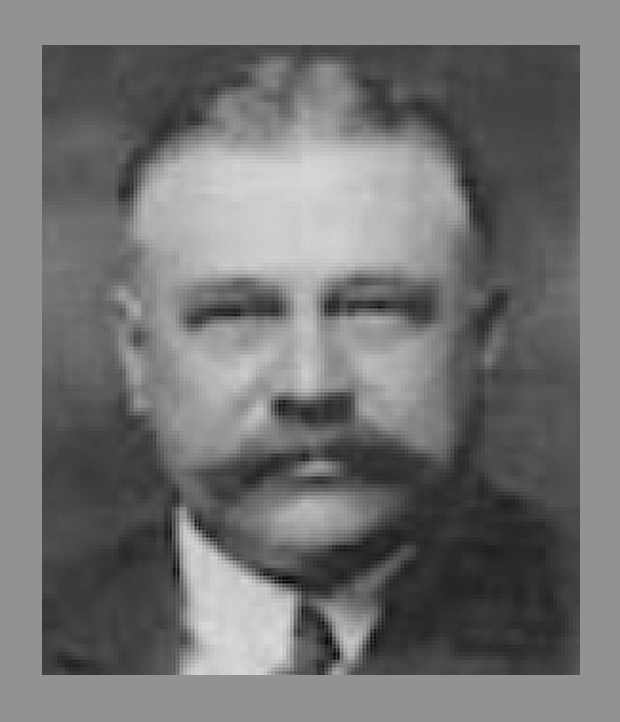
Julius Kessler’s life traces a path that mirrors the rise of American whiskey itself in the late nineteenth and early twentieth centuries: immigrant ambition, frontier commerce, industrial consolidation, and finally brand legacy. His could be the considered the classic story of a spirits salesman, strategist, and organizer who ultimately helped reshape how whiskey movedthrough the American market.
Kessler was born on August 4, 1855, in Budapest, then part of the Austrian Empire, to Ignatius Kessler and Nina Oestereicher. Despite little formal education, his early employment strongly suggests a solid command of and literacy in several languages. As a young man in the early 1870s, he emigrated to the United States, part of a broader wave of Central European migration seeking opportunity in the then-rapidly expanding nation.
His first known profession in America was journalism. Kessler worked in Omaha, Nebraska, and later in Denver, Colorado, writing at a time when the American west was undergoing dramatic transformation. One assignment in 1873 sent him to observe celebrations tied to the completion of the transcontinental railroad, an event that symbolized the linking of the nation’s coasts and the acceleration of western development. That experience influenced his trajectory, and soon he turned away from journalism, drawn instead to the economic possibilities of the frontier.
Kessler’s shift into whiskey was both pragmatic and opportunistic. Rather than pursuing mining as was common in that era of the American west, he recognized a more reliable product: alcohol. Whiskey had quickly become an enormous commodity for a booming population of miners and laborers, so in 1978, Kessler began purchasing whiskey in Denver and transporting it to Leadville, Colorado. At that time, Leadville was a rapidly growing mining town fueled by a silver boom. So using pack animals, he moved his product over difficult terrain and sold it directly to saloons and individuals, usually at a substantial profit. This early phase of his career defined his business style. Kessler did not rely on intermediaries. Instead, he traveled personally, moving from saloon to saloon, building relationships with retailers and customers. His willingness to meet buyers directly gave him both pricing control and a deep network of contacts. Over time, he claimed to have shaken hands with tens of thousands of liquor dealers across the United States, a testament to his relentless salesmanship.
By the 1880s, Kessler had moved beyond simple distribution and into brand creation. In 1888, he formally established what became known as Kessler Blended Whiskey. The product was marketed with a defining phrase—“Smooth as Silk”—a slogan that would endure for more than a century and become inseparable from the brand’s identity. The whiskey itself was a blended product, aligning with a broader American trend toward consistency and affordability that could be accomplished through blending. Kessler’s business expanded rapidly, and by the 1890s he had established a base of operations in Chicago, positioning himself within one of the nation’s most important commercial hubs.
At the turn of the twentieth century, Kessler transitioned again, this time into ownership and large-scale industry influence. Around 1900, he acquired Kentucky distilleries, including the Old Lewis Hunter and Crab Orchard facilities, giving him direct access to production. His growing prominence led to his involvement with the Distillers Securities Corporation, commonly known as the “Whiskey Trust,” a powerful organization that sought to stabilize prices and coordinate production among distillers. Kessler rose to become president of this organization, a role that placed him at the center of American whiskey’s industrial consolidation. His tenure was marked by pragmatic decision-making; At one critical moment, he chose to sell surplus whiskey stocks to competitors rather than flood the market and collapse prices, an action that earned him respect across the industry. Under his leadership, the trust experienced a period of profitability before the onset of Prohibition reshaped the entire trade.
At the turn of the twentieth century, Kessler transitioned again, this time into ownership and large-scale industry influence. Around 1900, he acquired Kentucky distilleries, including the Old Lewis Hunter and Crab Orchard facilities, giving him direct access to production. His growing prominence led to his involvement with the Distillers Securities Corporation, commonly known as the “Whiskey Trust,” a powerful organization that sought to stabilize prices and coordinate production among distillers. Kessler rose to become president of this organization, a role that placed him at the center of American whiskey’s industrial consolidation. His tenure was marked by pragmatic decision-making; At one critical moment, he chose to sell surplus whiskey stocks to competitors rather than flood the market and collapse prices, an action that earned him respect across the industry. Under his leadership, the trust experienced a period of profitability before the onset of Prohibition reshaped the entire trade.
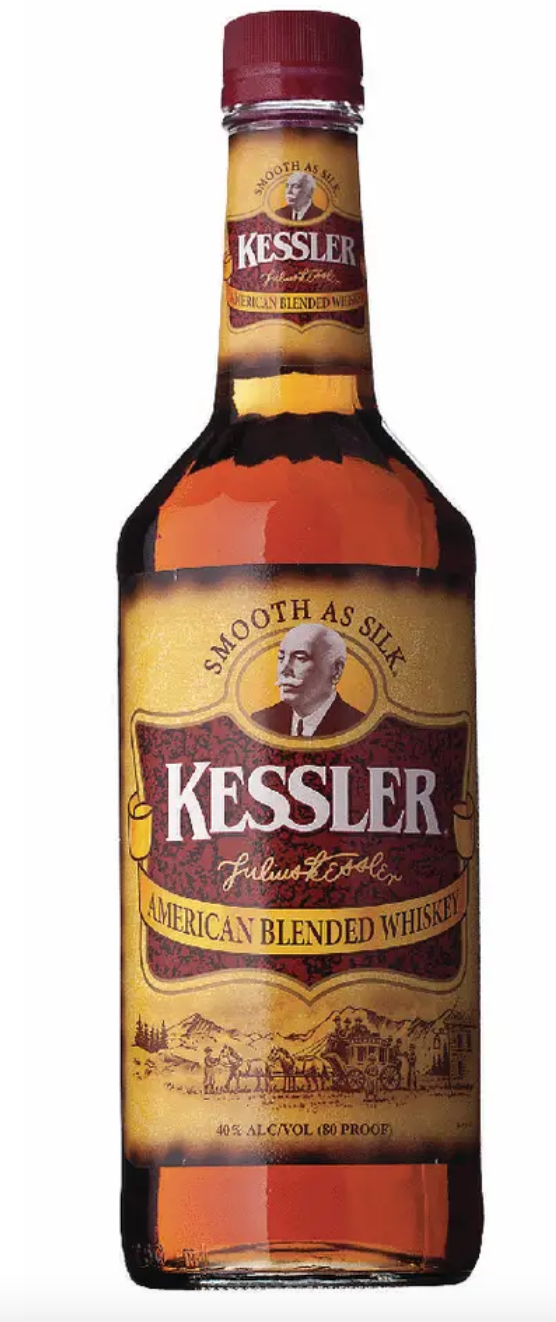
By 1921, at the age of sixty-five, Kessler retired from active business leadership. His retirement was not modest, and he soon relocated to Vienna with substantial wealth. Contemporary accounts describe him as a man of cultivated habits and personal indulgences. He was known to purchase cigars in large quantities, sometimes thousandsat a time, and to maintain a lively social presence well into his later years. Yet despite retirement, Kessler did not completely disappear from the industry. After the repeal of Prohibition in 1933, he returned to the United States and reentered the whiskey business at The Seagram Company. Seagram, which was then led by Samuel Bronfman, recognized both his experience and the enduring value of his name. In 1935, a new corporate entity, the Julius Kessler Distilling Company, was formed as a subsidiary of Seagram, with Kessler, then 80, installed as president. This arrangement ensured that his brand would continue into the modern era of American whiskey production.
Kessler’s whiskey remained positioned as an accessible blended product. It appealed to a broad market, particularly in the years of the Great Depression, when affordability and consistency were critical to rebuilding consumer confidence. Over time, the brand would pass through several corporate hands, ultimately becoming part of what is now Suntory Global Spirits, but it has retained its original identity and slogan.
Details of Kessler’s personal life are limited in surviving records. There is no widely documented evidence of a marriage or children in the available historical sources, a notable absence given his prominence. What does emerge is a portrait of a highly social individual. He maintained companions, including a bull terrier named Roxy and a bird named Dickie, and was known for his energetic lifestyle even in advanced age. He traveled frequently between Europe and the United States, dividing his later years between Vienna and New York City.
Julius Kessler died on December 10, 1940, at the age of eighty-five. By the time of his death, he had spent more than half a century shaping the American whiskey trade. His influence extended beyond his own brand to the broader systems of distribution and consolidation that defined the industry in the post-Prohibition era.
Kessler built his reputation on movement across continents, across industries, and across the changing structures of American commerce. From a young immigrant journalist to one of the most prolific and noted whiskey personalities of his time, Kessler’s legacy is validated by his very own whiskey. Through diligence, hard work and personality, Julius Kessler shepherded his brand from a tiny regional commodity into an international business that is still thriving nearly 150 years after its founding.
Sources:
Bourbon Veach, “Bourbon Barons—Julius Kessler”, Michael R. Veach, 30 December 2024, bourbonveach.com
Pre-Pro Whiskey Men, “Julius Kessler Was Top Dog of Whiskey Trust”, 17 December 2019, pre-prowhiskeymen.blogspot.com
TIME Magazine, “Business: Whiskey Names,” 26 August 1935, time.com
Liquor.com, “Kessler American Whiskey”, 2014, liquor.com
Difford’s Guide, “Kessler American Blended Whiskey”, diffordsguide.com
Headshot of Kessler courtesy of Those Pre-ProWhiskey Men!, pre-prowhiskeymen.blogspot.com
Contributed by Tracy McLemore, Fairview, Tennessee USA