Archibald Mitchell


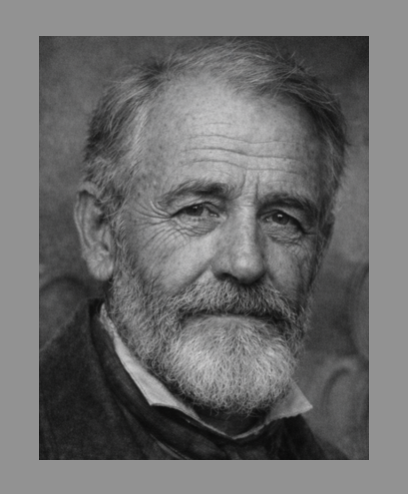
There are no known photographs of Archibald Mitchell known to exist. Above
is an AI-generated image of him based on facts known about his life.
Archibald Mitchell is often introduced as the founder of Springbank, but his real importance to Campbeltown whisky is bigger than any single set of buildings. In the overall story of Scotch whisky, he is of the hinge era: the cohort of men who turned local, semi-hidden whisky practices into a durable family trade, then did what they could to hand down enough distilling knowledge, property, and commercial footing so that their children could branch out into the ventures that put those advantages to use.
Archibald Mitchell was born 13 November 1766, in Campbeltown, Argyll, to Mary and Archibald Mitchell. He had a brother, John, who farmed. He also had a sister, Janet, who married into the well-known “Colvill” family of Campbeltown, nearly every one of whom was engaged in early distilling. Like his father, Archibald also became a distiller at an early age, though in polite terms of the day, those working in that career were quietly called “maltsters.” In that era, Campbeltown was a place where farming, malting, coastal shipping, and whisky sat in the same economic ecosystem. Upon that foundation, the town’s whisky reputation formed, first as a centre of smuggling and illicit distilling, and later as a powerhouse of licensed production.
In 1798, Archibald married his wife, Isabella Ferguson, when he was 32 and she was 24. The couple ultimately had seven children, four daughters and three sons. It is no surprise that all of Archibald’s and Isabella’s offspring would be engaged in distilling in some fashion, either directly or by marriage at some point in their lives. After all, Archibald belonged to a generation that understood whisky not only as a craft, but as infrastructure, grain supply, malting, equipment, warehousing, relationships, and routes to market. He also entered adulthood just as whisky in Campbeltown was no longer just a local habit; it was becoming a commercial language. His name is, therefore, repeatedly linked to the transitional moment when illegal or semi-legal distilling gave way to formal licensing, and he was fully engaged in distilling when, on 18 July 1823, the Excise Act was passed. The Act fundamentally shaped the future of the Scotch Whisky industry at the time. It set a fee for £10 for licensing a still, set duty levels for distilled spirits, allowed warehousing of distilled spirits before duty needed to be paid, and reduced opportunities for evading tax on distilled spirits.
Following passage of the Act, in 1828, Archibald Mitchell founded Springbank Distillery on the very site of his earlier illicit activity, and began producing whiskey in the open for the first time in his life. But modern accounts also place Archibald within a wider Mitchell web of distilling ventures. He and his brother Hugh also became partners in Rieclachan Distillery in 1825, evidence that the family was building capacity and influence across town, not staking everything on one site. That breadth helps explain how the Mitchells could later launch yet another distillery, Glengyle, 100 meters from their first venture and still have the people, equipment, and resources to staff it.
By 1837, Archibald’s sons, John and William Mitchell, were becoming more and more involved in the activities at Springbank. Later, John also took his own son into the business, forming the company J&A Mitchell. By then, Archibald was more than seventy years of age, a time when retirement begins to feel more inviting by the day. Following his stepping back from direct distilling activities at Springbank, not much more has ever been shared about Archibald Mitchell’s life. He and Isabella died mere weeks apart in 1849. At the time, he was 83 and she was 75. Ownership and management of Springbank Distillery then passed firmly into the hands of John and William, who continued distilling at Springbank during a period when Campbeltown was consolidating its reputation as one of Scotland’s most important whisky-producing centers. Under the Mitchell brothers’ stewardship, Springbank remained a family-operated enterprise, maintaining the production practices established by their father and emphasizing consistency rather than rapid expansion. By the late-nineteenth century, Springbank had become a stable, respected distillery. The brothers also diversified their business interests, even participating in bonded warehousing and blending, while keeping Springbank’s identity rooted in single malt production. When William Mitchell died in 1913 and John Mitchell in 1919, control passed to the next generation, including Archibald’s grandsons, who inherited both a functioning distillery and a heavy responsibility during a period of growing economic uncertainty.
The early twentieth century brought profound challenges to all of Campbeltown’s distillers. The First World War, the introduction of U.S. Prohibition in 1920, and a general contraction in global whisky demand placed severe financial pressure on many distilleries, including Springbank. Despite these conditions, the Mitchell family continued to operate for a time, drawing on reserves and their long-established reputation. However, by the mid-1920s, the cumulative effects of declining sales and restricted export markets became overwhelming. In 1925, Springbank entered liquidation, bringing an end to more than a century of continuous Mitchell family ownership.
Considering the unfortunate end to Springbank proprietorship, Archibald Mitchell’s legacy rests not simply in the buildings he established or the whisky he produced, but in the family culture he shaped. As founder, owner, and working distiller, he created a model of hands-on management in which sons were trained directly in the craft, expected to understand every stage of production, and entrusted with responsibility long before inheriting formal control. His leadership produced a succession of capable distillers who sustained Springbank across decades of growth, stability, and eventual crisis. Even after the Mitchell family ceased to own the distillery, Springbank continued to be defined by practices and values traceable to Archibald’s original approach; careful production, local identity, and a belief in generational continuity. In that sense, Archibald Mitchell remained present at Springbank long after his death; not as a distant founder, but as the architect of a living tradition that outlasted his family’s ownership and became inseparable from the distillery’s name.
Sources:
Find a Grave, “Archibald Mitchell”, findagrave.com/memorial/171586640/archibald_mitchell
WikiTree, “Archibald Mitchell (1766–1849)”, wikitree.com/wiki/Mitchell-21491
Kilkerran (Glengyle Distillery), “Glengyle Distillery History”, kilkerran.scot/the-glengyle-distillery/
Mark Littler, “The History of Springbank”, Hannah Thompson, 05 November 2021
My Name Is Whisky, “Springbank Distillery: A family legacy”, mynameiswhisky.com
Whisky Flight (blog), “Campbeltown: The Whisky Capital of the World”, whisky-flight.com
Whiskypedia, “Glengyle”, scotchwhisky.com/whiskypedia/1859/glengyle/
Springbank distillery official website, “Our Story”, springbank.scot/about/story/
Contributed by Tracy McLemore, Fairview, Tennessee USA