Martin McAdam



Martin Patrick McAdam is an engineer and entrepreneur whose experience in infrastructure and energy became central to the creation of Ardgowan Distillery during the early 2010s. As co-founder and one of the project’s principal public figures, McAdam helped guide the distillery from concept and planning through construction and eventual commercial operation. From the outset, the project reflected his belief that Scotch whisky should be approached as a long-term endeavor measured in decades rather than quarterly returns.
Before entering whisky, McAdam built a professional career in engineering and infrastructure. That background heavily influenced his approach to distilling. Rather than beginning with sourced whisky alone or pursuing a small-scale tourist operation, he and his collaborators envisioned a fully functioning distillery designed for long maturation periods and sustained production. Their ambition was to create a modern Scottish distillery rooted firmly in traditional whisky-making principles while incorporating contemporaryengineering, sustainability, and energy efficiency.
When McAdam and his partners began exploring locations for a new distillery, they focused on Scotland’s west coast and ultimately selected Inverclyde. The region offered practical advantages, including maritime access,transportation links, and proximity to Glasgow. Just as importantly, it carried historical and cultural resonance. The nearby Ardgowan Estate had longstanding associations with Scottish aristocratic and landholding traditions, providing a narrative backdrop that aligned naturally with the heritage-driven identity often associated with Scotch whisky.
From the beginning, McAdam approached the project methodically. Rather than rushing into production, he spent years refining architectural plans, securing approvals, attracting investment, and addressing the financial realities of modern distillery construction. His public comments during the development period consistently emphasized patience. McAdam argued that whisky projects often fail when developers focus too heavily on immediate returns instead of long-term quality and maturation.
That philosophy became most visible in the creation of Ardgowan’s “Infinity Casks,” one of the most distinctive concepts associated with McAdam’s tenure. Developed alongside the late whisky expert Dr. Jim Swan, the Infinity Cask project was built around the idea of continuousmaturation and fractional blending over extraordinarily long periods. Instead of bottling whisky exclusively from finite casks, Ardgowan proposed maintaining living casks that would periodically be replenished with older stocks, allowing portions of the whisky to survive and evolveindefinitely. The concept drew attention because it blended traditional Scotch maturation techniques with ideas more commonly associated with solera systems.
McAdam openly stated that he wanted to create whisky capable of outlasting its founders. The Infinity Cask idea reflected his broader philosophy toward the distillery itself: build carefully, think generationally, and avoid sacrificing long-term quality for short-term financial gain.
Original plans for the distillery called for a modern production facility capable of producing substantial quantities of malt whisky while maintaining traditional visual character. Long-term warehousing and wood management became central priorities during development. McAdam repeatedly emphasized that maturation was not a secondary stage of whisky production but the defining element of the final spirit. In his view, careful cask management and patience separated great whisky from ordinary whisky.
The project faced repeated delays and financial challenges during construction, particularly amid rising construction costs and broader economic uncertainty across Britain during the late 2010s and early 2020s. Yet McAdam continued moving the project forward. The persistence reflected both his engineering mindset and the economic realities of Scotch whisky production, where substantial capital investment must often be committed many years before mature whisky becomes commercially viable.
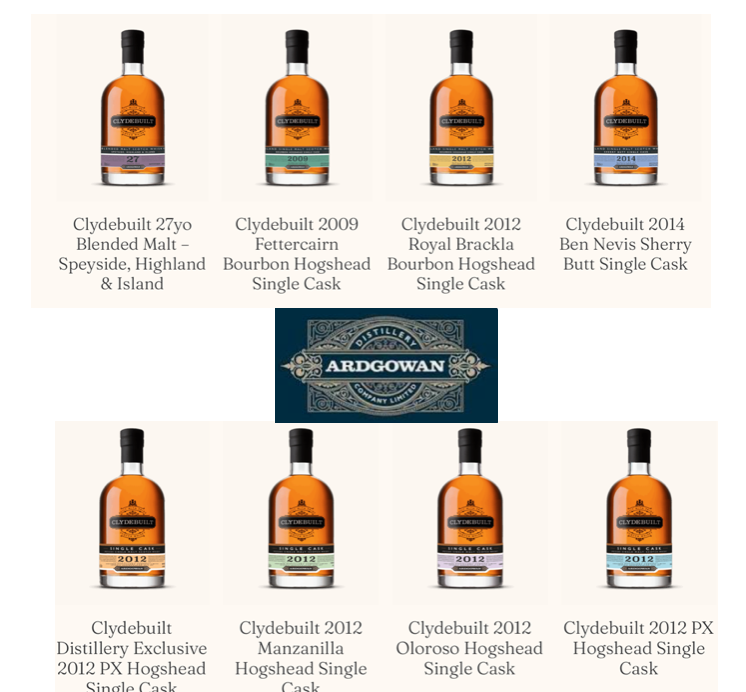
Even before the distillery reached full operation, Ardgowan began building brand recognition through sourced and blended releases tied to its long-term philosophy. Those bottlings allowed the company to establish market visibility while construction continued and also demonstrated McAdam’s understanding of the modern whisky industry, where new distilleries frequently require years of public engagement before their own mature spirit becomes available.
After the distillery itself neared completion, McAdam continued shaping Ardgowan’s direction by emphasizing sustainability, efficiency, and long-term maturation policy. The completed facility incorporated modern environmental considerations alongside traditional production goals, placing Ardgowan within the broader twenty-first-century expansion of independent Scotch distilling. Under McAdam’s leadership, the company also strengthened its reputation for maturation-focused whisky development rather than relying primarily on tourism or rapid-release young whisky programs. Industry attention increasingly centered on Ardgowan’s cask philosophy, its partnership with Jim Swan, and its positioning as a patient, long-horizon whisky producer.
The project also reflected larger changes occurring within the Scotch whisky industry during the 2010s and 2020s. Independent distilleries increasingly challenged the dominance of multinational corporations, while consumers showed growing interest in authenticity, production methods, cask management, and long-term maturationpractices. McAdam’s public messaging aligned closely with those trends. He consistently presented Ardgowan not simply as another whisky brand, but as a distillery intended to think in terms of generations.
Away from whisky, McAdam also experienced significant personal loss. He was married to Pat McAdam, a teacher who died from cancer in 2007. The couple had a daughter, Kate. In 2011, Martin and Kate McAdam, together with Pat’s parents, established a scholarship for Chemical and Bioprocess Engineering students in memory of Pat McAdam and in recognition of what was described as her gentle and benevolent life.
By the time Ardgowan emerged as a functioning distillery project, Martin McAdam had become closely associated with a style of whisky-making that emphasized patience, engineering precision, sustainability, and long-term maturation. His work helped position Ardgowan among the independent Scottish distilleries seeking to balance modern innovation with traditional Scotch whisky values. Rather than pursuing rapid expansion or short-lived trends, McAdam built the project around the idea that great whisky is created slowly, matured carefully, and intended to endure well beyond the generation that first produced it.
Source:
Ardgowan Distillery official website, ardgowandistillery.com
Self-headshot of Martin McAdam © Martin McAdam (2013)
Contributed by Tracy McLemore, Fairview, Tennessee USA