Thomas Mackenzie


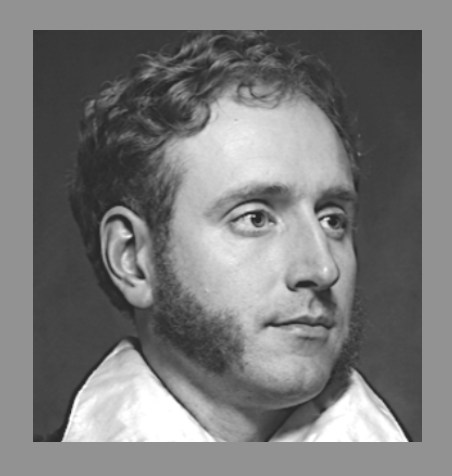
Above is an AI-generated image of Thomas Mackenzie created from an official oil portrait.
Glen Ord Distillery rose out of the rich barley country of the Highlands at a moment when that region’s whisky was changing from a local agricultural trade into an industrial and international business. At the center of that transformation stood Thomas Mackenzie, the aristocratic Highland landowner whose decision to establish a legal distillery in 1838 permanently altered the economy and identity of the district around Muir of Ord.
Thomas Mackenzie was born on 25 November 1795, into the powerful Mackenzie family of Ross-shire. Thomas’ father was Alexander VI of Ord, a branch of Clan Mackenzie whose estates stretched across the fertile agricultural expanse just west of Inverness. By the early nineteenth century, the Highlands were still recovering from the economic and social upheaval that followed the Jacobite era, so agricultural reform, tenant displacement, and changing patterns of land management forced many Highland proprietors to reconsider how their estates could survive economically. It was in that context in which Thomas Mackenzie inherited the Ord estate in 1820 and began reshaping the district with a practical and commercial eye.
Unlike many Highland lairds who concentrated solely on rents or livestock, Mackenzie recognized the value of barley cultivation and whisky production. The surrounding barley fields, known locally as the “Black Isle” possessed rich soil, dependable water sources, and generations of local knowledge in illicit distillation. At the time, numerous small stills operated across the district, many run by tenant farmers who converted their barley crops into whisky as a means of paying rent and surviving financially. Mackenzie saw an opportunity to channel that activity into a legal, industrial enterprise that could provide steady employment and greater stability for the region.
On a personal front, it was about this time that on 27 April 1825, Thomas married Anna Watson Fowler. The two assured continuance of the generational Mackenzie line when an heir, Alexander Watson Mackenzie, was born 13 months later. Alexander would later play a big part in the distillery his father was to found.
As a loyal Highlander, Thomas Mckenzie had long envisaged an industry where local men could have year-round employment, but he also needed a ready market for his barley. So in 1838, Mckenzie established what became Glen Ord Distillery near Muir of Ord. The distillery initially operated under the name Ord Distillery Company. Water came from nearby lochs and local springs, including the famous Cuckoo Well, while the surrounding farmland supplied the barley needed for production. The distillery sat close to agricultural communities whose labor force already understood the rhythms of malting and distilling. Around eighteen men worked there during its early years, a significant source of employment in the district. The entire barley yield from Mckenzie’s own farm was used for distilling, which was the quickest means of turning the crop into cash to pay the rents. The distillery itself was water-powered by 2 large water wheels driven by water from Loch nam Bonnach and Loch nan Eun.
Mackenzie’s undertaking reflected a broader transformation taking place throughout Scotland. Legal distilleries increasingly displaced illicit whisky production after the Excise Act reform of 1823 made licensed distilling more practical and profitable. Yet the Highlands remained difficult terrain for large-scale whisky operations. Roads were poor, transportation was expensive, and financing was uncertain. Establishing and maintaining a legal distillery in Ross-shire required persistence, land, agricultural planning, and substantial capital. Further, as an aristocratic landowner, Mackenzie himself had little to do with the operation of the distillery, and day-to-day licensed operations were handled by two trusted managers, Robert Johnstone and Donald MacLennan, whom Mackenzie immediately licensed/leased the distillery to rather than attempt to operate it himself.
Johnstone’s and MacLennan’s early years, initially successful, soon proved turbulent. Financial instability plagued many young distilleries in the 1830s and 1840s, and the Ord Distillery Company eventually collapsed into bankruptcy nine years later, in 1847. Even so, whisky production reportedly continued illegally for a time before the business regained formal licensing under new operators. Yet the survival of the distillery through those years demonstrated the strength of the whisky trade in the region and the solid foundations Mackenzie had created.
The distillery lay silent until 1855, when Alexander McLennan and Thomas McGregor purchased it. Under the new owners, production resumed successfully, and McLennan’s widow assumed the management of the distillery after his death in 1870. In 1877, fate intervened in the history of Glen Ord, as it passed back to the MacKenzie clan through the re-marriage of McLennan’s widow to Alexander MacKenzie. Sadly, soon after their marriage, much of the distillery was destroyed in a fire. After Alexander MacKenzie died in 1896, Glen Ord was then sold to James Watson & Co. In 1923, Glen Ord changed hands again, this time to Dewars, marking the beginning of the use of their Single Malt in the Blend. Glen Ord survived a series of other mergers, eventually landing in the possession of DCL. In 1966, the distillery was renovated and expanded, with the number of stills increasing from 2 to 6. In 1985 Glen Ord was acquired by United Distillers, who became part of Diageo a decade later.
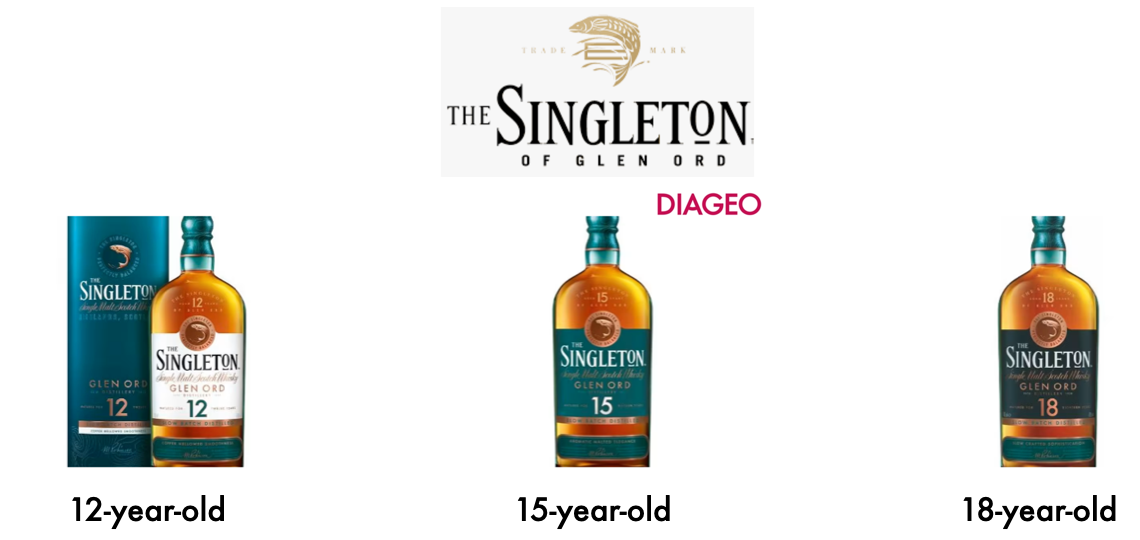
Thomas Mackenzie died at the age of 91 on 16 July 1887. His legacy, therefore, rests less in surviving personal anecdotes than in the permanence of the institution he created, while the scale of the modern distillery would have been almost unimaginable during Mackenzie’s lifetime. Today, Glen Ord produces millions of liters of spirit annually and forms a major component of Diageo’s Singleton range and numerous blended whiskies. Massive still houses, mechanized production systems, and international export networks now occupy the same landscape where Mackenzie once sought simply to create employment and bring legal order to Highland whisky-making.
In the story of Scotch whisky, founders are often overshadowed by later master blenders, industrial consolidators, and global brands. Thomas Mackenzie belongs to an earlier class of whisky pioneer: the Highland landowner who recognized that barley, water, labor, and geography could be united into a lasting enterprise. His vision connected agriculture to industry and local Highland traditions to international commerce. Nearly two centuries after he established the distillery at Muir of Ord, whisky still flows from the site he brought into existence
Sources:
Luxury Scotland Tours, “Private Heritage Tours of Scotland-Glen Ord”, luxuryscotlandtours.com
Wikitree, “Thomas Mackenzie VIIth of Ord (1795-1887)”, wikitree.com
NOSAS Archaeology Blog, “The Mackenzies of Ord”, nosasblog.wordpress.com
Geni (ancestry website),“Thomas Mackenzie, 7th of Ord”, www.geni.com
Headshot created from a portrait courtesy of the Fraser-Mackenzie Family
Contributed by Tracy McLemore, Fairview, Tennessee USA