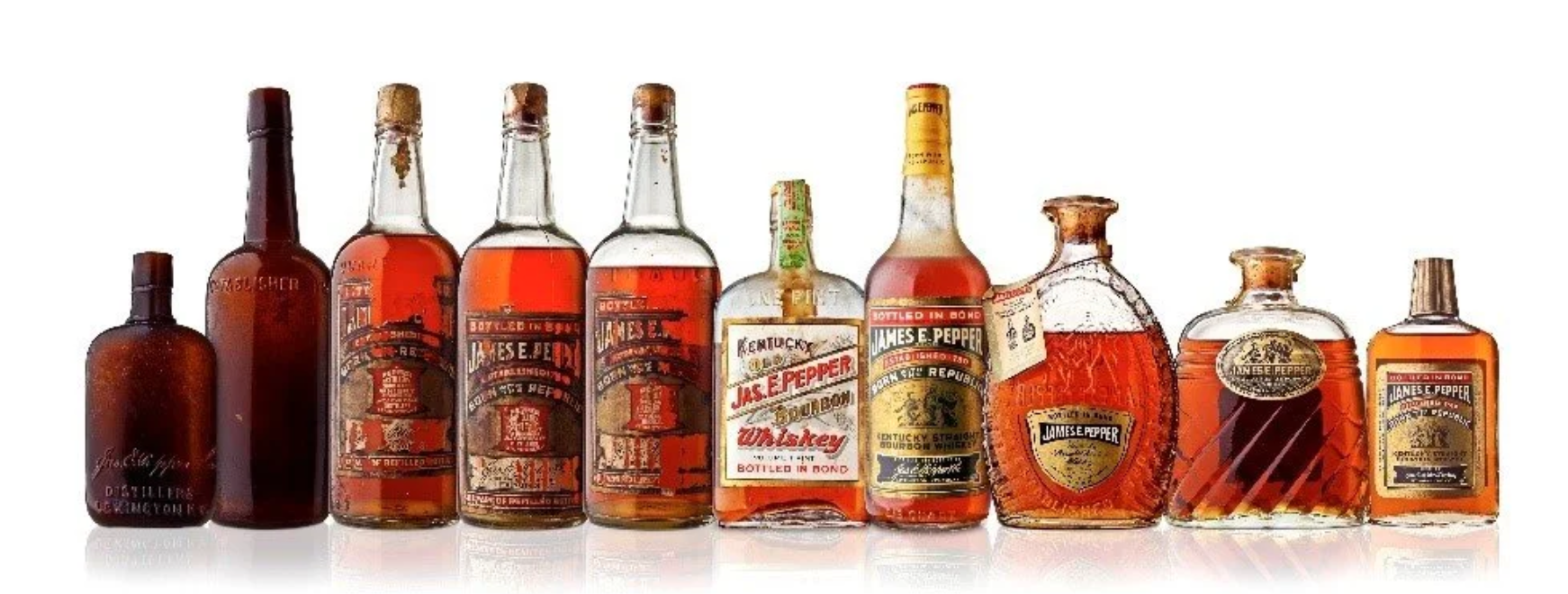
James E. Pepper


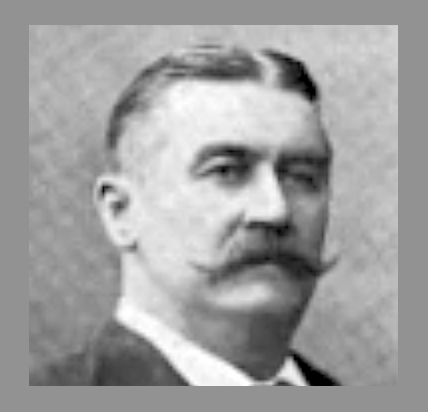
James Edward Pepper was born on May 18, 1850, at the Pepper family distillery property in Woodford County, Kentucky, into one of the earliest and most influential whiskey families in the United States. From the beginning, his life was inseparable from distilling. His grandfather, Elijah Pepper, had begun producing whiskey during the American Revolution, and his father, Oscar Pepper, expanded the family’s operations into a major early Kentucky distillery enterprise.
Growing up on distillery grounds, James was raised in an environment where whiskey production was both a livelihood and a legacy. The Pepper distillery, later associated with what is now the Woodford Reserve Distillery site, exposed him early to mash bills, fermentation, and barrel aging. While detailed records of his formal education are limited, it is clear that he received both practicalinstruction in distilling and the social polish expected of a member of a prominent Kentucky family.
Pepper entered adulthood during a transformative period in American whiskey history. The Civil War and the Internal Revenue Act of 1862reshaped the industry, eliminating smaller producers and favoring larger, better-capitalized operations. Within this changing landscape, he became involved in the family business and worked alongside prominent figures such as Col. Edmund H. Taylor, Jr., who at one point partnered in operating the Oscar Pepper distillery.
Despite this early involvement, Pepper’s career was not without setbacks. He lost control of the original family distillery during a period of financialdifficulty and restructuring within the industry. This loss forced him away from the family’s historic base, and he spent time in New York, where he gained broader commercial experience and developed a flair for marketing and promotion that would later define his career.
Pepper returned to Kentucky in 1879 determined to rebuild his fortunes. Partnering with George A. Starkweather, he acquired the Henry Clay Distillery in Lexington, which soon became known as the James E. Pepper Distillery. This move marked the true beginning of his independent career and established him as a central figure in Kentucky’s Bluegrass whiskey region. At the new distillery, Pepper produced whiskey using his family’s established mash bill and branded it “Old Pepper.” He formally trademarked the brand in 1880 and leaned heavily into its Revolutionary War heritage, promoting it as “Born with the Republic” and “Old 1776.” His insistence on continuity with his grandfather’s methods gave the whiskey both historical credibility and marketing power.
Pepper’s distillery benefited from broader industrial trends. Improvements in glass production allowed whiskey to be bottled at the distillery rather than sold exclusively by the barrel. Pepper embraced this shift and became one of the first Kentucky distillers to bottle his own product, ensuring greater control over quality and branding.
James E. Pepper’s influence extended beyond his own distillery. He introduced a “signature strip stamp” across the top of his bottles as a guarantee of authenticity and quality. This innovation later influenced federal standards and became incorporated into the Bottled-in-Bond Act of 1897, one of the most important pieces of legislation in American whiskey history.
By the late nineteenth century, his Lexington distillery had grown into one of the largest in the United States. Pepper cultivated a reputation not only as a distiller but also as a tireless promoter of bourbon. He advertisedaggressively, emphasizing the heritage of Kentucky whiskey, and positioned his own brand as both traditional and superior. His personality became inseparable from the brand. Contemporary accounts describe him as flamboyant, confident, and deeply invested in the public image of his whiskey. He frequently claimed that his product was among the oldest and best in the country, reinforcing a narrative that tied quality to lineage and longevity.
In 1890, Pepper married Ella Offutt Kean, a woman from a well-connected family with ties to the horse racing world. The marriage united two shared interests: social prominence and a passion for thoroughbred racing. Pepper maintained a stable of racehorses, some of which competed in the Kentucky Derby, reflecting both his wealth and his enthusiasm for the sport. Unfortunately, James and Ella did not have any children.
Notwithstanding this disappointment, Pepper’s lifestyle reflected his gregarious personality and success. He traveled in a private railcar named “The Old Pepper,” decorated with imagery from his whiskey brand, and cultivated a public persona that blended showmanship with business acumen. His presence in both distilling and social circles made him a recognizable figure in Kentucky and beyond. Despite his success, Pepper’s career included periods of financial strain, including bankruptcy. These reversals were not uncommon in an industry subject to fluctuating demand, overproduction, and increasing pressure from the temperance movement.
James E. Pepper died in 1906 at the age of 56. Even at his young age, by the time of his death, he had solidly secured his place as a defining figure in the bourbon industry, both as a producer and as a promoter of Kentucky whiskey. Pepper’s distillery in Lexington continued operating after his death and remained a significant industrial site into the twentieth century. The brand survived Prohibition in part through medicinalwhiskey sales and authorized warehousing, maintaining its name recognition even as production ceased.
Unfortunately, in the decades that followed, the distillery changed hands several times, eventually coming under the ownership of Schenley Industries during the post-Prohibition consolidation of the whiskey industry. Production fluctuated through World War II and the postwar period before ceasing entirely in 1958. The site, once a centerpiece of Lexington’s distilling industry, fell dormant for decades before being revived in the twenty-first century. Today, the James E. Pepper Distillery stands again in Lexington’s Distillery District, linking modern bourbon production to one of its earliest and most colorful advocates.
James E. Pepper’s life reflects both the volatility and the promise of Kentucky’s whiskey industry during its formativeyears. Born into a distillingdynasty, he lost and rebuilt his position, transforming setbacks into opportunities. He combined inheritedknowledge with aggressiveinnovation, helping shape practices that would become industrystandards. His whiskey carried the weight of family history, but its success depended on his ability to modernizeproduction and marketing. Through branding, bottling innovations, and legislative influence, he helped define what consumers could expect from American whiskey.
Sources
James E. Pepper Distillery official website, “Colonel James E. Pepper (1850–1906),”jamesepepper.com
Sipping History, “History of Old Pepper Distillery”, March 17, 2022, sippinghistory.com
VisitLEX, “Where Old Meets New: Discover Lexington’s Revived Distillery District”, visitlex.com
Kentucky Bourbon Trail, “James E. Pepper Distillery”, kybourbontrail.com
Whiskey Network, “James E. Pepper: Inventor of the Old Fashioned”, whiskeynetwork.net
Contributed by Tracy McLemore, Fairview, Tennessee