
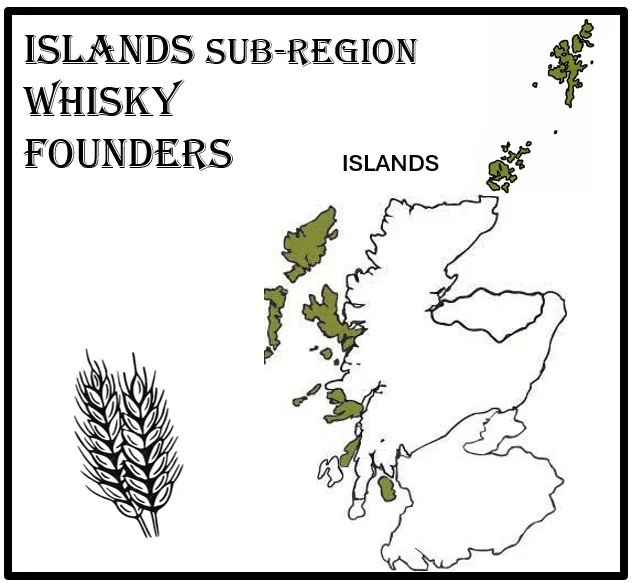
(NOTE: FOUNDERS ARE LISTED IN ALPHABETICAL ORDER)
Scotch Whisky Founders
Island Subregion
The Northern Areas within Scotland includes the Highland Sub-Region
Below are links to Whisky Founders that have made huge contributions to the growth of the Island Regions as well as the Scotch Whisky Industry as a whole. These may have been historical figures that lived long ago before prohibition or may be living leaders that have advanced the cause of the industry as a whole.
1
Alastair Day
Raasay
For Raasay whisky, Alasdair Day’s signature approach centers on producing both peated and unpeated spirits. He then matures them in a defined set of cask types, most prominently ex-rye casks, chinkapin oak casks, and ex–Bordeaux red wine casks, then marries those strands into a unified house style.
2
Magnus Eunson
Highland Park
Mangus Eunson was tipped off about an impending raid on his illegal whiskey-house. When the Excise agents burst in, a solemn “funeral service” was under way, with the coffin resting on casks discreetly covered with a white cloth. Just before the covering was raised, the word ‘smallpox,’ was whispered and the agents fled.
3
Robin Fletcher
Jura
During the Second World War, Robin Fletcher served in the Gordon Highlanders. He was captured in Singapore and spent years as a prisoner of war, enduring forced labor associated with the Burma–Siam Railway. His wife received only brief postcards during that captivity that were limited to a few words.
4
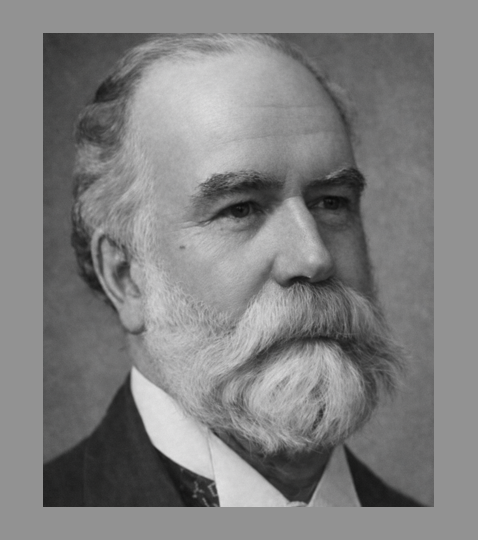
Roderick Kemp
Talisker
Roderick Kemp wrote to the laird describing the danger of moving casks onto waiting ships, stressing that only witnesses could truly understand the hazard. The point of the letter was that Talisker needed a pier, because the business was exposed every time whisky had to be manhandled across water.
5
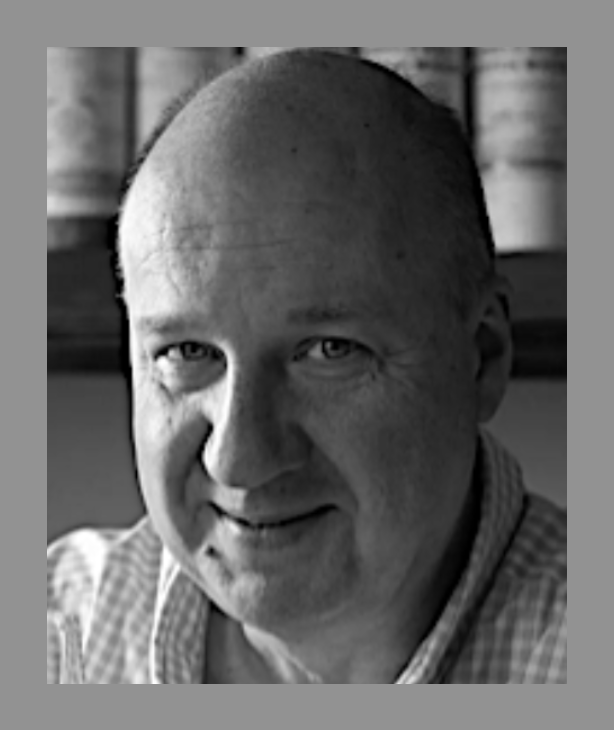
Neil Mathieson
Torabhaig
Neil MacLeod Mathieson established Reivers in the Scottish Borders, focused on experimentation, and Torabhaig on the Isle of Skye, dedicated to a traditional, peated island style. For Mathieson, the two distilleries represented the opportunity to control the entire lifecycle of whisky production.
6
John Sinclair
Ledaig
In April 1797, John Sinclair applied for 57 acres south of the harbor to build houses and a distillery. The timing was almost perverse. Distilling had been banned since 1795 as Britain tried to conserve grain during wartime pressures. Predictably, Sinclair was initially told to build a brewery instead.
7
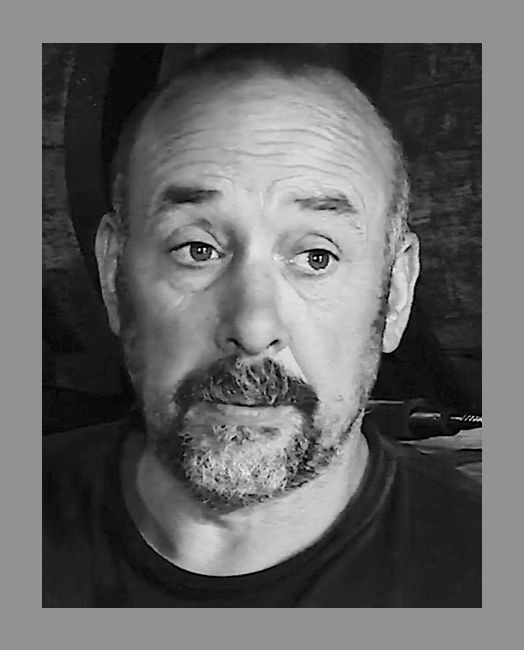
Marco Tayburn
Abhainn Dearg
Marko Tayburn built Abhainn Dearg on the site of an abandoned salmon hatchery. The stillhouse itself was new, but the broader site carried the bones of its previous life. Tayburn’s adaptive-reuse choice signals the practical, do-it-with-what-you-have mindset that shows up repeatedly at the distillery.
8
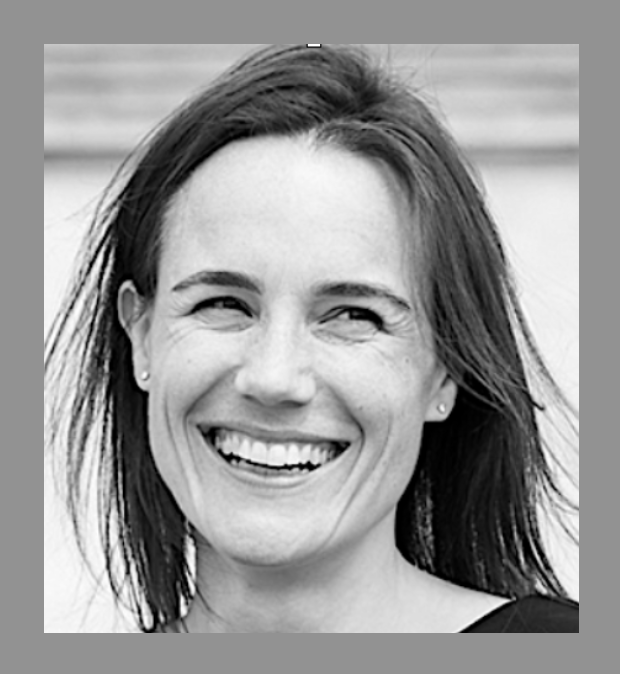
Annabel Thomas
Nc'nean Distillery
In the early 2010s, Annibel Thomas began exploring the Scotch whisky industry to learn its constraints. What she identified was a gap, in that while Scotch whisky was globally respected, it was also often perceived as somewhat outdated, too traditional, male-dominated, and resistant to change.
9
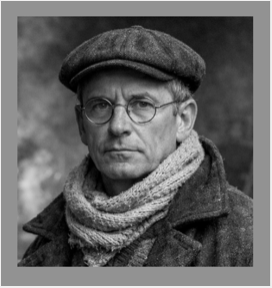
John Townsend
Scapa
John Townsend continually dealt with the unglamorous necessities of distilling: bonded storage, buildings, and excise compliance. A Customs & Excise file relating to Scapa submitted at that time included applications for a warehouse extension in the late 1890s, complete with plans of the distillery.