
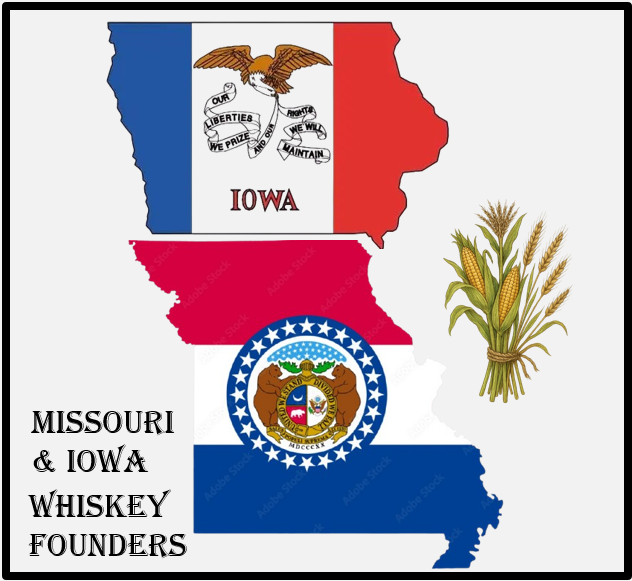
(NOTE: FOUNDERS ARE LISTED IN ALPHABETICAL ORDER)
Craft Distillery Whiskey Founders
Missouri & Iowa
The Great Plains States Region includes the States of: Iowa & Missouri
Below are links to Whiskey Founders that have made huge contributions to the growth of Missouri and Iowa’s Whiskey Industry. These may have been historical figures that lived long ago before prohibition or may be living leaders that have advanced the cause of the industry as a whole. Craft Whiskey has now been its own whiskey category for years.
1

Ryan Bare
Century Farms Distillery
Ryan Bare purchased a group of buildings along U.S. Highway 71 on the north side of Spencer, Iowa in 2017. The property had once housed, ironically, an International Harvester dealership. Ryan, Amanda, three generations of the Bare family, and numerous others helped transform it into Century Farms Distillery.
2

Ryan Burchett
Mississippi River Distillery
Ryan Burchett spent roughly five years pressing for legislative change in Iowa. Finally, a law signed in May 2017 allowed Iowa distilleries to sell spirits by the glass, transforming opportunities for all distillers in the state. Mississippi River Distilling Company was among the first prepared to use the new privileges.
3

Scott Bush
Foundry Distilling Company
Scott Bush’s Templeton Rye entered the market in 2006, and he presided over a period of rapid brand expansion. Templeton became a nationally recognized rye whiskey at a time when American rye was beginning a significant revival. Ever the capitalist, however, Bush sold his interest in Templeton Rye in 2016.
4
Kyle Doyle
Iowa Distiliing Company
Kyle Doyle took the reins of Iowa Distilling Company in November 2016. He saw greater possibilities in what the company itself has called the “little distillery that could,” and his entrepreneurial background suited the task of expanding the operation. Doyle made the small-town identity central to his business strategy.
5

Rich Eggers
Iowa Legendary Rye
In Carroll, Iowa, “Whiskey Rich” Eggers is known less for expansion than for consistency, and Iowa Legendary Rye stands as an example of how historical methods can be preserved in a modern context, as a practical and intentional way of making whiskey exactly like bootlegger Lorene Sextro did in 1932.
6

David Epstein
Tom's Town
Upon his return to Kansas City, David Epstein and Steve Revare quickly reconnected, picking up a conversation that had effectively been paused rather than ended. Both sensed that Kansas City’s new phase was one defined by an interest in locally made spirits and by a renewed interest in the city’s own complicated past..
7

Patrick Garcia
Union Horse
Patrick Garcia always felt at home in the shifting seasons of Kansas. Garcia grew up in Kansas City alongside his older brothers Damian and Eric, and sister Mary, learning early that family ties often form the backbone of successful enterprise. So from their childhood, the Garcia siblings looked for the chance to build something together.
8
Gary Hinegardner
Wood Hat Spirits
Gary Hinegardner, owner and founder of Wood Hat Spirits, frequently challenges visitors at his distillery with a compelling question: “Why do we make whiskey from the same corn that cows and pigs eat? We should be making whiskey from corn meant for people.” This perspective embodies his forward-thinking approach and steadfast commitment to both agriculture and whiskey artistry.
9

Pat Hoffman
Lonely Oak Distillery
Pat Hoffman kept the plan for his distillery to himself while he tested whether turning farm-grown grain into spirits was truly workable. By the time he raised the idea with his wife, Amy, he had already done enough groundwork to believe it could succeed. Surprisingly, Amy Hoffmann backed the idea wholeheartedly.
10
Ben Holladay
Holladay Distillery
Ben was able to purchase the land for the distillery in 1849 after discovering the limestone spring on the site. He went to work with his brother David to secure the necessary equipment and materials and was able to begin distilling whiskey at the Blue Springs Distillery in 1856. The first whiskey was sold for 35 cents per gallon the following year.
11
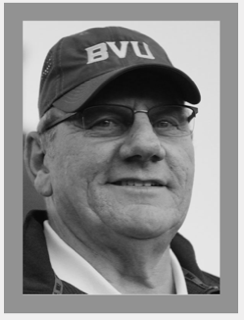
Keith Kerkhoff
Templeton Distillery
Keith Kerkhoff grew up in rural western Iowa, surrounded by farms and hidden stills. His grandfather, Alphonse (“Al”) Kerkhoff, was among the bootleggers in Templeton who produced rye whiskey during Prohibition, utilizing rye grain and aging it in barrels to make their product smoother and more marketable
12

Alex Lindsey
West Bottoms
Alex Lindsey began distilling on his own more than a decade before his business became public, starting with sharing his results with friends and family and paying close attention to what people actually liked. Soon, Lindsey noticed that some people who normally avoided whiskeyenjoyed what he was making.
13

Ryan Maybee
J. Rieger Distillery
n 2010, Ryan Maybee met Andy Rieger at the restaurant and ended with the two beginning serious conversations about reviving the old family whiskey name. The legacy they were reaching for belonged to Jacob Rieger and the pre-Prohibition firm sometimes rendered as Jacob Rieger & Company.
14
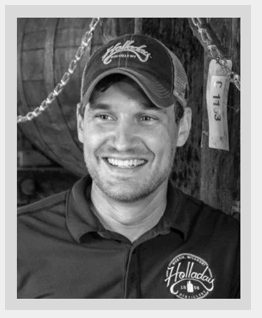
Kyle Merklein
Holladay Distillery
Kyle Merklein’s passion for bourbon and distillation is rooted in both science and craftsmanship. As Master Distiller at Holladay Distillery in Weston, Missouri, he combines his technical expertise with a deep appreciation for the art of whiskey-making..
15
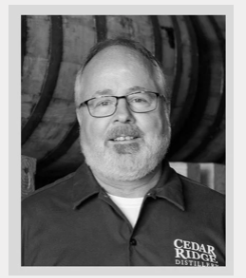
Jeff & Laurie Quint
Cedar Ridge
Jeffrey Anthony Quint, alongside his wife Laurie, founded Cedar Ridge Distillery in 2005 in Swisher, Iowa, becoming the first licensed distillery in Iowa since Prohibition. Fueled by a passion for spirits, Jeff envisioned creating not just a distillery, but a destination that would offer a unique experience for both locals and visitors traveling through the Midwest.
16
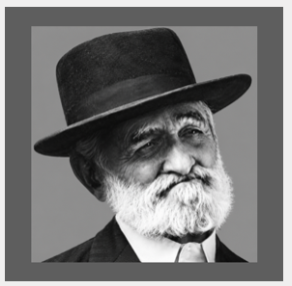
Jacob Rieger
J. Rieger Distillery
Jeffrey Anthony Quint, alongside his wife Laurie, founded Cedar Ridge Distillery in 2005 in Swisher, Iowa, becoming the first licensed distillery in Iowa since Prohibition. Fueled by a passion for spirits, Jeff envisioned creating not just a distillery, but a destination that would offer a unique experience for both locals and visitors traveling through the Midwest.
17
Jamie Siefken
Cedar Ridge
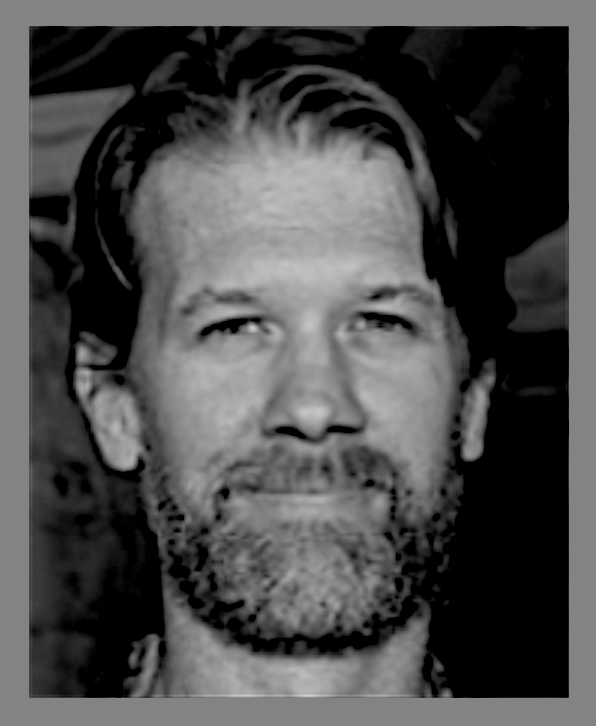
In 2010, Jamie Siefken joined Cedar Ridge Distillery as General Manager. It was a consequential moment to step into the operation. Cedar Ridge wasn’t merely a tasting room; it was a hybrid business that had to balance tourism, productionrealities, and distribution, with wine and spirits under one roof.
18

Christi Taylor
Revelton Distilling Company
Christi Taylor’s interest had become serious preparation by 2015. She spoke with distillers about the realities of running a spirits company, toured hundreds of distilleries, and studied at Moonshine University. Taylor characterized about two years of this period as an unofficial education, but the learning never stopped.
19

Dave Weglarz
Still 630
Dave Weglarz took ownership of the location he intended to turn into a distillery and moved into what was previously a Hardee’s. He positioned himself as the working distiller. He planned to build the brand’s identity around intensity, experimentation, and a refusal to be subdued, despite several setbacks.